
[Round-up] Asus ROG Announce Their New Monitors at Computex 2026
Disclaimer: this article includes sponsored coverage from Computex 2026, but all content, opinions and commentary are our own as always
Introduction
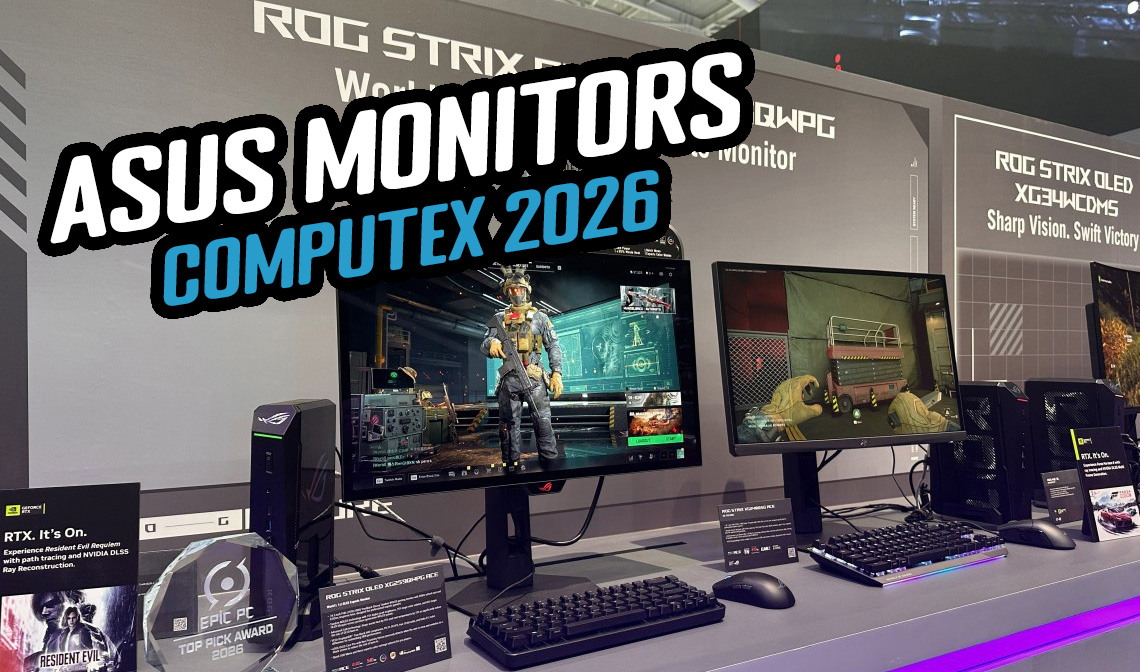
In this round-up articled we will take a detailed look at the new monitors that were announced and showcased by Asus at this year’s Computex 2026 event in Taiwan, including the latest OLED gaming displays, more RGB-stripe OLED’s, the World’s first 24.5″ 1080p Esports gaming OLED monitor and a new 5K dual-mode LCD. All the latest news, information and analysis is included below in this article, and you can also find loads of coverage and hands on experience of two of the flagship screens in our dedicated video linked below as well. This written round-up includes other new monitors that were at their main booth, but which were not at their pre-Computex event and so were not featured in the video.
- Stay up to date: To stay up to date on all the news from Computex 2026, make sure you subscribe to our YouTube channel here, and you can also track all the latest news and content on our dedicated Computex 2026 page where all the other recent news can also be found.

Asus Computex 2026 Event Video Coverage
The World’s First 24.5″ OLED Esports Monitor!
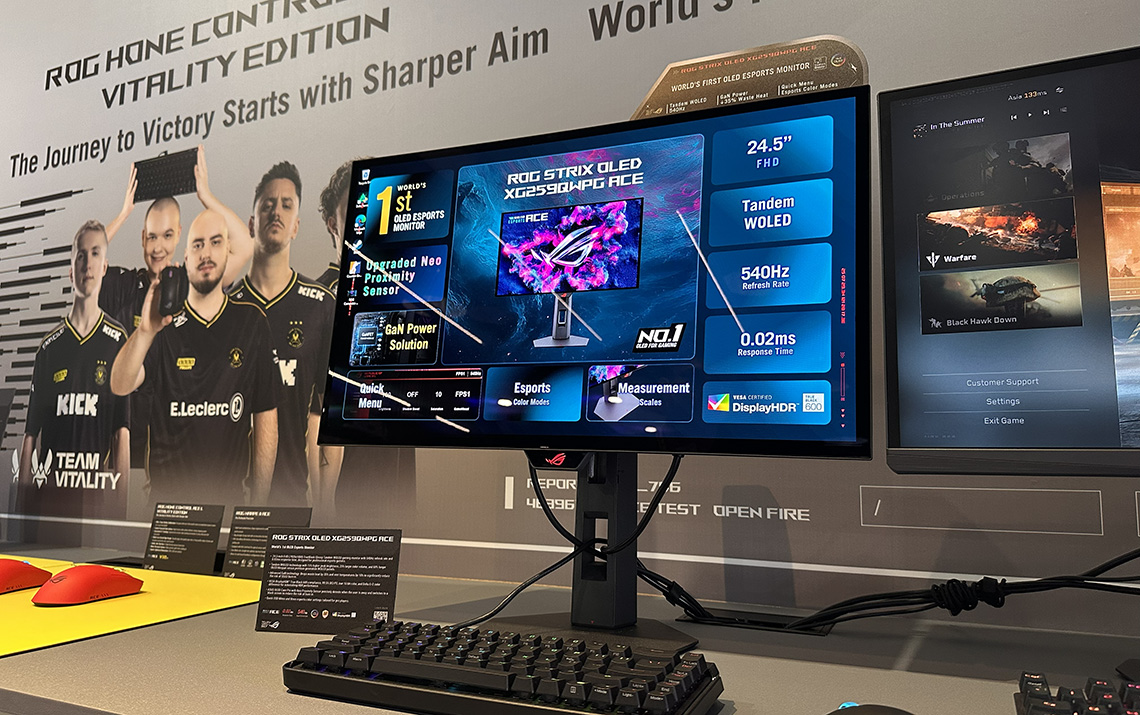
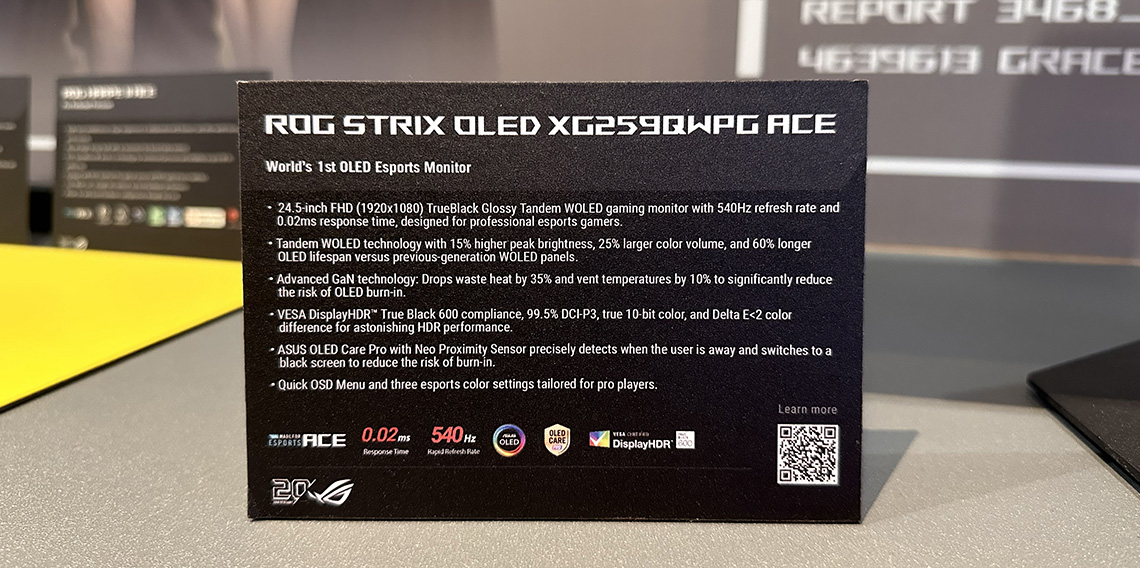
Let’s start with a World’s first shall we? Asus unveiled their new Asus ROG Strix OLED XG259QWPG Ace, an exciting screen which many gamers have been crying out for. Engineered specifically for competitive gamers and professional Esports players, this new screen is the first small-size OLED monitor to be produced, offering a 24.5″ screen size for the first time.

That gives you a smaller screen area to focus on for competitive gaming situations than common 27 – 32″ sized OLED monitors, so less glancing around the screen and a smaller area to focus on. It has a native 1920 x 1080 (1080p) resolution which is obviously far easier to power than higher resolutions, allowing gamers to prioritise speed and frame rates for these competitive situations. With the native resolution of the panel matching the desired game resolution, you also don’t need to worry about scaling or loss of image detail like you would when playing games at this configuration on a higher resolution panel.
It’s combined with a super-high 540Hz refresh rate, the highest native refresh rate currently available from any OLED monitor and this matches their existing 27″ sized 1440p PG27AQWP-W model too. It’s a brand new Tandem WOLED technology panel from LG Display, also offering a ‘TrueBlack Glossy‘ screen coating for a clear and sharp image which we know many people will love.
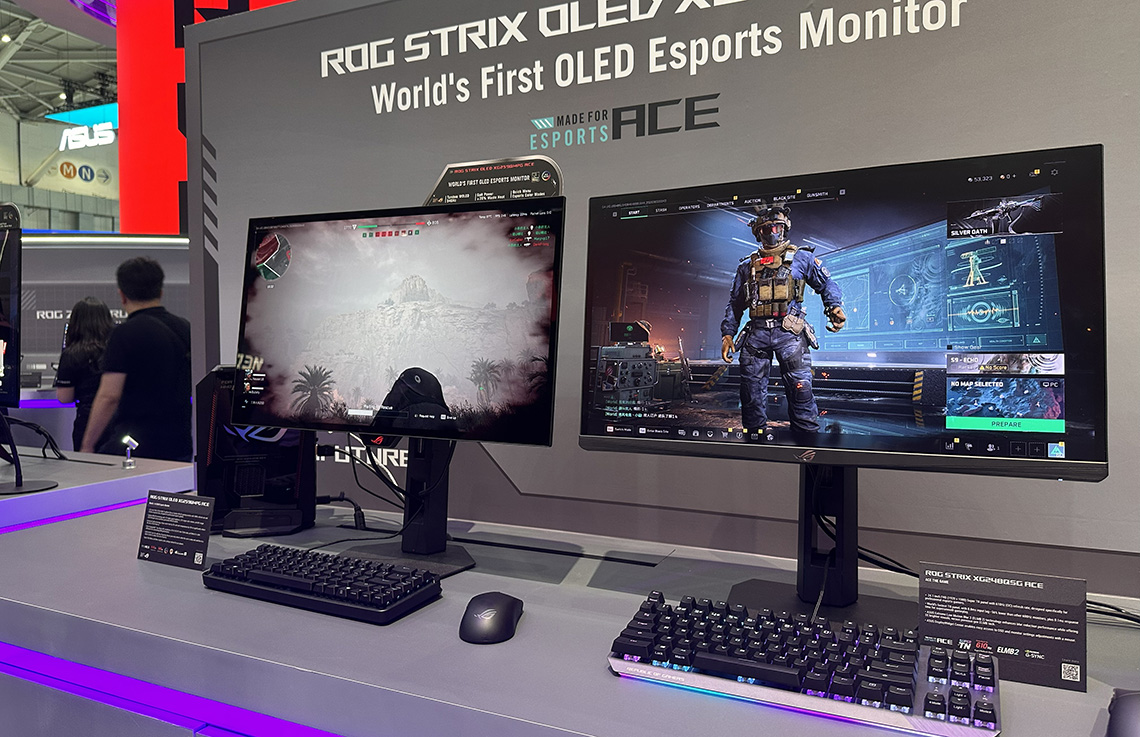
The ~24″ segment is still a popular monitor size with several LCD options already being produced in this space, including Asus’ own XG248QSG Ace for instance which was set up side by side with the new screen at the event. That model offers a 1080p resolution and 610Hz refresh rate, but it’s built around a TN Film LCD panel so the overall performance is very different to an OLED panel.
24.5″ 540Hz OLED vs. 600Hz+ LCD monitors
It’s interesting to consider how this new OLED screen will compare with the existing Esports LCD monitors you can buy in this size.
Response times and motion clarity
Thanks to the near-instant response times of the OLED panel (Asus quote 0.02ms G2G), this screen will offer much faster response times than even the fastest competing LCD panels available, free from any overshoot problems or artefacts and offering consistent performance at all refresh rates and during VRR situations. You don’t need to worry about varying overdrive performance, overshoot or response-time induced blur like you do on LCD panels. Sure, the fastest TN Film LCD panels in this space are super-fast, but OLED still has the edge.
Combined with a very high 540Hz refresh rate, this new screen will offer exceptional motion clarity and smoothness, along with support for high frame rates that competitive gamers are looking for. In fact because of the near-instant response times a 540Hz OLED monitor can offer the approximate equivalent motion clarity to a theoretical ~810Hz LCD monitor. That puts it a step ahead for motion clarity of even the fastest LCD gaming monitors such as the 600Hz+ TN Film panels that are currently used in leading esports gaming monitors. We’re getting in to very small margins of course here at these kind of refresh rates, but these are the margins that might make the differences in Esports gaming situations and for pro gamers.
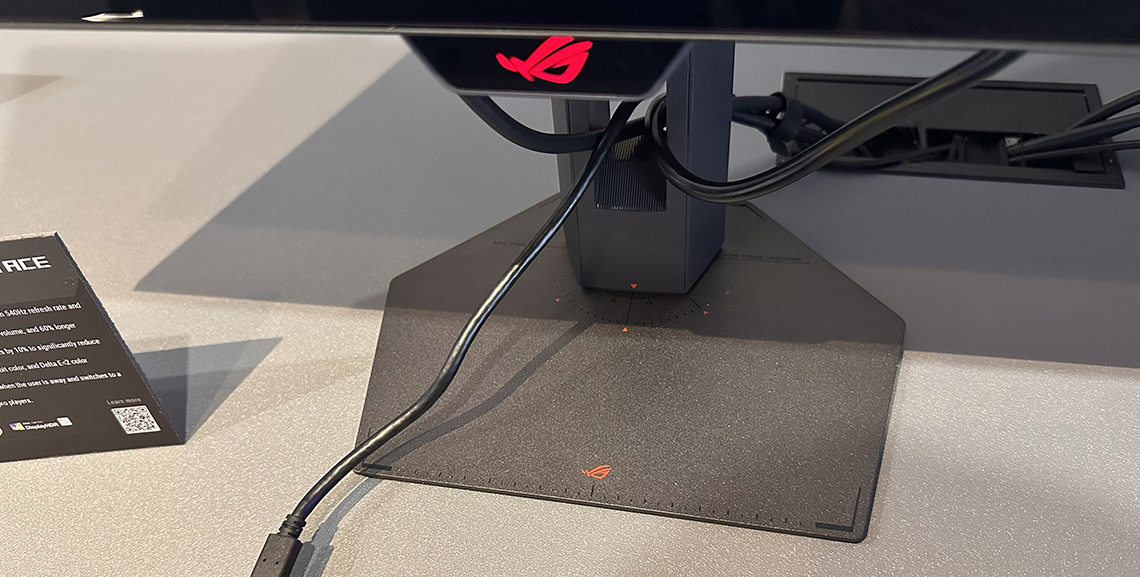
Where strobing blur reduction backlights are offered on LCD gaming screens, those can take motion clarity a step further though. That is especially useful for improving motion performance at lower frame rates as well. Asus do provide a similar feature on this new OLED monitor via their Extreme Low Motion Blur (ELMB) function, which activates a BFI (Black Frame Insertion) mode which can run up to half the native refresh rate (270Hz), allowing you to get 540Hz-like motion clarity even if you can only power lower frame rates.
HDR capabilities
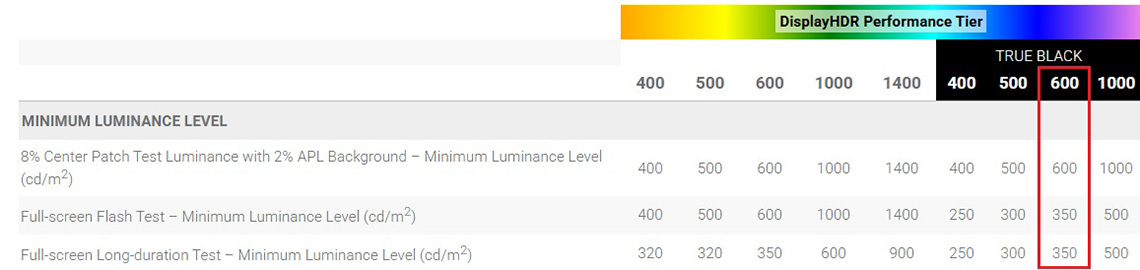
One other especially interesting spec for this new monitor is that it will be certified under the VESA DisplayHDR True Black 600 tier, one of the first desktop OLED monitors we’ve seen that achieves this tier in fact, and offering enhanced brightness performance compared with other OLED monitor panels. This includes a peak brightness spec of 1700 nits (1.5% APL), over 600 nits for 10% APL and 390 nits for 100% APL (and for SDR brightness).
HDR capability is a big benefit of the OLED panel over competing Esports LCD monitors of this size which have basically no real HDR hardware capabilities at all. You now have the option to use this screen for HDR gaming if you want, which just isn’t an option at all on competing LCD offerings of this size.
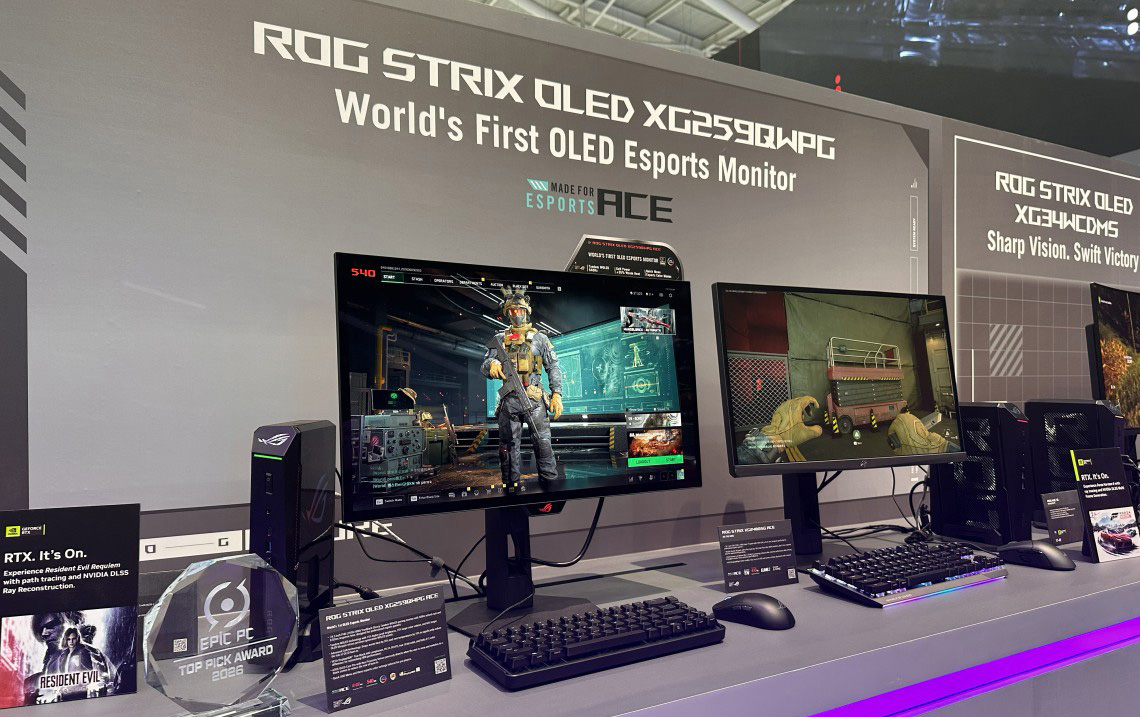
Image quality
This OLED panel can offer better colours and much better viewing angles than competing TN Film LCD panels, offering a much more all-round performance so you can use the screen outside of purely gaming if you want. This includes a wider colour gamut (99% DCI-P3 vs 90%) and 10-bit colour depth for a more colourful and vivid image, as well as much better support for wide gamut content where needed, including HDR which we’ve already discussed above.
One area to be aware of is that the panel features an added white sub-pixel like the majority of LG Display’s Tandem WOLED panels and so this can create some fringing on text in general and office applications compared with a Windows-expected RGB layout that is used on an LCD panel. That’s something to keep in mind, but should not present any issues in gaming and dynamic content.
Other key specs and features
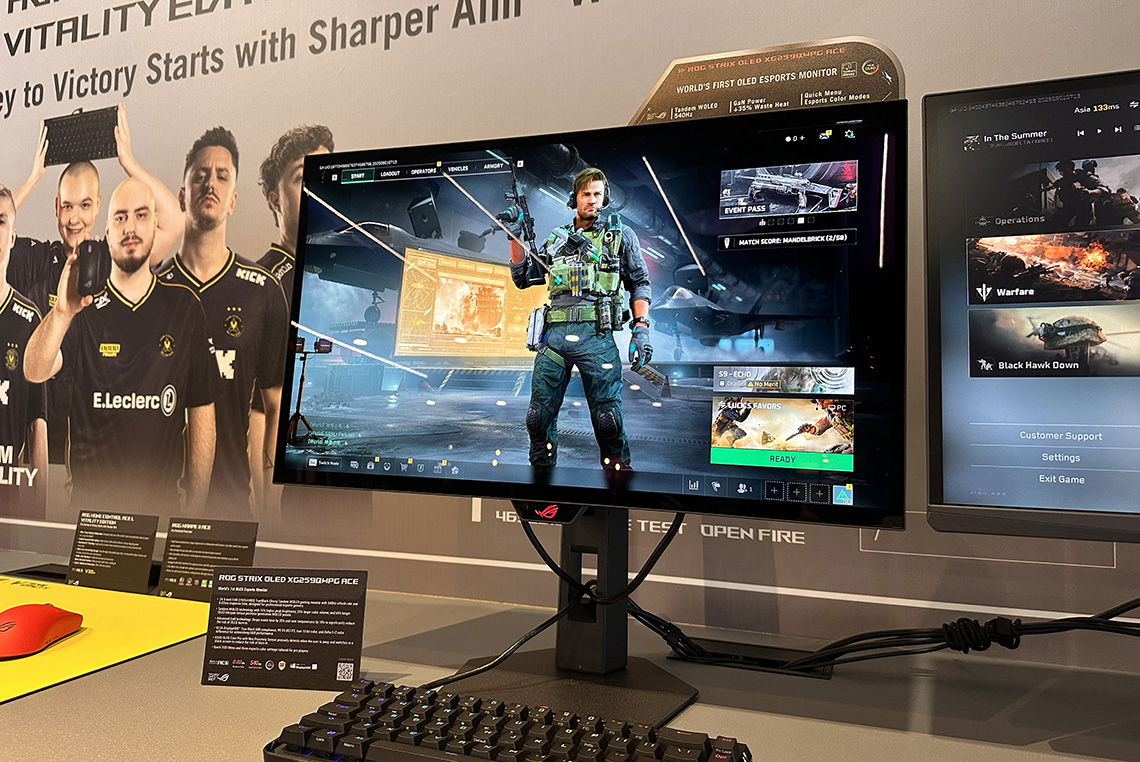
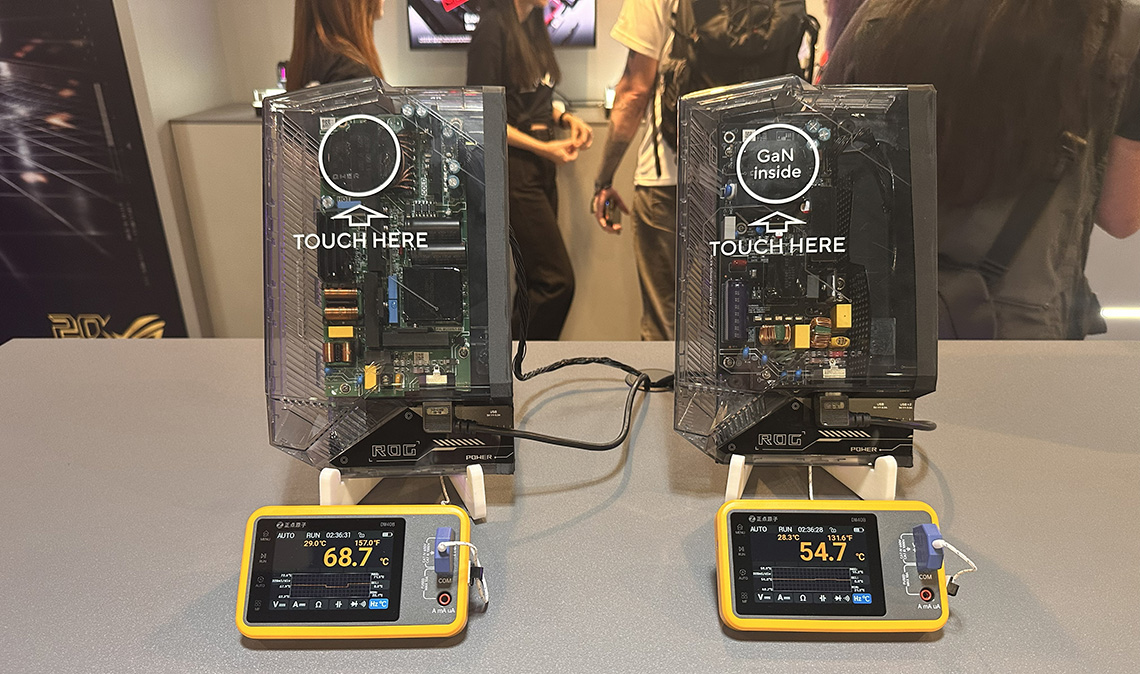
Asus also talk about the new “Advanced thermal solution” for this screen which utilizes new materials to optimize heat dissipation and helps safeguard the OLED panel against burn-in over time, including a GaN power supply unit which will be used across their other new OLED monitors in the future as well. This is also supported by their comprehensive range of OLED Care Pro features and settings, including their Neo Proximity Sensor which also adds a new adjustable sensitivity setting and ‘Auto away timer’ for further control.
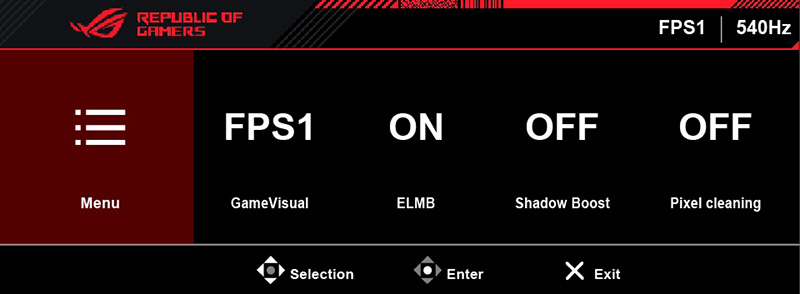
A new “Quick OSD Menu” feature on this model allows gamers to quickly and easily adjust core screen settings. Plus, the 3 “Esports Color Settings” provide specialized visual profiles “professionally tuned for elite competitive play”.
Pricing and availability
This screen is due to be released in mid-Q4, but pricing is still TBC at this stage.
The World’s First 32″ 4K Tandem WOLED monitor with RGB-stripe
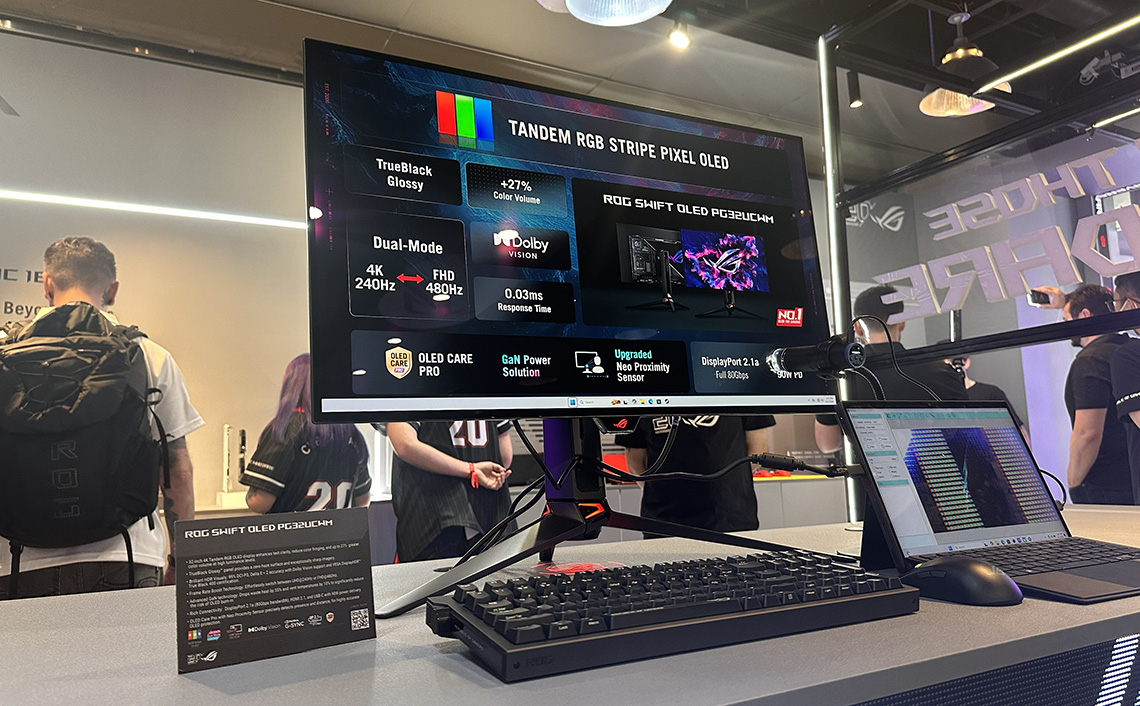
Another exciting headline announcement for Computex 2026 from Asus is the new ROG Swift OLED PG32UCWM, a 32″ sized monitor featuring a brand new Tandem WOLED technology panel from LG.Display, and for the first time in this size, a true RGB-stripe sub-pixel layout. It will also offer a ‘TrueBlack Glossy’ coating for a super-clear and sharp image. An impressive combination that will be very popular with anyone looking for a high resolution, high detail OLED monitor for work and play.
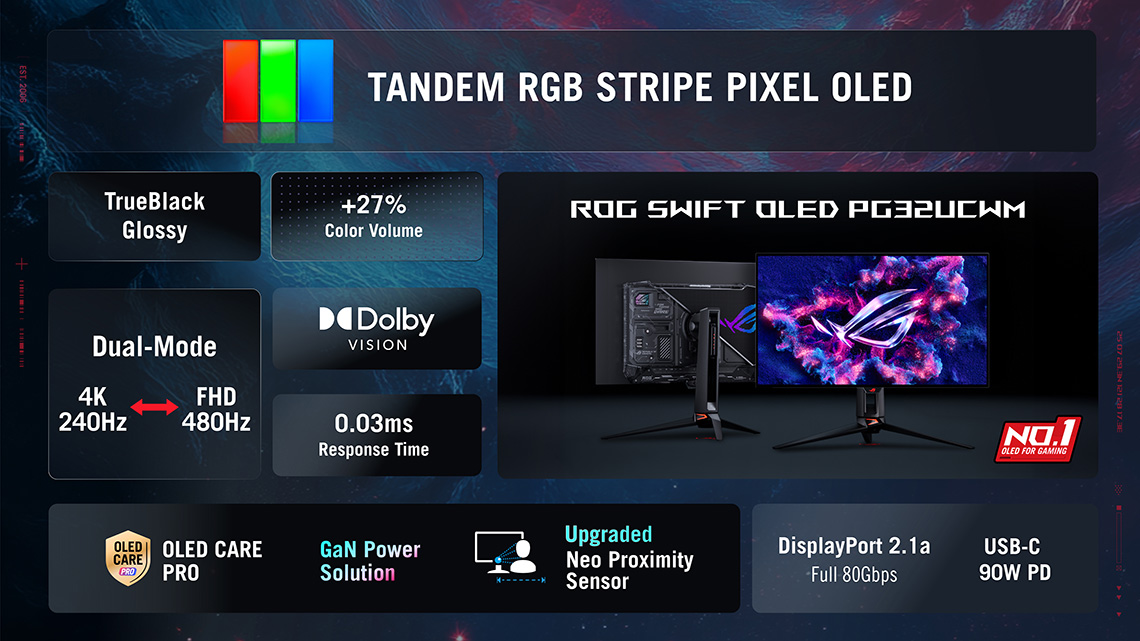
This 32″ model follows on from their 27″ ROG Swift PG27UCWM that was announced back in January at CES 2026 (not actually on show at Computex this year), offering the same design aesthetic but a larger screen size here. It offers the same 3840 x 2160 “4K” resolution, a native 240Hz refresh rate and a dual-mode function which supports 480Hz at 1080p for certain gaming situations, although of course there’s a larger screen size for increased immersion and more desktop space, but a lower pixel density (140 PPI vs 166 PPI) as a result.
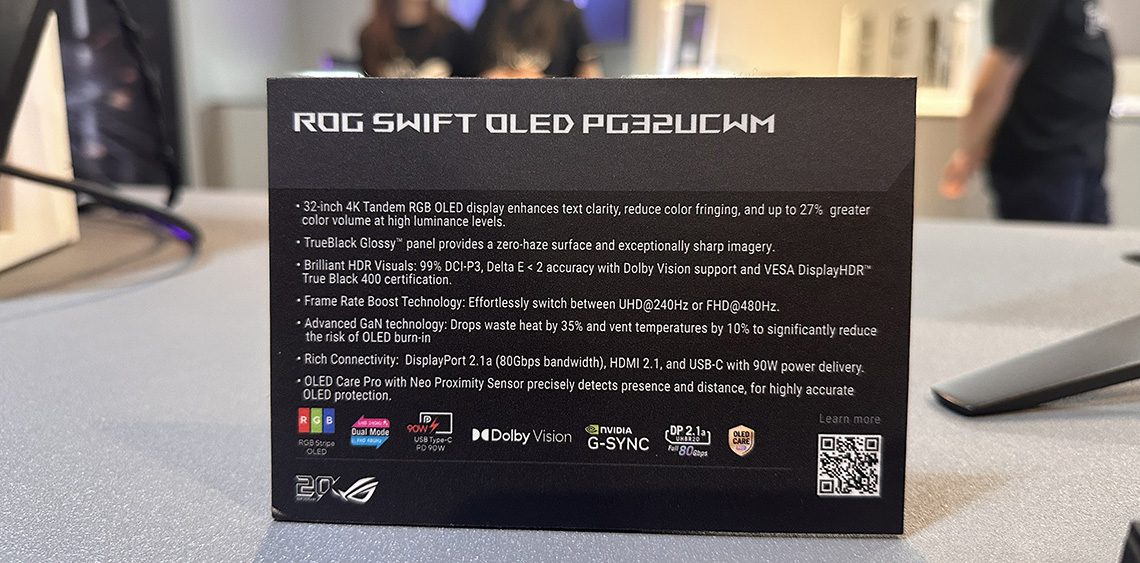
Like the 27″ PG27UCWM model, one of the key features of the PG32UCWM is that it features a true RGB-stripe sub-pixel layout from the new Tandem WOLED panel, removing the white sub-pixel from the panel design which improves text clarity even further, reduces any visible fringing and improves HDR colour volume too.
RGB-stripe layout
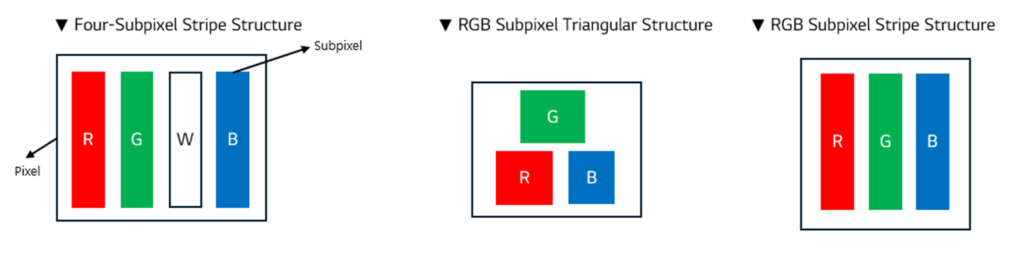
The use of an RGB-stripe sub-pixel structure without the added white sub-pixel means that total brightness won’t be as high as some of LG Display’s other recently launched Tandem WOLED panels, including their RGWB version of this same panel. That’s one area you sacrifice a little when converting to an RGB-stripe layout WOLED panel.
This model meets the VESA DisplayHDR True Black 400 certification tier but if you need brighter, there’s a standard RGWB model from Asus also announced in their ROG Strix series which we will discuss more in a moment. This model has a peak brightness of 1000 nits and 250nits for full screen white/SDR. It can support HDR10 and Dolby Vision HDR content too.
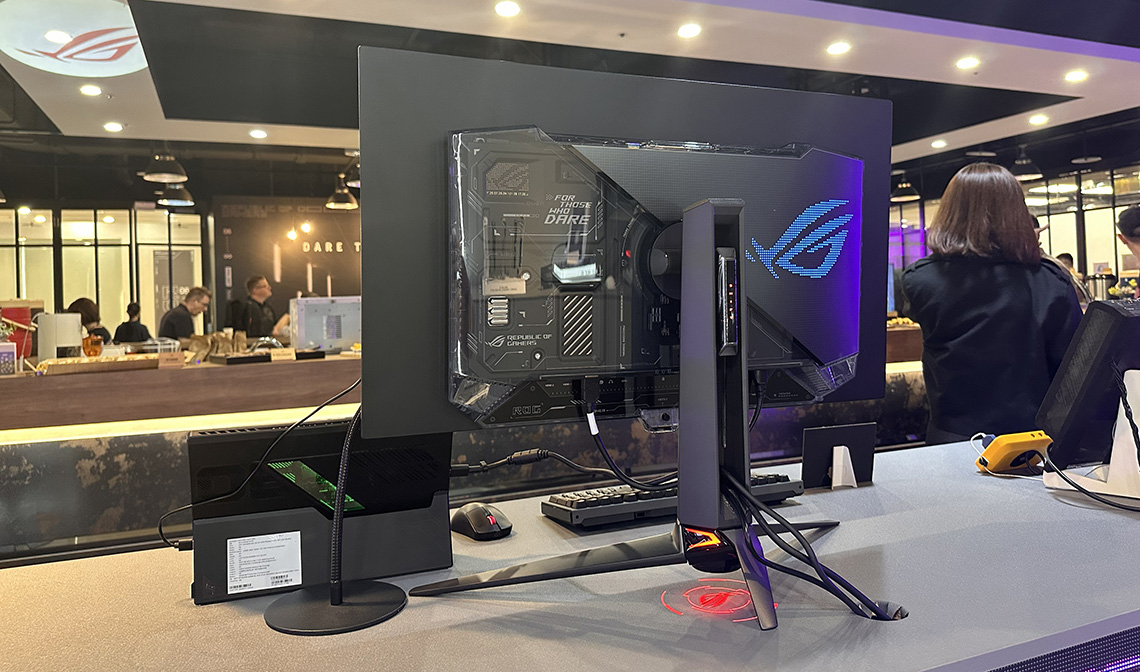
On the other hand, with only RGB sub-pixels now available, this will offer an “additive” approach to colour brightness, which means we get higher peak colour luminance and higher colour volume in HDR – i.e. colours will be maintained even at maximum brightness. This will behave differently to previous WOLED panels where the white pixel would be used to boost brightness, but this can lead to some washout of colours and “volumetric collapse” when considering colour volume for HDR for lower APL scenes. Asus state “up to 27% larger colour volume, especially at high luminance levels, to give gamers richer, more vibrant colours.”
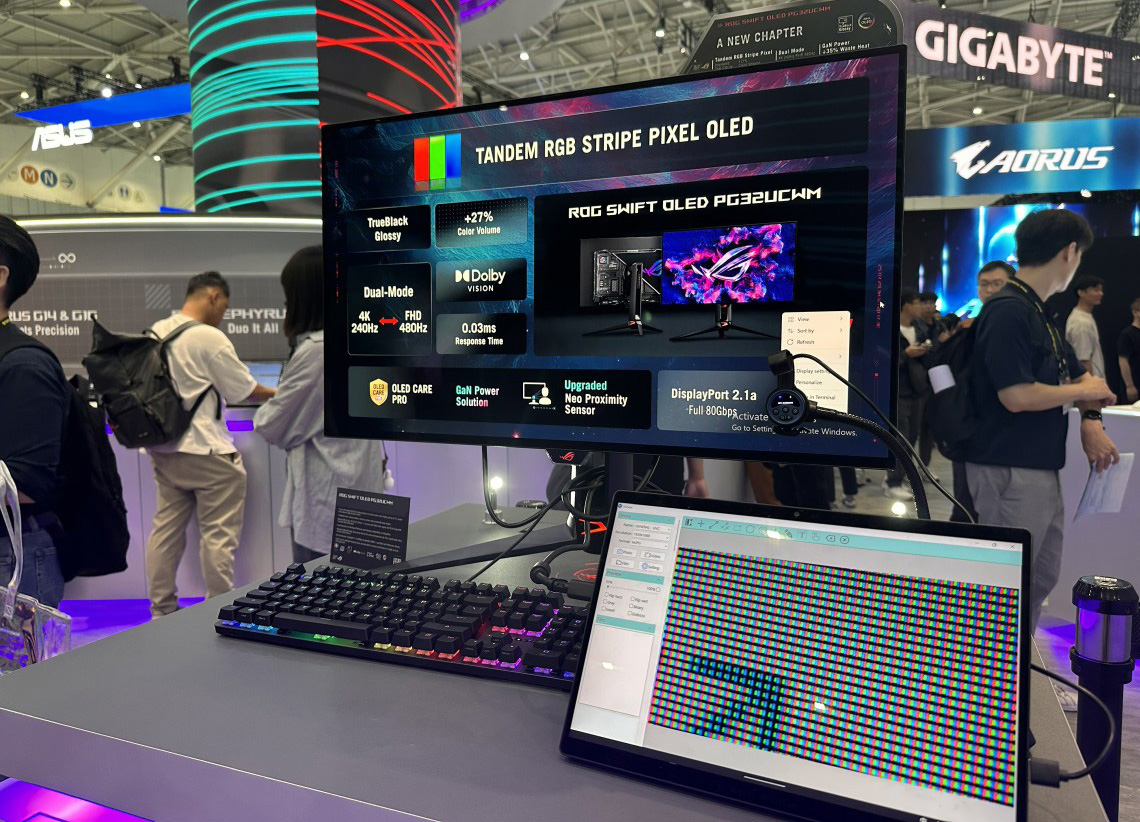
Based on the specs provided by LG Display at the tour we had of their panels at Computex, this RGB-stripe 32″ Tandem WOLED panel can reach a colour luminance peak of 1000 nits, whereas the RGWB version of the panel (with the white sub-pixel still included) reaches only 600 nits colour luminance peak for the same 1.5% APL situation. In their side by side demos this offered noticeably more vivid and saturated colour highlights in low APL dark scenes. More testing and comparisons will be needed of course when we receive both versions of the panel in our lab.
Note that this panel remains a “Tandem WOLED” panel as the “W” in “WOLED” represents the white colour of the light that the panel produces, and is not related to the inclusion of a white sub-pixel.
Other key specs and features
Also of note for this model is that connectivity includes DisplayPort 2.1 (UHBR20, 80Gbps), HDMI 2.1 and USB type-C (with DP Alt mode, data and 90W power delivery). Like the 24.5″ Esports monitor discussed earlier, the PG32UCWM will feature their updated “advanced thermal solution” with a GaN power supply, along with their OLED Care Pro feature set and updated Neo Proximity Sensor controls.
Pricing and availability
[UPDATE] The PG32UCWM, and also the 27″ 4K RGB-stripe PG27UCWM model which was not on show at Computex, are due to be released in early Q3 although this could vary by region. The 27″ model will have a global price of $1,199 USD while the 32″ 4K model will be $1,299 USD. We have reviewed the 32″ model in full here.
A second new 32″ 4K Tandem WOLED monitor option
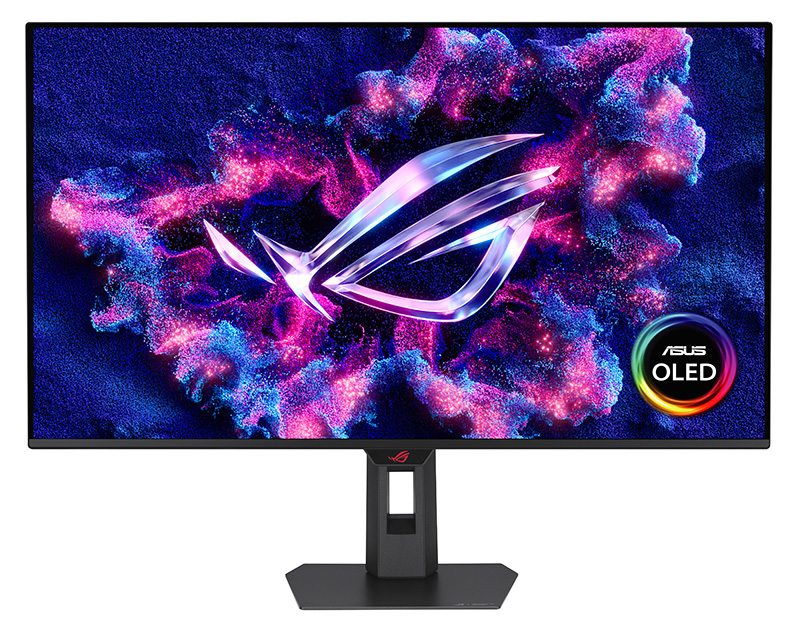
Asus actually have a second new 32″ Tandem WOLED monitor being released and this one uses the RGWB version of the panel instead. This model unfortunately wasn’t on show at Computex, so forgive the lack of photos.
The ROG Strix OLED XG32UQWMS comes in with a slightly more modest spec and an expected lower price point as well as part of their ROG Strix line-up. That means you’ve got a choice in the Asus range between an RGB-stripe version for the sharpest text clarity which is positioned more at professional applications and office users a little more; and a normal RGWB version for higher brightness that’s aimed a little more towards gaming and multimedia.
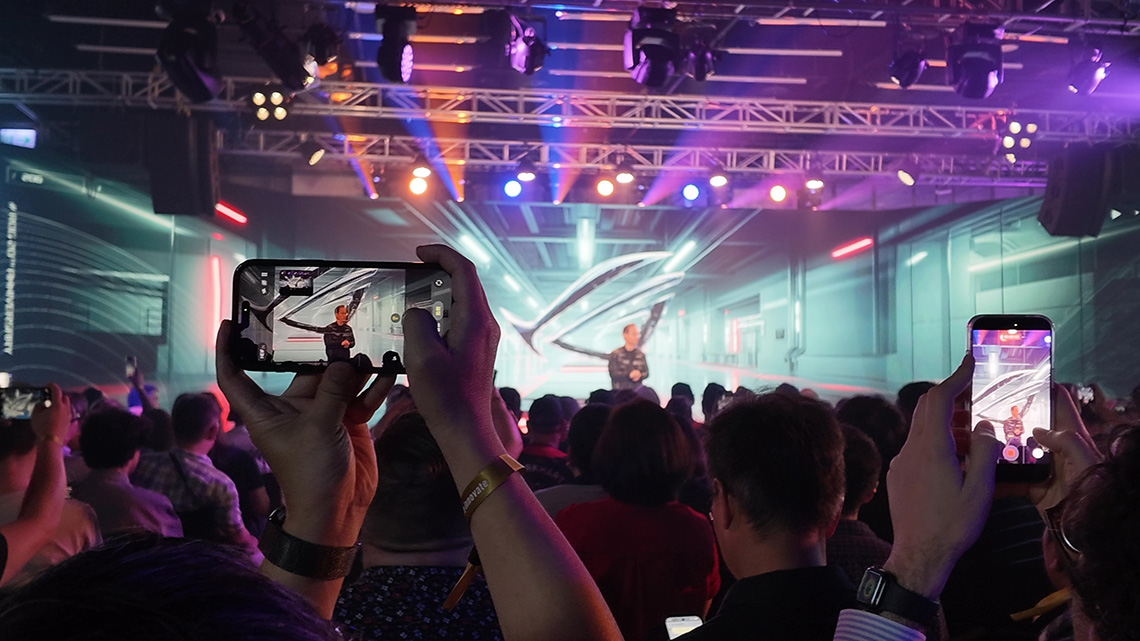
This model is also 31.5″ in size (32″ class) with a 3840 x 2160 “4K” resolution, 240Hz native refresh rate and a dual-mode function supporting 480Hz at 1080p. It’s also got a ‘TrueBlack Glossy’ coating too.
With the white sub-pixel still included, this panel is certified under the higher VESA DisplayHDR True Black 500 tier, a higher tier than the RGB-stripe version being launched. It’s also a step up in brightness compared with all the previous-gen WOLED panels of this size, like for instance Asus’ previous PG32UCDP and XG32UCWMG models we have reviewed in the past.
This includes a peak brightness spec of 1500 nits (1.5% APL) compared with 1300 nits on the earlier Gen panels, as well as at least 300 nits for 100% APL compared with 250 nits. This model is basically a Tandem WOLED upgrade from their existing XG32UCWMG model which is an excellent screen.
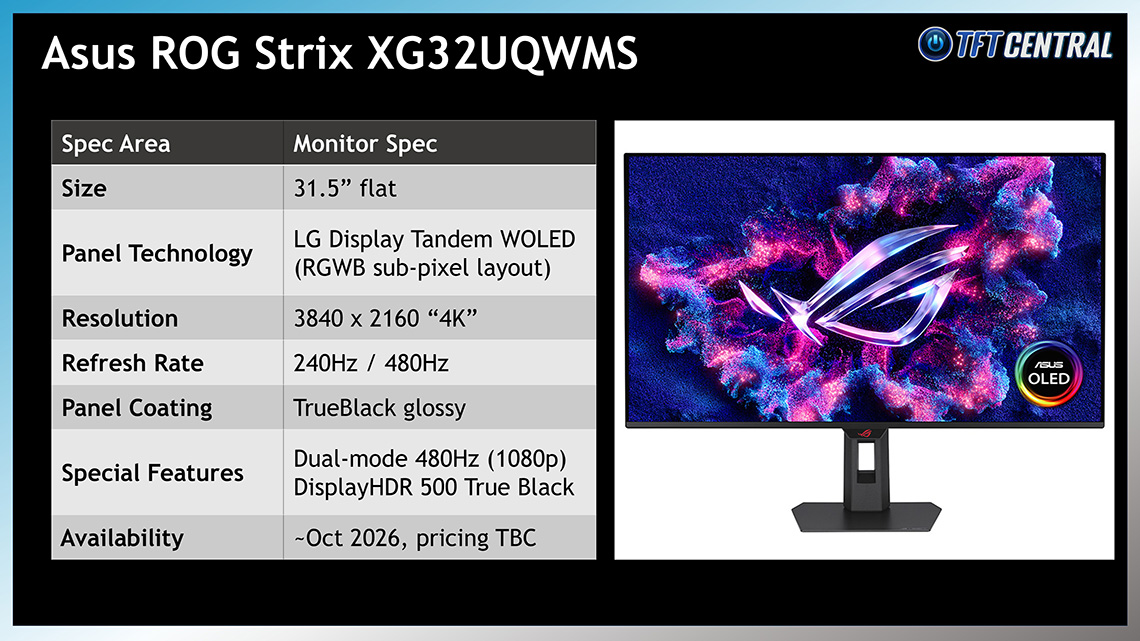
Other key specs and features
Their comprehensive OLED Care Pro feature set and updated Neo Proximity Sensor controls are included here again and for connectivity there’s DisplayPort 1.4 (with DSC), HDMI 2.1 and a USB hub. Note that there’s no DP 2.1 or USB type-C connections on this ROG Strix version, which are offered on the ROG Swift model discussed before. It has a different design aesthetic with a simpler and more subtle stand design and rear enclosure.
Pricing and availability
[UPDATE] We are told this model should also be launched in early Q3, with pricing TBC in most regions although we’ve been given a price of £819 GBP in the UK. You can find our full review of this monitor here.
A new 5th Gen QD-OLED 34″ ultrawide model showcased
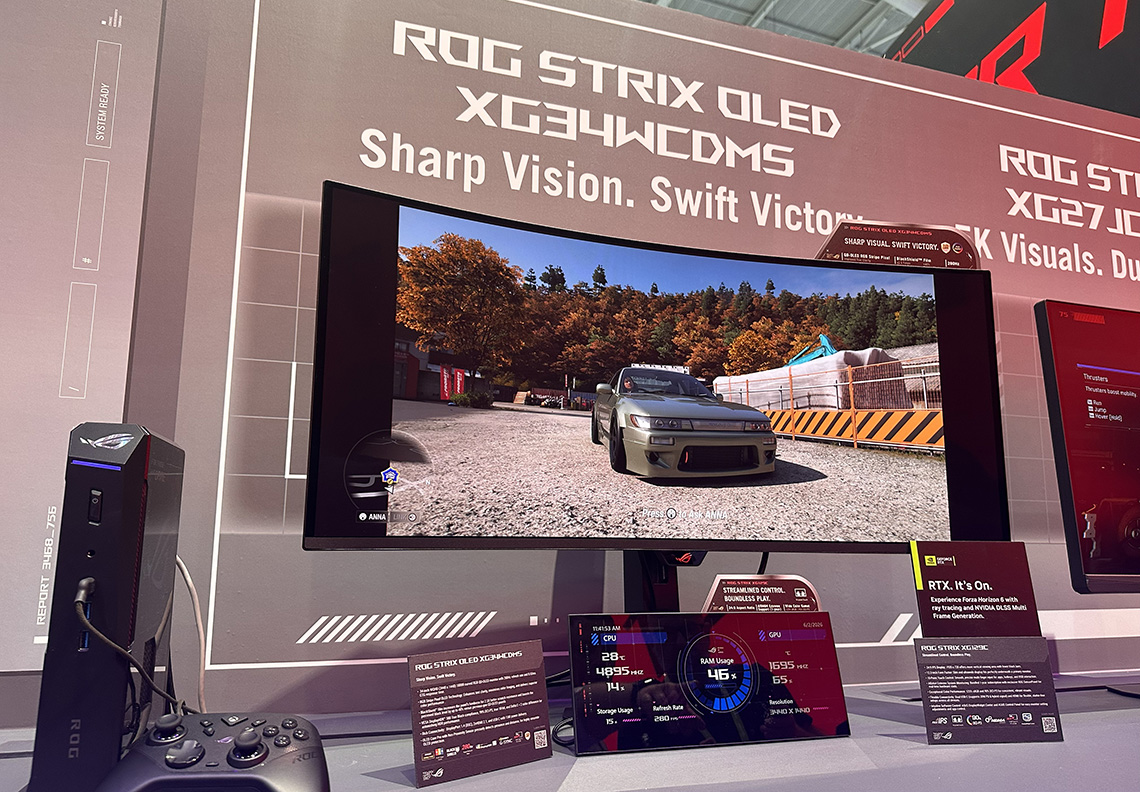
Asus also showcased their new ROG Strix OLED XG34WCDMS, a model which was announced around the time of CES 2026 but that was not on show at that event. This model brings a second 5th Gen Penta Tandem QD-OLED panel option to their 34″ ultrawide range, following on from the ROG Swift PG34WCDN which we reviewed at the start of the year. This ROG Strix model offers a slightly more modest spec, design and feature set which provides a lower cost option if you’re looking for a 34″ ultrawide screen.
It offers a 3440 x 1440 resolution, 1800R curvature and a 280Hz refresh rate – a little lower than the 360Hz offered from the ROG Swift version. Like the ROG Swift model the key benefit of this new model is the use of the latest 5th Gen QD-OLED panel technology, part of what Samsung Display refer to as their “Penta Tandem QD-OLED” line-up. It features their latest 5-stack OLED structure, EL 3.0 material and offers an RGB-stripe sub-pixel layout for enhanced clarity and sharpness. It also features the added ‘BlackShield Film’ which enhances panel hardness by 2.5x, while also improving black depth and contrast in well lit rooms by up to 40%. It’s basically the same panel tech as the ROG Swift 360Hz model, just with a lower refresh rate here.
Other key specs and features
The screen meets the VESA DisplayHDR True Black 500 tier and offers a peak brightness spec of 1300 nits, and a typical brightness of 300 nits for SDR. Despite being part of their lower-tier ROG Strix line-up, this model will still include OLED Care Pro features and their Neo Proximity Sensor.
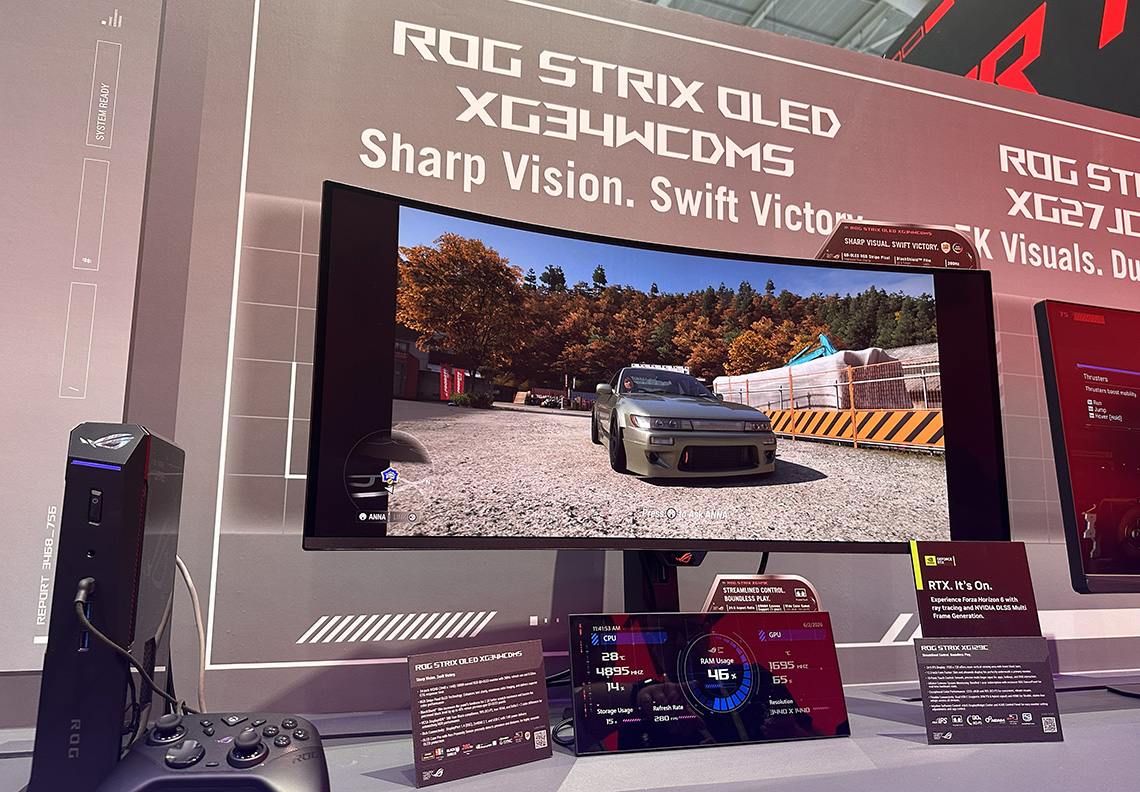
For connectivity there are DisplayPort 1.4 (with DSC), HDMI 2.1 and USB type-C (with DP Alt mode and 15W power delivery). The ROG Swift model offers high connectivity specs with DP 2.1 (UHBR 20) and a higher power delivery of 90W from the USB-C port. There’s also 3x USB-A data ports and a headphone jack provided.
Pricing and availability
This screen should be available during June/July depending on region, and it’s started to appear available for pre-order now in the UK at a price of £749 GBP.
More info: Product page
A new 5K Dual-mode monitor announced
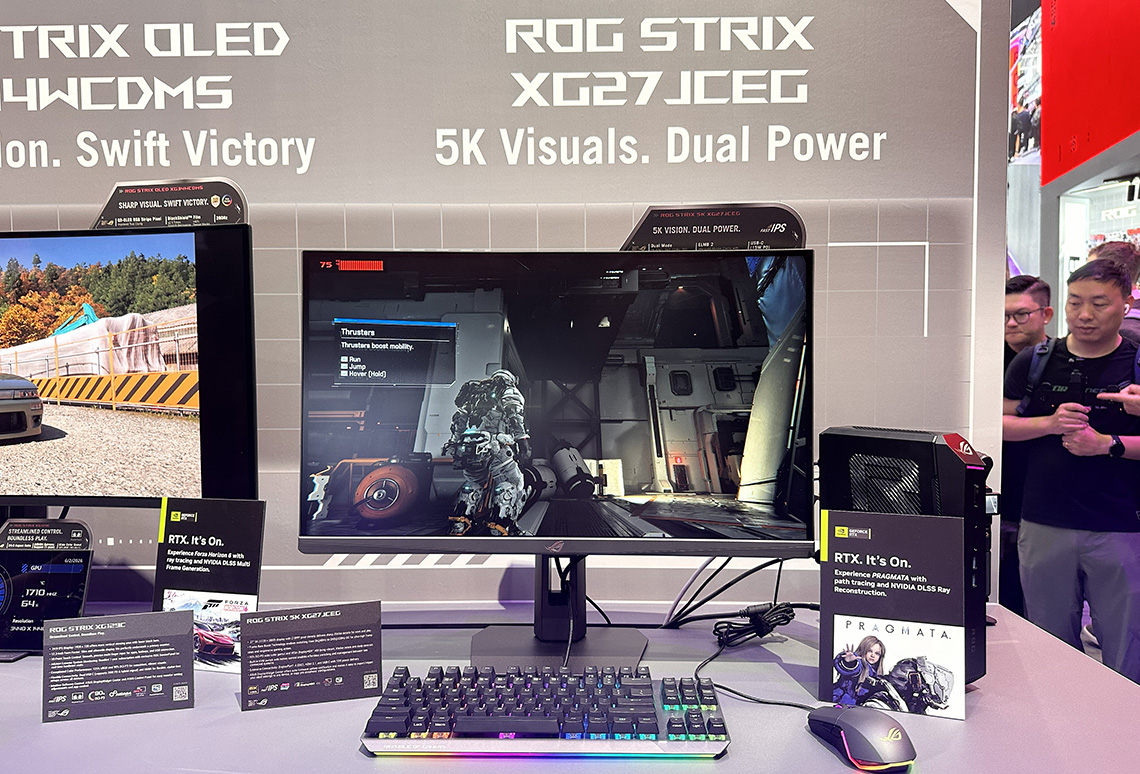
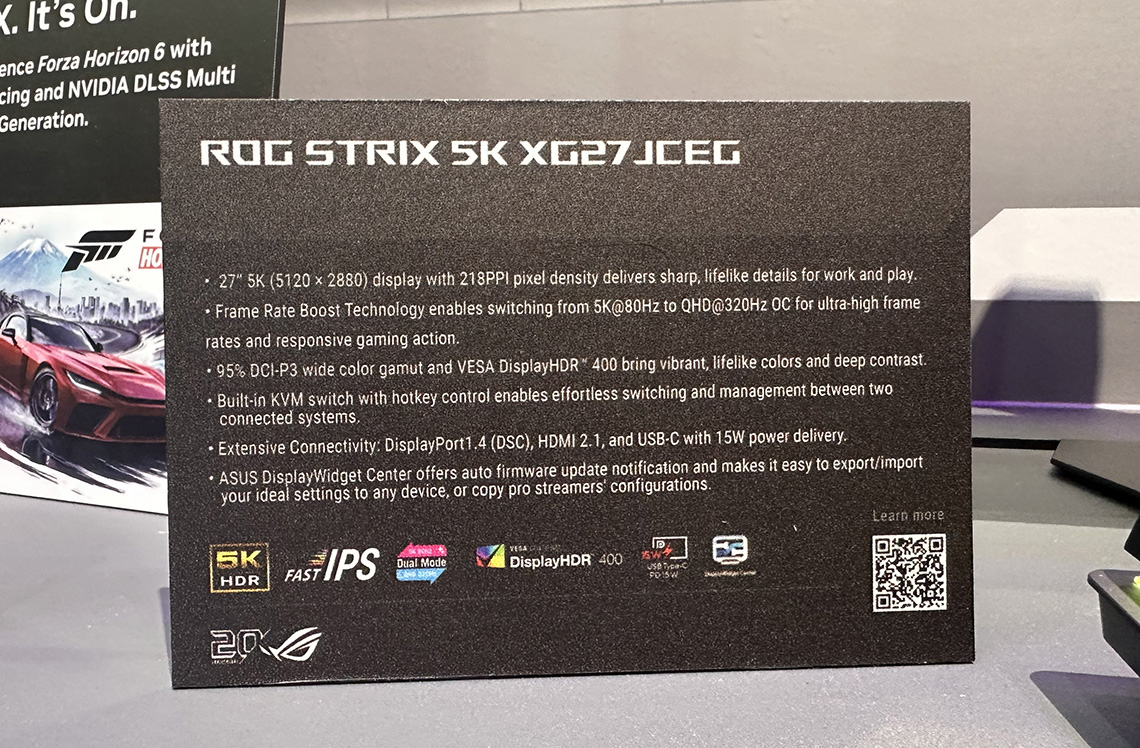
Asus have unveiled a further 5K dual-mode gaming screen in their line-up. The ROG Strix XG27JCEG incorporates a 27” sized ‘Fast IPS’ LCD panel with a 5120 x 2880 “5K” resolution and an 80Hz refresh rate (with a small overclock), which can be boosted to 320Hz when dropping to a 2560 x 1440 (1440p) resolution, an increase of 4x’s the native refresh rate. The high 218 PPI pixel density in 5K mode offers you super-clear and sharp visuals for general desktop usage and professional applications, while the dual-mode can give you an excellent refresh rate boost for gaming situations at a still-very-decent 1440p resolution.
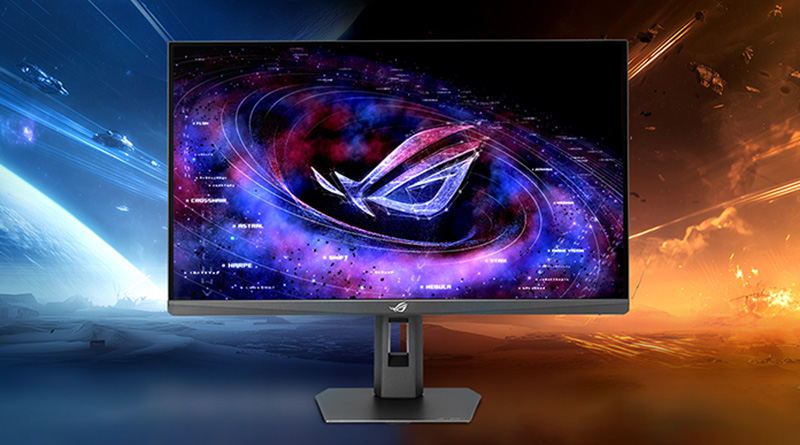
Related: The Future of Dual-mode Monitors
Everything you need to know about dual-mode monitors and how they work. We also explore the future of this technology and some of the improvements and upgrades being introduced this year [View here]
This is the second 5K dual-mode screen Asus have introduced in their ROG Strix line-up as this market continues to grow, with the XG27JCG already available to buy now, and although it has a reduced spec sheet compared with its predecessor, it still offers a great combination of ultra-clear visuals for productivity and general usage, along with a decent dual-mode option for fast-paced gaming. The main difference panel-wise is the lower 80Hz native refresh rate, compared with 160Hz of the XG27JCG model.
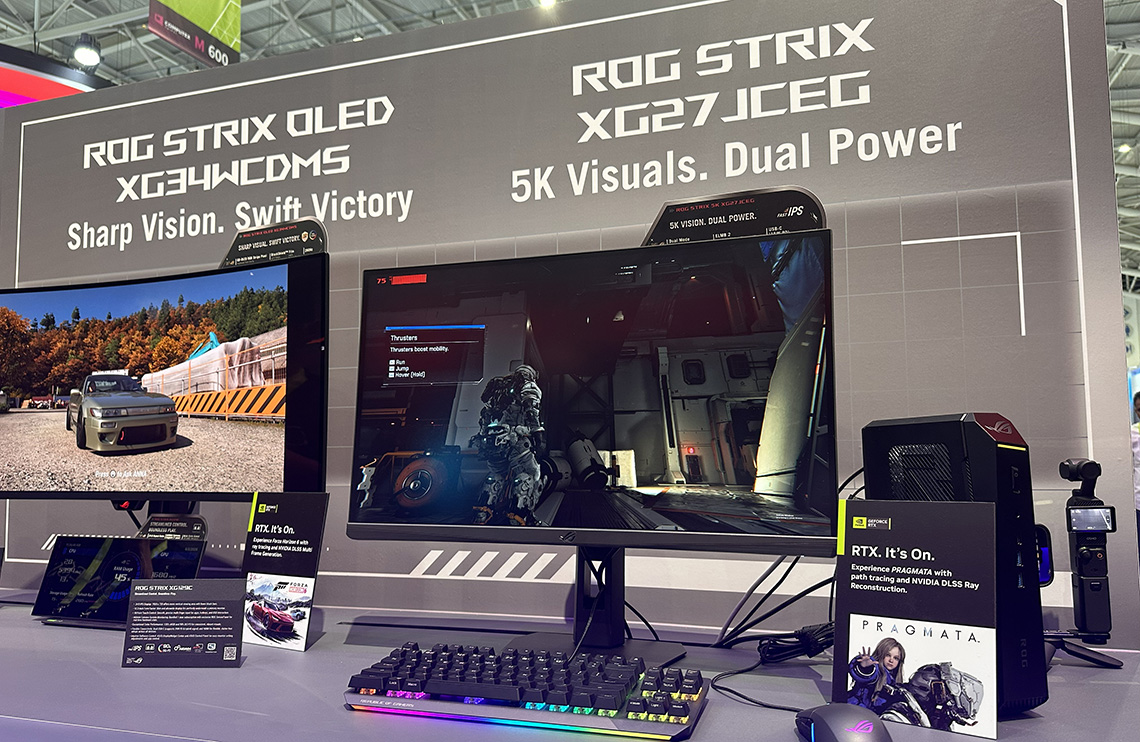
Other key specs and features
Connectivity remains the same with 1x DisplayPort 1.4 (with DSC), 1x HDMI 2.1 and 1x USB type-C (with DP Alt mode, data and 15W power delivery). Familiar Asus Gaming AI features like dynamic shadow boost and dynamic crosshair will continue to be included too.
Related content
Pricing and availability
Pricing and release date is still TBC, we will report back when we have further information for this model.
A 20th Anniversary Edition of their flagship 540Hz OLED display
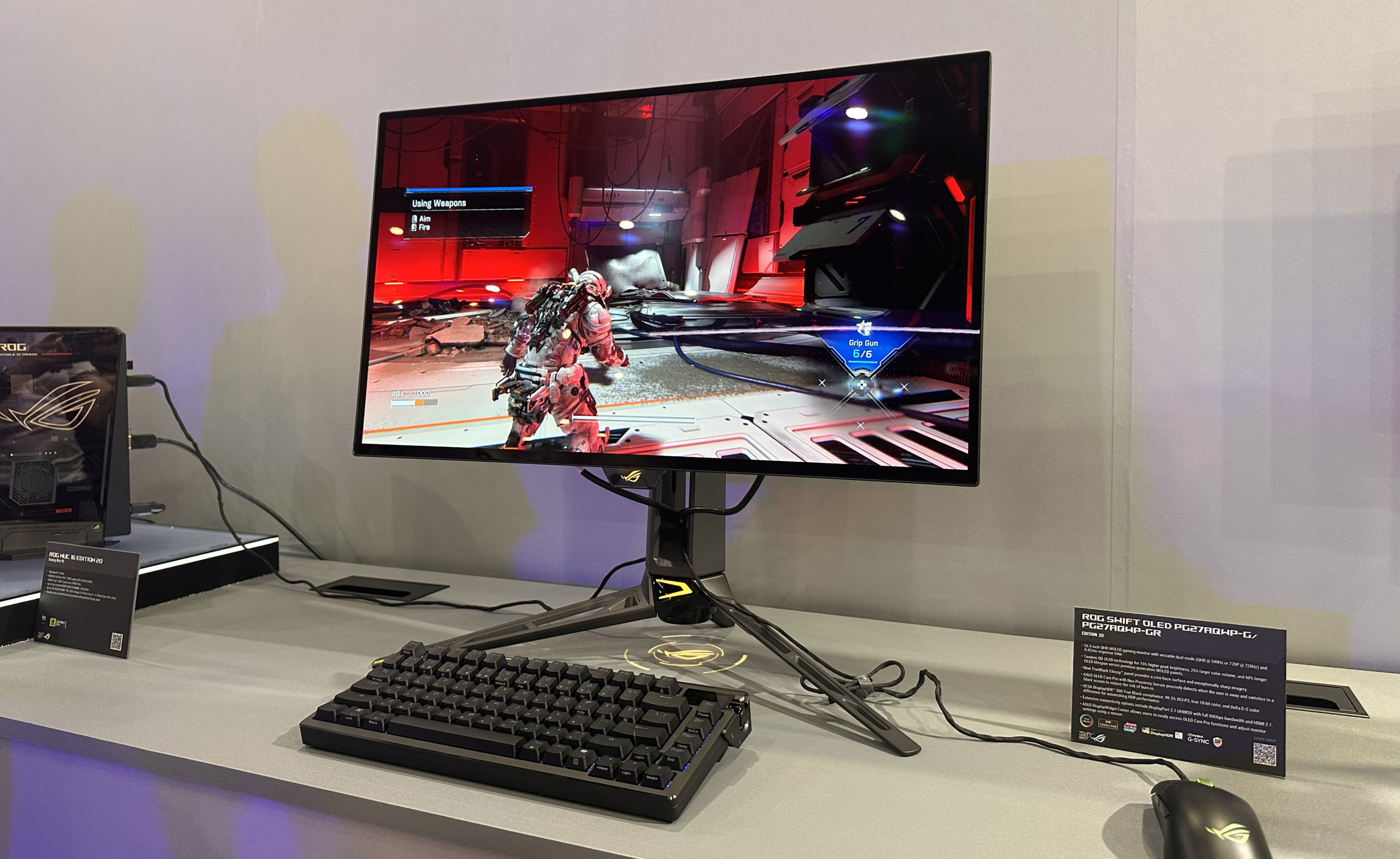
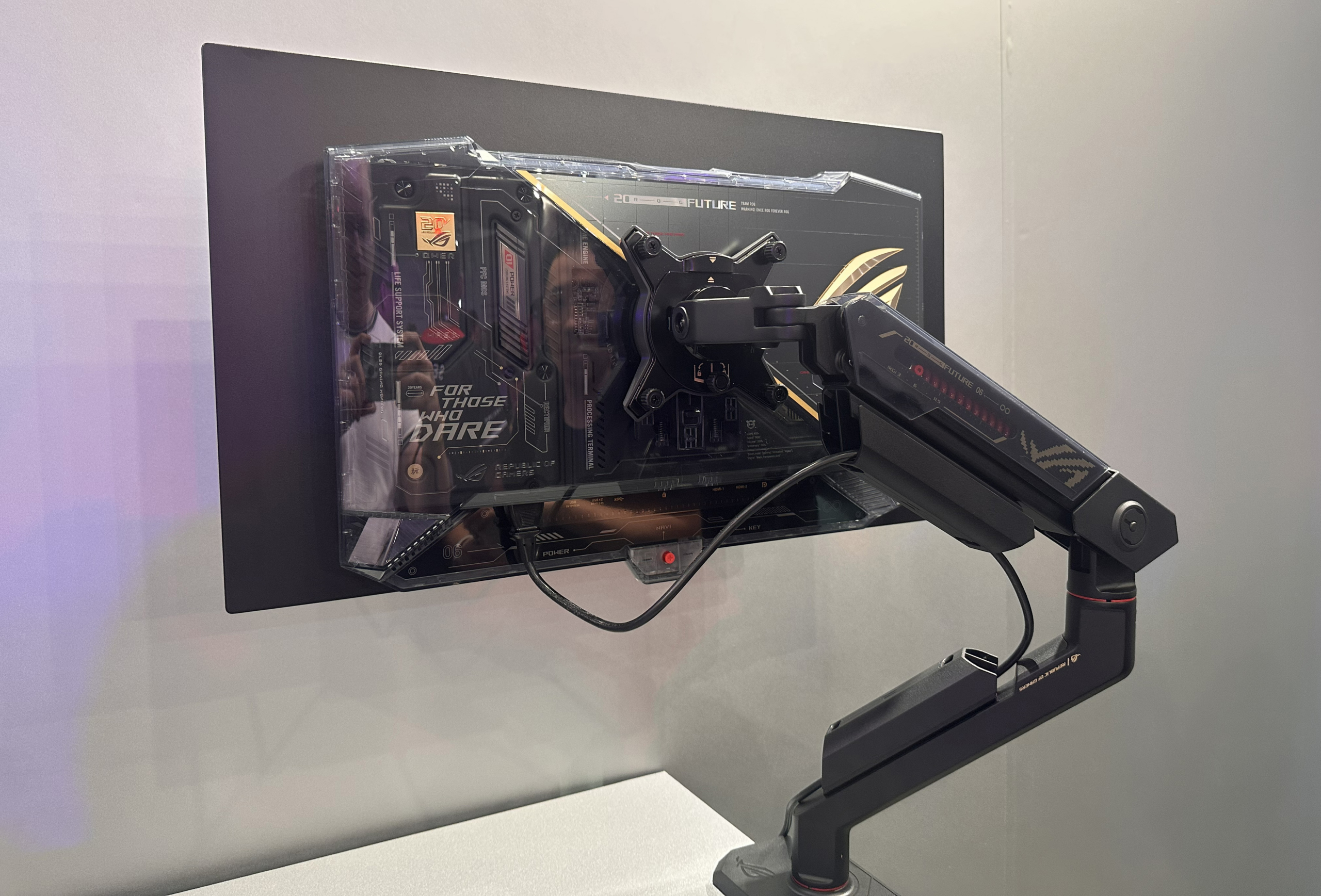
Also announced at the event was a special limited edition, 20th anniversary edition of their flagship 540Hz OLED gaming monitor. The “ROG Swift OLED PG27AQWP-G Edition 20” has the same panel and spec as the PG27AQWP-W model that we reviewed last year, just with a different design aesthetic for their 20th anniversary.
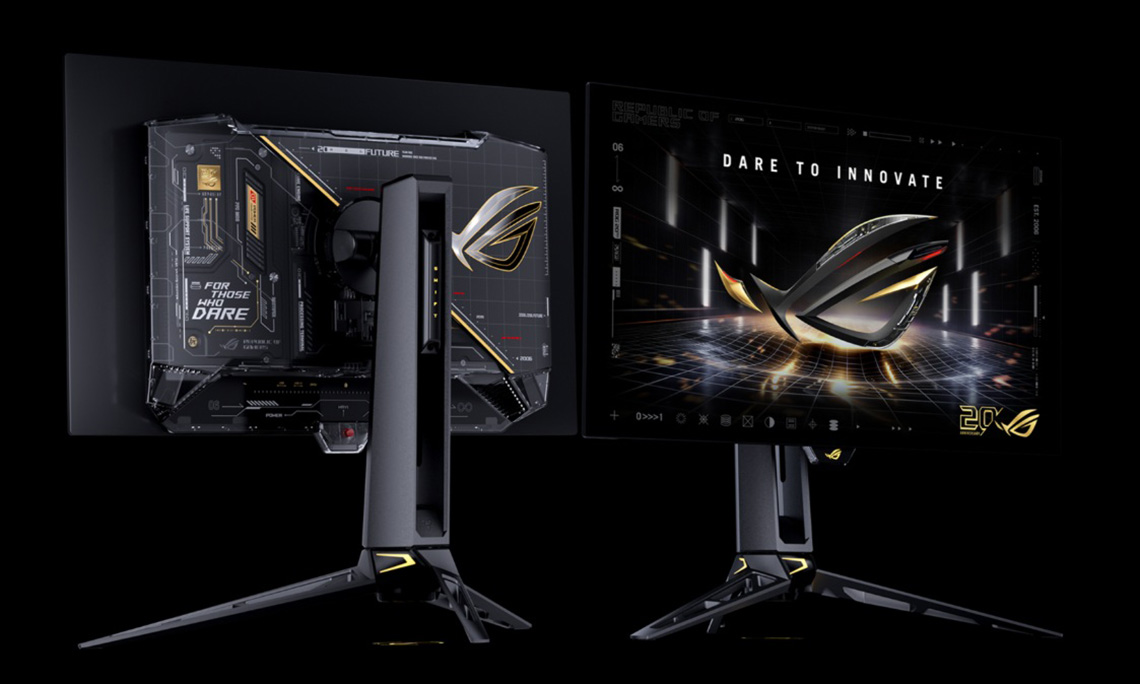
Rather than the silver design of the original model, this version has a black design with gold trim and highlights, and looks really smart. That’s a good alternative for those who liked the panel, specs and feature set but perhaps wanted a black version of the screen instead of silver to go with their setup.
It uses the same 27″ 1440p resolution Tandem WOLED panel, with a TrueBlack glossy screen coating. It offers a 540Hz native refresh rate and a dual-mode function that supports 720Hz at a lower 720p resolution for certain gaming situations.
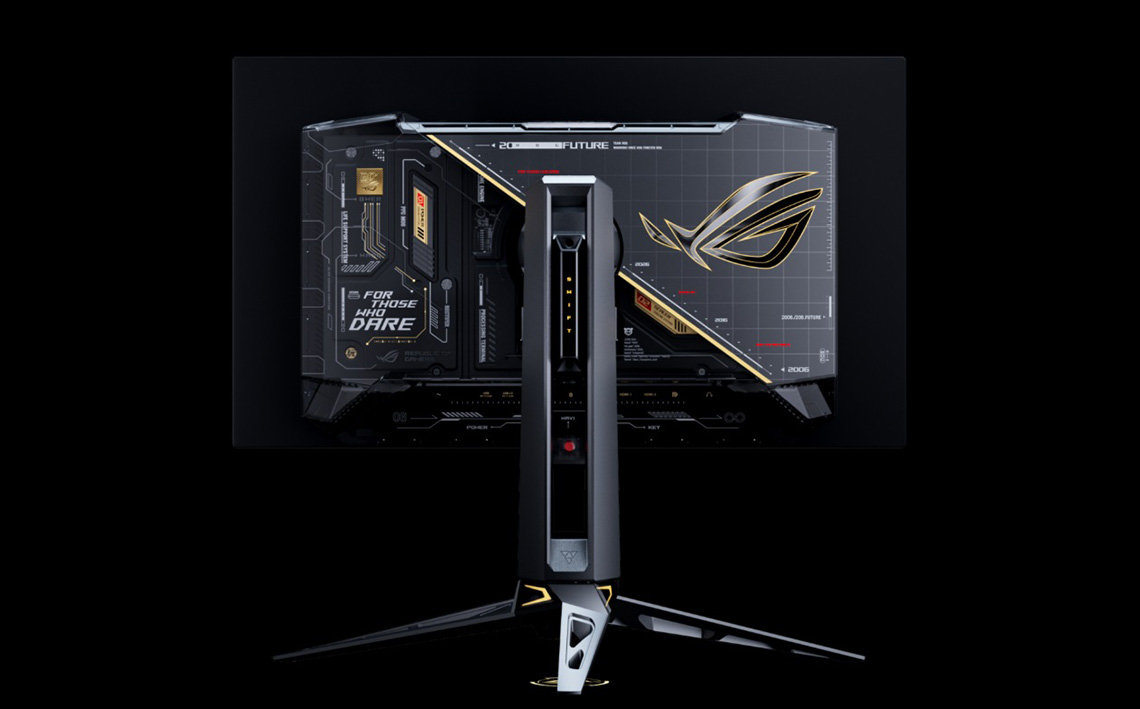
It’s certified under the DisplayHDR True Black 500 tier, with a peak brightness spec of 1500 nits (1.5% APL) and 335 nits for full screen white and SDR.
Connectivity includes 1x DisplayPort 2.1 (UHBR20), 2x HDMI 2.1 and 3x USB-A data ports along with a headphone jack. The stand offers a full range of tilt, height, swivel and rotate adjustments. It also offers their OLED Care Pro and Neo Proximity Sensor features.
Pricing and availability
This screen should be available during June/July depending on region, and it’s started to appear available for pre-order now in some regions including the US at a price of £1,200 USD.
More info: Product page
More Computex news and coverage
We’ll be bringing you loads more information, insight and coverage from Computex 2026. To stay up to date, make sure you subscribe to our YouTube channel here, follow us on X here, and you can also track all the latest news and content on our dedicated Computex 2026 page where all the other recent Computex news can also be found.
We may earn a commission if you purchase from our affiliate links in this article- TFTCentral is a participant in the Amazon Services LLC Associates Programme, an affiliate advertising programme designed to provide a means for sites to earn advertising fees by advertising and linking to Amazon.com, Amazon.co.uk, Amazon.de, Amazon.ca and other Amazon stores worldwide. We also participate in a similar scheme for Overclockers.co.uk, Newegg, Bestbuy , B&H and some manufacturers.