
QD-OLED Generations Infographic and FAQ
Originally published 17 June 2025, last updated 30 July 2026
Introduction
We get a lot of questions about QD-OLED panels – which generation panel does x monitor use? When can we expect to see a new panel of x size? To answer these common questions we’ve written a short guide and FAQ here, and provided a handy infographic so you can cross-refer any QD-OLED monitor you might buy with the associated panel from Samsung Display to figure out which generation it is.
The Latest QD-OLED Updates, News and Panels (Video)
Our most recent round-up of the latest panels as of July 2026.
Our latest summary of all generations, technologies and changes (published April 2026)
QD-OLED Monitor Panel Database and Generations Infographic
Here’s our handy infographic reference table showing all of the QD-OLED monitor panels produced to date, and a couple which we know about planned for the future. You can cross refer the spec of any QD-OLED monitor with this table to figure out which generation panel is being used. Just check the size, resolution and refresh rate and you should be able to work out which panel generation is used.
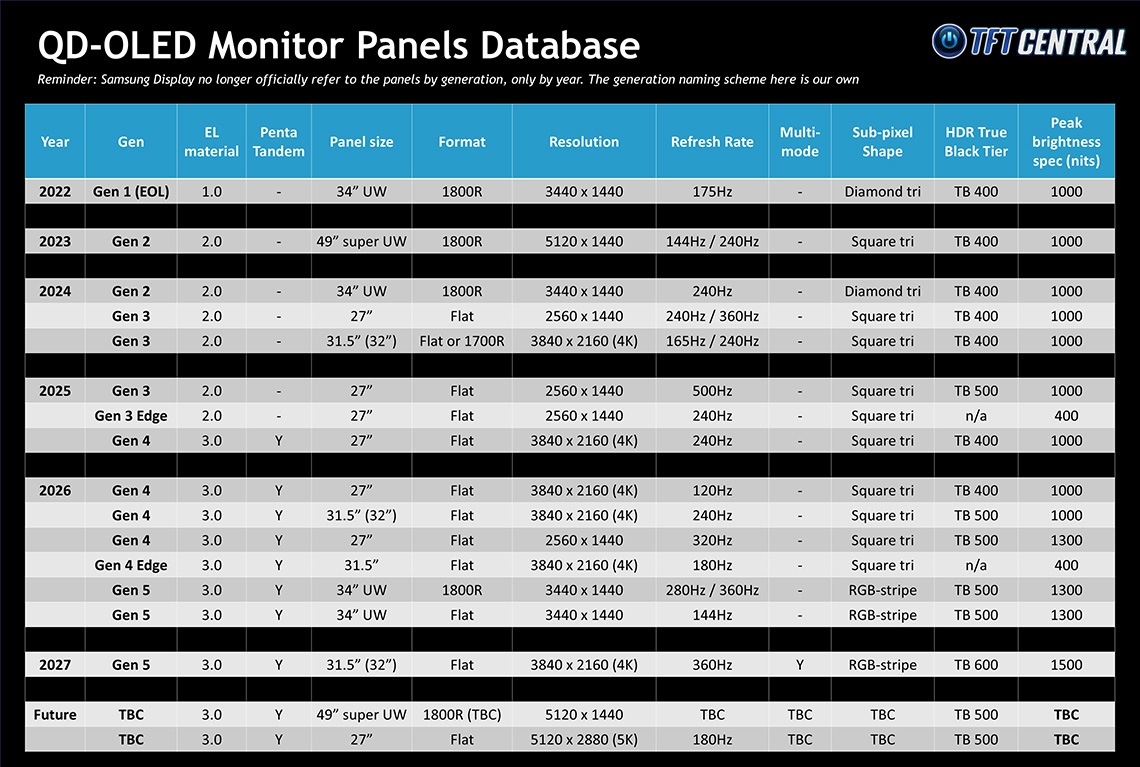
Please note that the generation naming scheme has been dropped by Samsung Display as of 2025 and so the generational naming scheme is our own. You’ll also see various display manufacturers follow suit to make it easier to distinguish the changes and improvements between panels and models
QD-OLED Monitor Panel Technologies Infographic
Over the years the technologies and features of these panels have changed as generations have progressed. You can find a lot more info about the different generations and their features and benefits in our latest QD-OLED 2026 video here. Here’s a summary of the technologies and changes that have been made over the years:
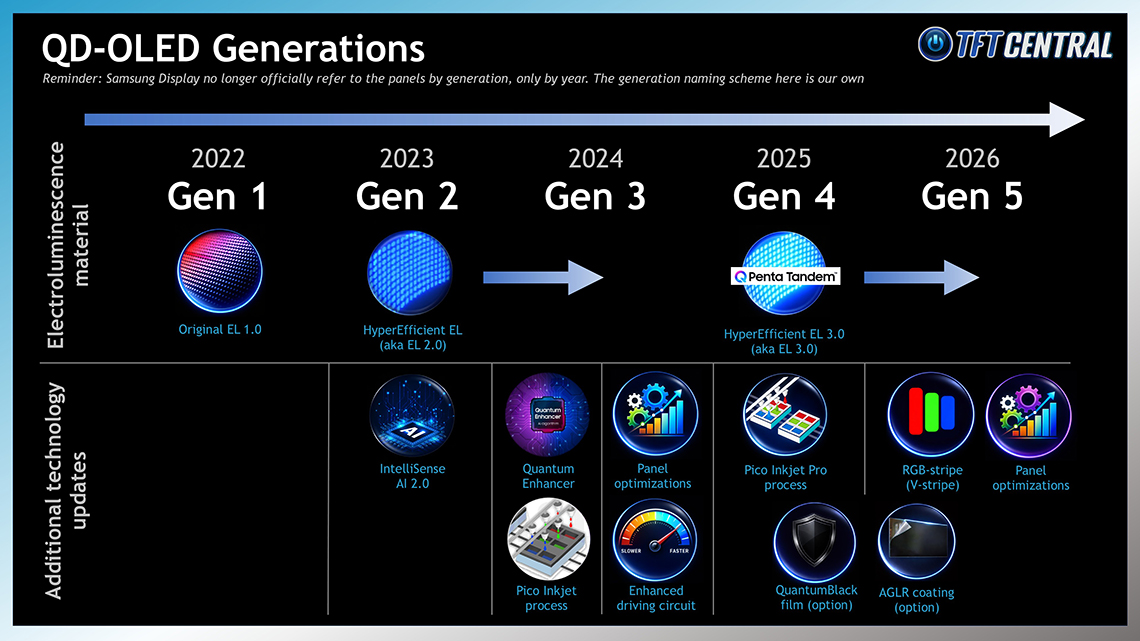
Please note that the generation naming scheme has been dropped by Samsung Display as of 2025 and so the generational naming scheme is our own. You’ll also see various display manufacturers follow suit to make it easier to distinguish the changes and improvements between panels and models
FAQ
This display manufacturer says their screen is a different generation to what you have listed?
One of the most important things to note here is that we are referring to the generations of QD-OLED panels produced by Samsung Display. This is Samsung Display, the panel manufacturer, as opposed to Samsung Electronics the TV/monitor manufacturer. Samsung Display produce ALL the QD-OLED technology monitor panels, and those are used widely across the monitor market by loads of different display manufacturers like MSI, Asus, Gigabyte, AOC, Samsung Electronics and others.

You may sometimes see those display manufacturers refer to a generation on their website, and this doesn’t always line up with the generations of panels we’ve listed here. This can get really confusing if this happens, but sometimes those display manufacturers are referring to their monitor generations, not the generation of the panel they’re using. For instance you may see a display manufacturer release different monitors using the exact same panel in consecutive years, labelling them as different generations of their monitors, despite the fact that the underlying panel they’re using is the same and therefore from the same generation.
What is Penta Tandem QD-OLED?
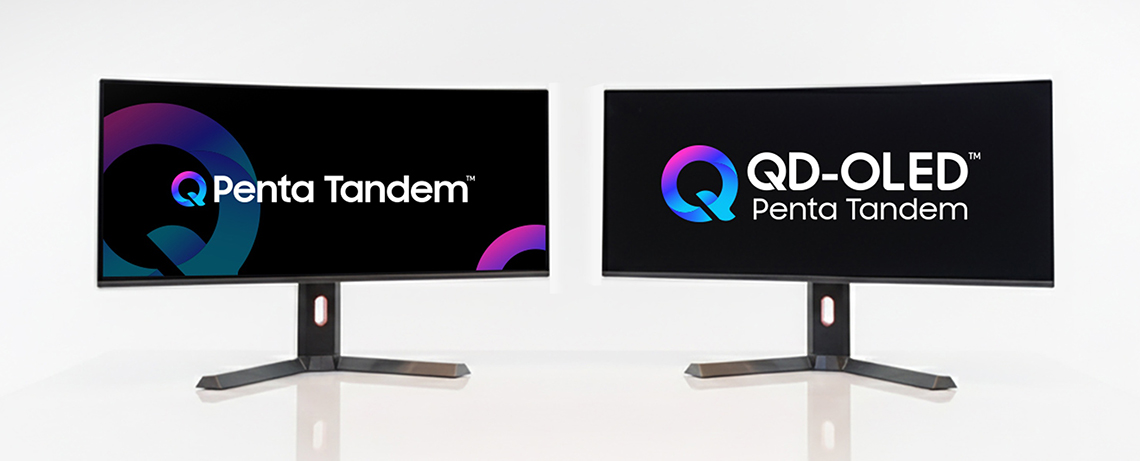
Penta Tandem QD-OLED is a branding that Samsung Display introduced in early 2026 to represent all their panels which use their latest 5-stack (“penta”) structure and their latest EL 3.0 (Electroluminescence layer) material. You will see it listed in our panels infographic above and covers one of their panels from 2025 (27″ 4K), as well as all their new panels for 2026 so far.
What coating options are available and for which generations?
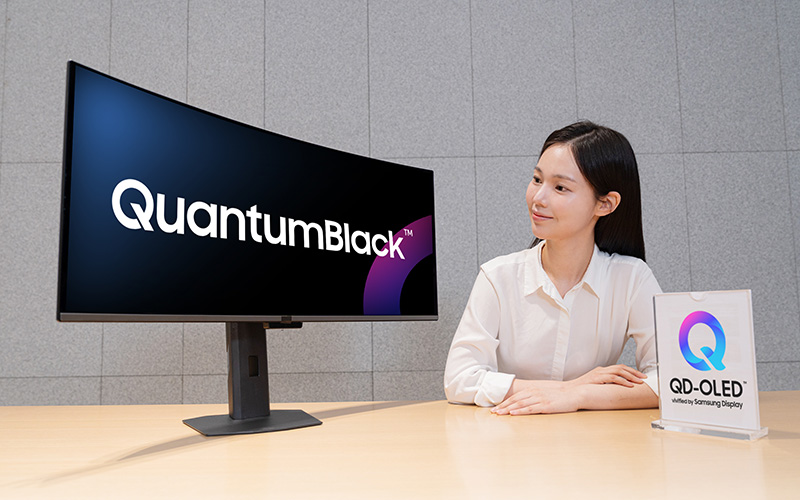
QD-OLED panels have a standard “semi-glossy” finish, which looks glossy visually but also has some added anti-reflective properties. It provides a sharp and clear image and is a great coating option many people love.
As of 2026 Samsung Display have started to offer two optional upgrades for their panels, available for monitor manufacturers to select and adopt if they want, depending on their target market.
- QuantumBlack film – this film improves panel hardness from 2H to 3H, improving scratch resistance by 2.5x. It also helps improve ambient light handling, helping blacks look darker in the presence of ambient lighting and helping to eliminate the purple tint that impacts QD-OLED panels. Samsung Display’s name for this is “QuantumBlack film” (sometimes called “Black AR”) but it is marketed under various brand names by monitor manufacturers such as “BlackShield Film” (Asus), “DarkArmor film” (MSI) and “ObsidianShield” (Gigabyte). This is widely adopted across modern Gen 4 and Gen 5 panels
- AGLR coating – Samsung Display also offer an anti-glare low reflection (AGLR) coating option for their panels now, applied at the factory and suitable for displays where reflection and glare handling is especially important. It is commonly adopted for professional range monitors.
Note that in the past Samsung Electronics (the monitor manufacturer) also added their own matte AG coating to some earlier QD-OLED monitors, on top of the standard semi-glossy finish. This new option is instead applied by the panel manufacturer Samsung Display at source.
Are all the 34″ ultrawide QD-OLED panels Gen 1?

No. There’s actually been three different generations of their 34″ ultrawide QD-OLED panel so far. The first Gen 1 panel was produced in 2022 and offers a 175Hz max refresh rate, being used in a wide range of monitors launched in the early days of OLED monitors (e.g. the Dell Alienware AW3423DW was the first to market).
In 2024 Samsung Display updated the 34″ panel to offer a higher 240Hz refresh rate, but also importantly this was part of their 2nd Generation. This included an updated EL 2.0 material and other features that should help improve longevity and make the panel more robust. The sub-pixel shape remained the same though which often causes confusion with the original Gen 1 panel.
In 2026 they introduced their third iteration of this panel which we have labelled as a Gen 5 panel, offering an increased 360Hz refresh rate, a shift to a true RGB-stripe sub-pixel layout and other enhancements. You can find out loads more about the changes in technologies in our video here.

Are 5K2K resolution QD-OLED panels being produced?
Nothing has been announced or mentioned at this time from Samsung Display. We know LG.Display are producing a range of ultrawide panels in various sizes with this 5120 x 2160 resolution, so hopefully in time we will see Samsung Display offer something from their QD-OLED technology too. At the moment they only produce 34″ ultrawide and 49″ super ultrawide panels of this technology, so it remains to be seen whether they explore any additional ultrawide sizes like 38″, 39″ or 45″ for instance.
Our best estimate for a higher resolution ultrawide QD-OLED panel would be a 34″ panel at some point, as they’ve already proved they can produce panels with the required pixel density (~163 PPI) and beyond. There is no firm information at this stage, but we would be surprised to see any other ultrawide sizes explored at this time.
When are higher pixel density 5K panels coming?

We know that Samsung Display have an upcoming 27” 5K resolution (5120 x 2880) panel planned for the future with a super high ~220 PPI pixel density and a 180Hz refresh rate. This will be using the company’s latest EL 3.0 material which offers improvements in brightness and efficiency.
The prototype panel was on show at Computex 2025 next to the existing 27” 4K panel, and while that already has a very sharp and detailed image, the 5K panel does offer something even better. It looked crisper and more true to life, while also being visibly brighter thanks to the newer gen panel and enhanced brightness capabilities. This panel will fit well with MacOS thanks to its 5K resolution and retina-ready pixel density.
Despite some initial reports at CES 2025 around timelines, Samsung Display told us that it’s only in development stage at the moment and there are currently no firm timescales at all. It was not part of their CES or Computex 2026 exhibitions, and we understand they are pending demand from monitor manufacturers at this time. It’s likely to be reserved for professional grade monitors we expect at this time, as and when it is adopted.
What about other panel sizes?

What about other panel sizes such as 24″ for competitive and esports gaming? Or unusual but popular LCD sizes like 38″ 24:10 aspect ratios? We’ve not had any official information from either Samsung Display or LG.Display about any OLED panels of these sizes at this time, but we have fed back to various display manufacturers where we see demand and potential market gaps, and we know they have in turn been discussing these requirements with the panel manufacturers. Hopefully we will see further variety in the future, and a lot has changed in the few years OLED monitors have been around already.
We may earn a commission if you purchase from our affiliate links in this article- TFTCentral is a participant in the Amazon Services LLC Associates Programme, an affiliate advertising programme designed to provide a means for sites to earn advertising fees by advertising and linking to Amazon.com, Amazon.co.uk, Amazon.de, Amazon.ca and other Amazon stores worldwide. We also participate in a similar scheme for Overclockers.co.uk, Newegg, Bestbuy , B&H and some manufacturers.