
OLED RGB-stripe Panels Explained – Should You Wait?
Originally published 10 July 2026, last updated 7 August 2026
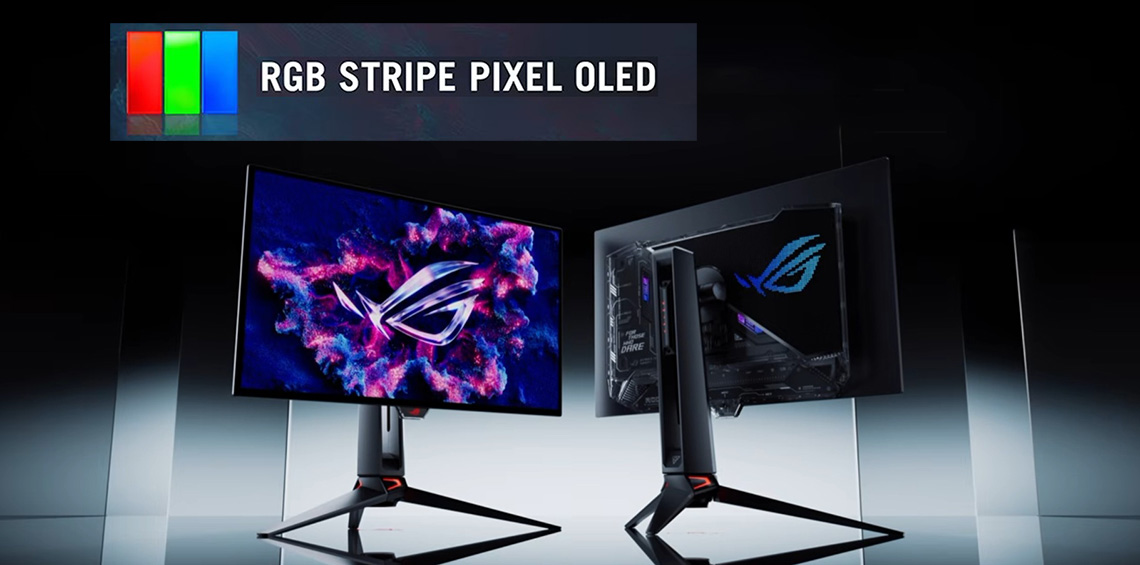
Introduction
With all the OLED development and news that’s going on at the moment it’s sometimes difficult to keep track of what’s what. There’s been a concerted push by many manufacturers to offer new OLED monitors which have an RGB-stripe sub-pixel layout and you will probably have seen this talked about.
However, it might not be clear whether you want this, whether it’s worth waiting for, or which monitors are even available or coming soon which offer panels that have it. In this article we will explore this topic in more detail, to help you understand what is available now, what’s coming soon, and help you decide whether you want to wait or not.

The purpose of RGB-stripe OLED panels
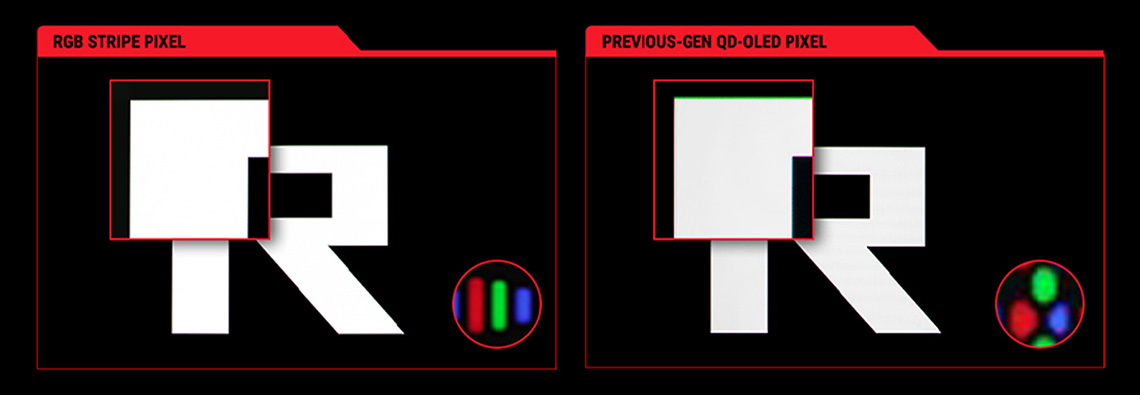
Put simply, RGB-stripe pixel layouts aim to improve text clarity and image sharpness on OLED panels. They help eliminate problems with text fringing and other artefacts that have impacted earlier OLED monitor panels since they were first introduced in 2022. Until now the OLED monitor panels have used alternative / unusual sub-pixel arrangements and shapes, which are not optimized for Windows systems, and that’s what has caused these issues.
In some cases that makes the OLED panels poorly suited to general and office uses and text work, or can sometimes causes eye strain or other viewing problems for users. Because Windows expects to see a simple red/green/blue (RGB) stripe layout, with the sub-pixels arranged in columns, any panel structured differently to this can causing image rendering challenges.
Both Samsung Display and LG Display, the two primary manufacturers of OLED monitor panels are developing and launching RGB-stripe panels at the moment and their two competing panel technologies, QD-OLED and WOLED, are doing this to tackle different things.
QD-OLED monitor panels
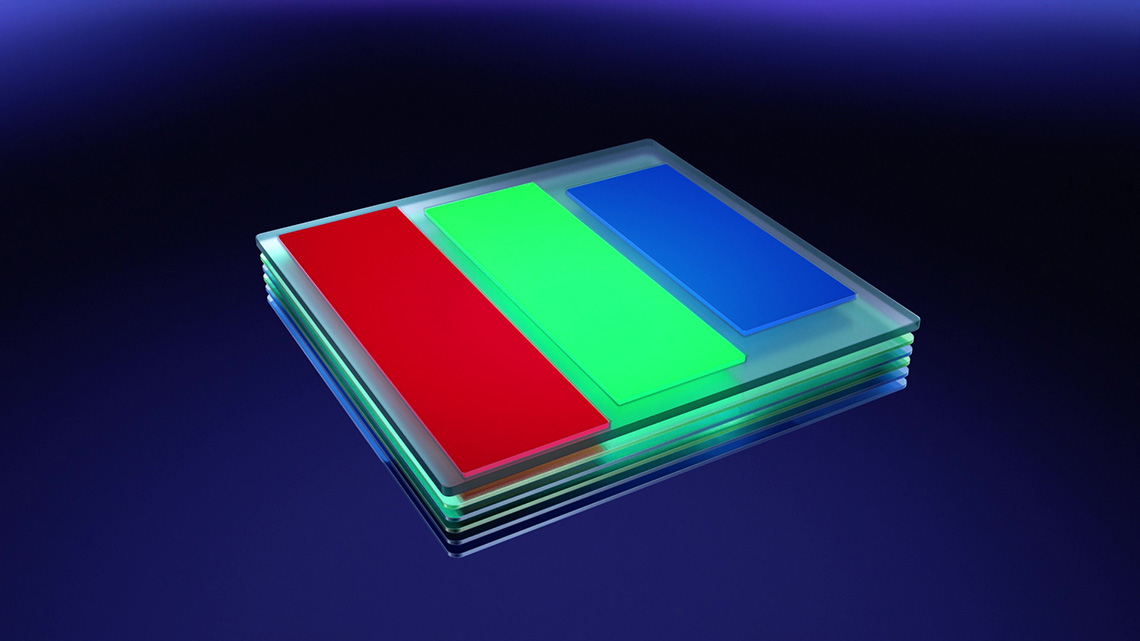
In the QD-OLED panel space Samsung Display’s panels have always had only red, blue and green sub-pixels anyway, but they’ve previously been arranged in a triangular layout which leads to some text clarity problems on their panels. You can see the layout in the graphic below showing macro photos of different panel sizes and generations.

Samsung Display did make some improvements to the shape of the RGB sub-pixels over the years, moving from a diamond shape to a squarer share, which helped improve things a bit. Text clarity issues have also been largely eliminated by increasing the pixel density on some modern panels too. For instance the latest 27″ 4K resolution panels look excellent for text clarity, despite the unexpected and unusual triangular layout thanks to the high 166 PPI pixel density. On the lower density panels, the triangular layout remains a challenge.
Known QD-OLED panels with RGB-stripe
34″ ultrawide – available now
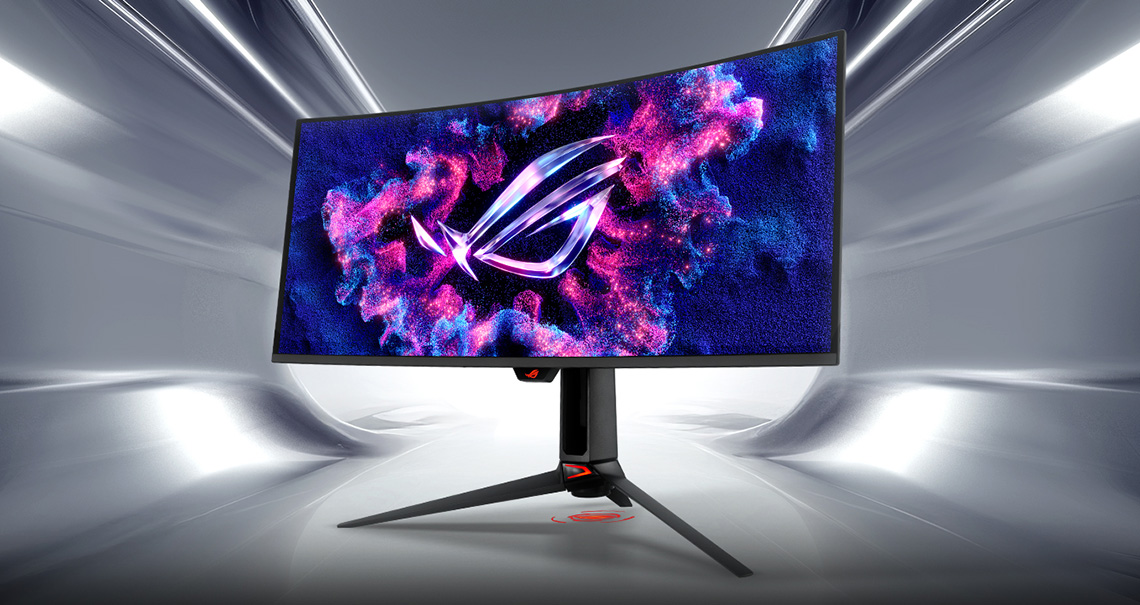
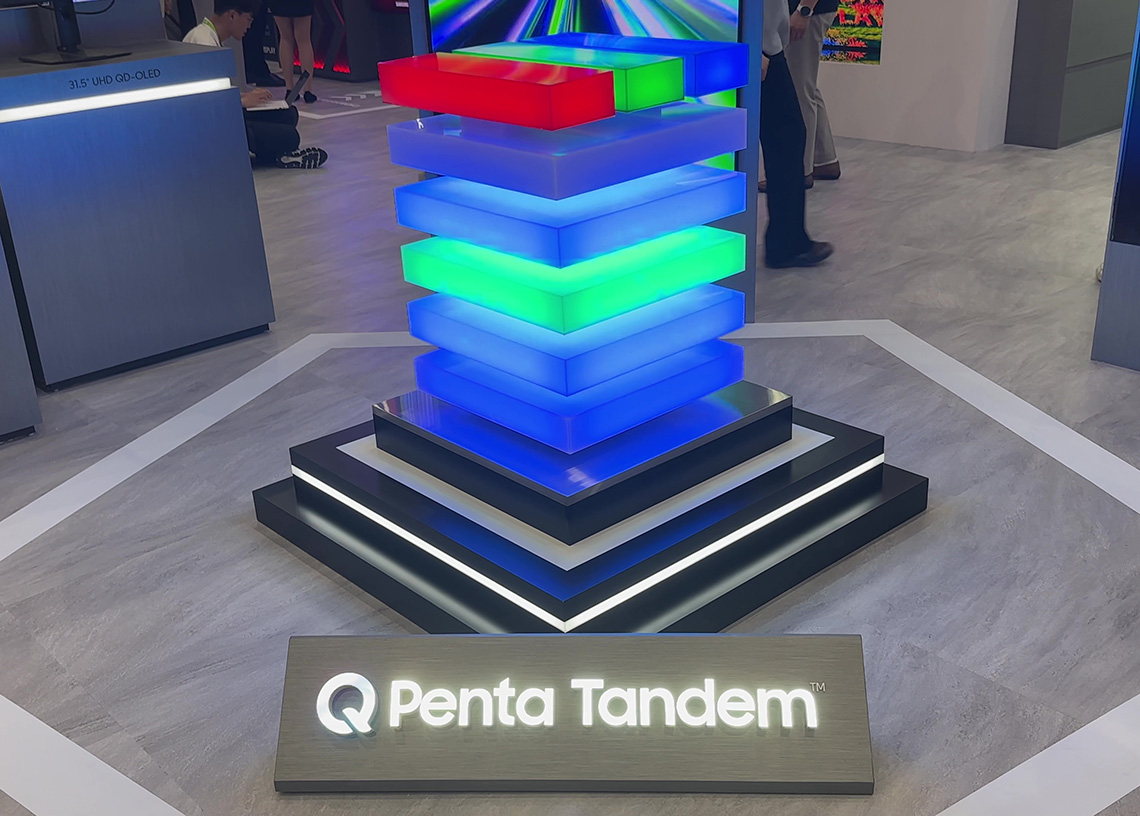
The only modern OLED monitor panel actually available right now at the time of writing is the 34″ ultrawide QD-OLED panel from Samsung Display, which is part of their Penta Tandem QD-OLED line-up, and commonly marketed as “5th Gen”. Monitors using these panels should hopefully be promoted as offering an RGB-stripe panel which makes things simple if you’re looking for one, but if it’s not clear then these panels have either a 280Hz or 360Hz refresh rate. Anything lower is likely to be an older Gen panel, and these 280Hz/360Hz refresh rates are only possible from the latest Penta Tandem panel, with the RGB-stripe layout. That’s a giveaway.
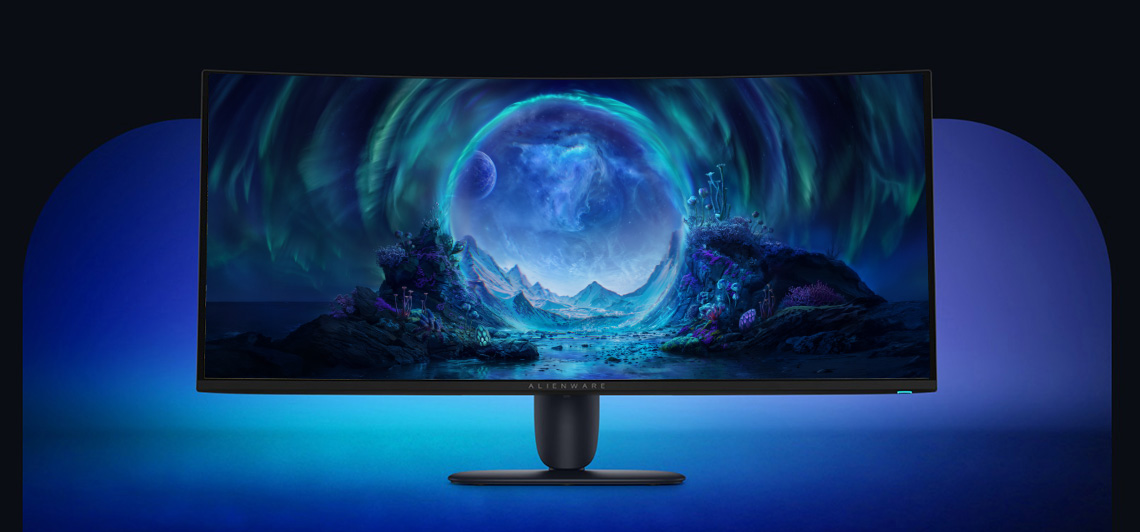
You will find many models already released and announced using this 34″ panel including excellent models from Asus, MSI and Dell that we’ve already reviewed.
| Specs | |
| Panel size and format | 34″ ultrawide, 1800R curvature |
| Resolution | 3440 x 1440 |
| Native refresh rate | 280Hz or 360Hz |
| Peak brightness spec (1.5% APL) | 1300 nits |
| SDR brightness / 100% APL | 300 nits |
| DisplayHDR certification tier | True Black 500 |
| Panel mass production | Now |
| Monitor availability ETA | Now |
Other upcoming QD-OLED panels with RGB-stripe
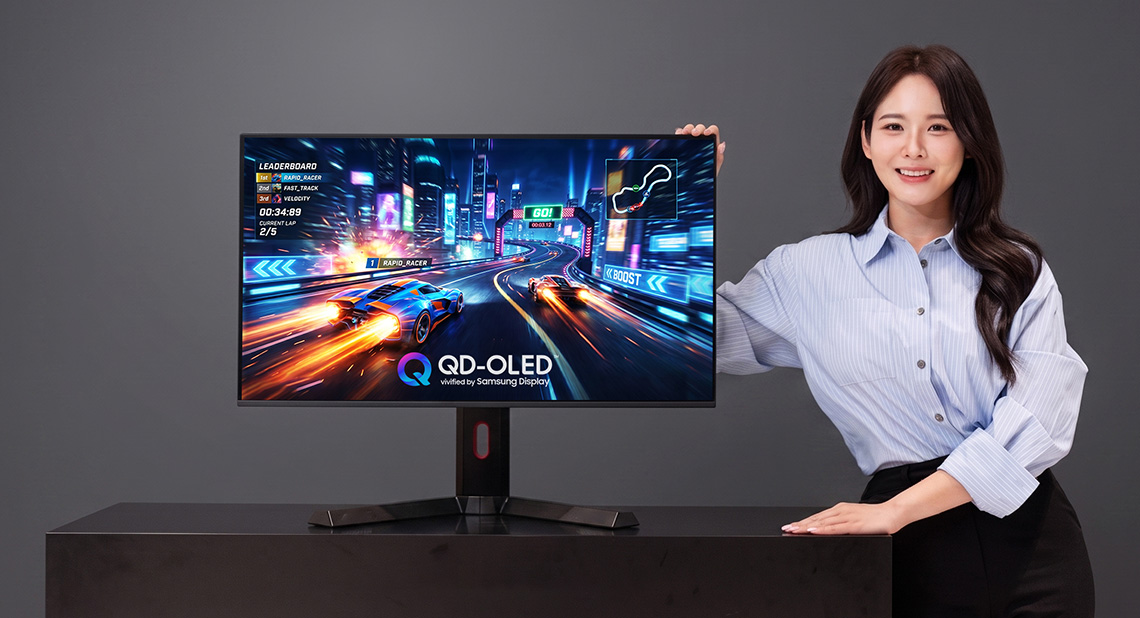
Other panels will definitely follow from Samsung Display, but none are yet in mass production or adopted by monitor manufacturers in available models. We know that an upcoming 32″ 4K 360Hz QD-OLED panel will offer RGB-stripe but that won’t be available until 2027.

So far only MSI have announced a monitor that will use this panel which looks really impressive.
| Specs | |
| Panel size and format | 31.5″, flat |
| Resolution | 3840 x 2160 “4K” |
| Native refresh rate | 360Hz |
| Peak brightness spec (1.5% APL) | 1500 nits |
| SDR brightness / 100% APL | 350 nits |
| DisplayHDR certification tier | True Black 600 |
| Panel mass production | TBC, likely Q4 2026 |
| Monitor availability ETA | TBC, likely Q1 2027 |
There are bound to be other QD-OLED panels, and we expect RGB-stripe to be a continued focus from Samsung Display moving forward. Apart from changes to production process, there’s not really any drawbacks for them shifting to the new layout. There shouldn’t be any impact to brightness, refresh rates or anything else as they already only used the 3 sub-pixels, they just need to change the layout design.
Now that they’ve produced a 34″ panel with 110 PPI, there’s no real reason why they can’t do the same with their 27″ and 49″ super ultrawide panels which have the same pixel density as well – but so far no panels have been confirmed, and no monitors announced in those sizes. More info and details when more panels become available.
QD-OLED panels where it doesn’t really matter
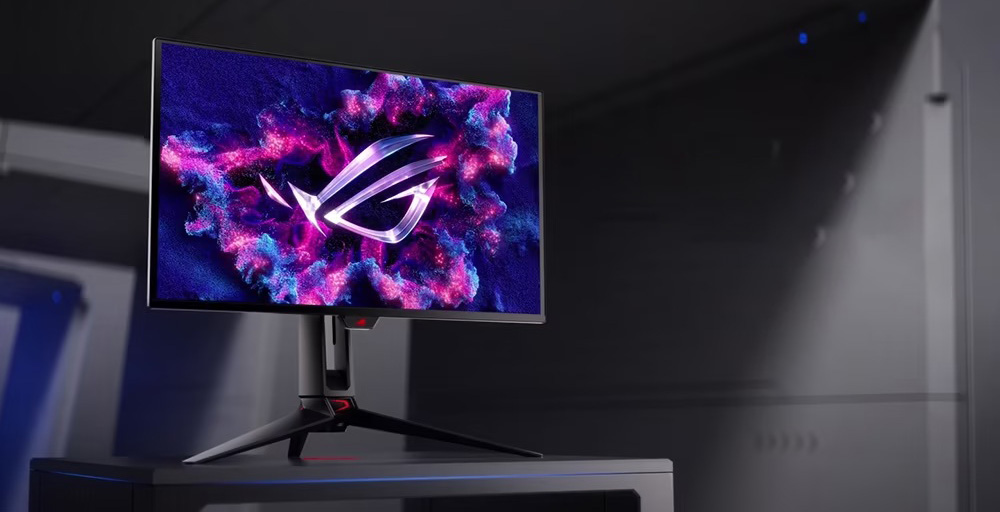
In the QD-OLED monitor space we don’t think this is a problem for the vast majority of users with the existing 32″ 4K resolution panels, and certainly the 27″ 4K panels that use the older triangular layouts. At those kind of pixel densities (140 PPI and 166 PPI respectively) the improved density masks the fringing and we don’t think it’s a problem. The text clarity and image sharpness are excellent, especially on the 27″ 4K panel. If you’re particularly sensitive or have had problems in the past, there might be some benefit in waiting for true RGB-stripe versions, but most people shouldn’t find this a problem.
We think the most benefit from an RGB-stripe layout can be had from the lower pixel density panels, with the 34″ being a classic example as it has the joint lowest pixel density of ~110 PPI, and also until now it has used the older triangular layout AND the old diamond shape. That panel really needed the update and it was the first to be launched. We’d love to see further updates for their lower pixel density panels where the most benefit can be realised.
WOLED panels
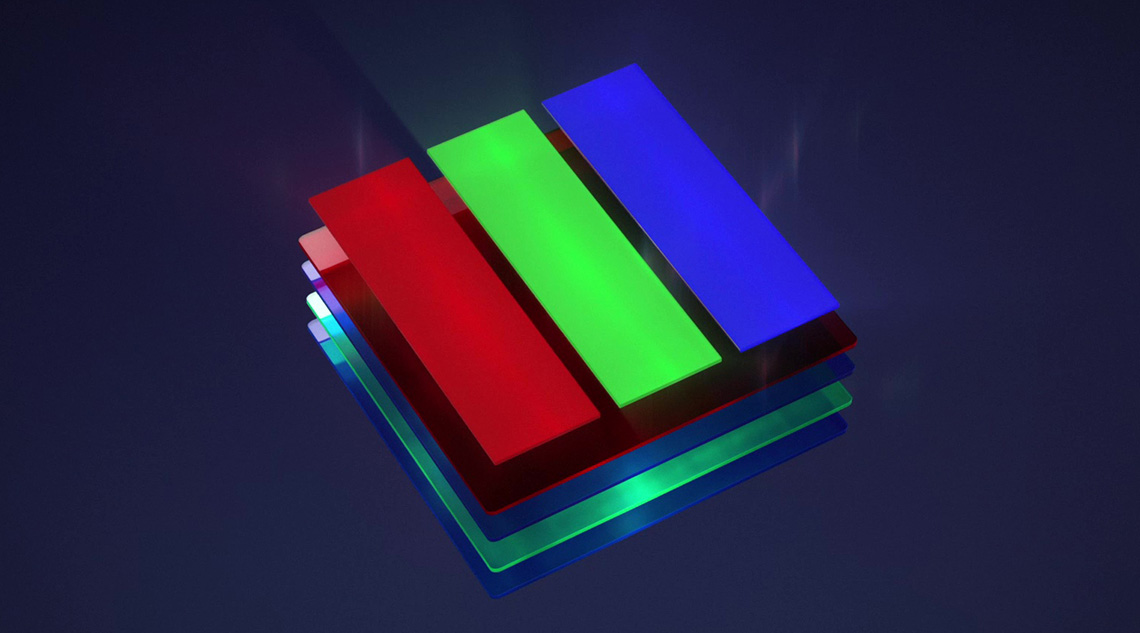
The approach with LG Display’s WOLED panels is a little different. These panels have always had vertically aligned sub-pixels, not triangular in layout like the QD-OLED panels so that part of it is already in place. However, their WOLED panels have always included an additional white sub-pixel alongside red, green and blue; used to boost panel brightness. It’s that added white sub-pixel which causes challenges for Windows systems which expect just a standard RGB layout, leading to text and image clarity issues.
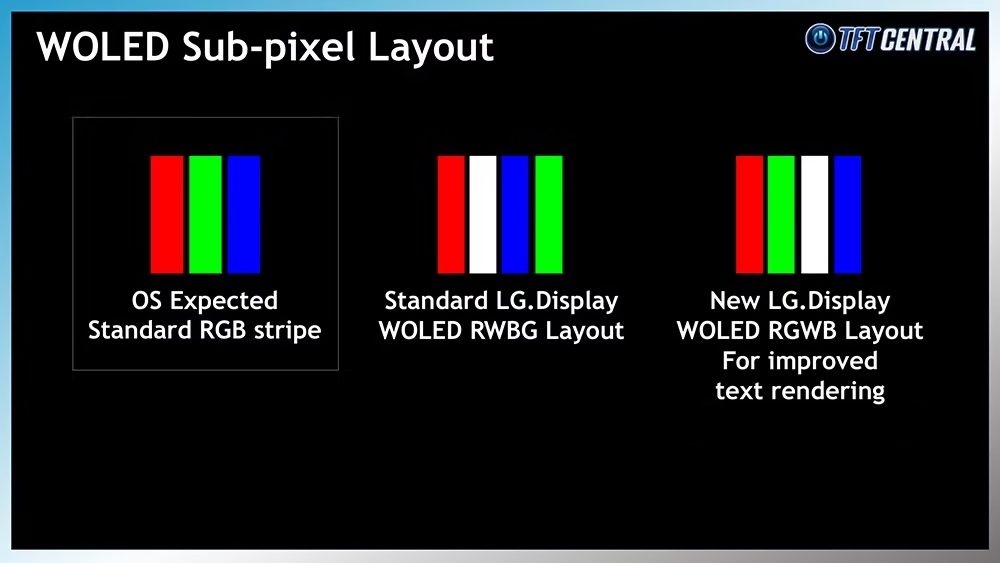
This was further exacerbated on earlier generation WOLED panels where the red, green and blue sub-pixels were also in the wrong order. The layout of the sub-pixels used to actually be red-white-blue-green (RWBG) which was not ideal. Later on from around 2024 onwards LG Display improved that by switching to the correct order, still keeping the white sub-pixel in there, but changing the order to be more optimal. The newer WOLED panels have a red-green-white-blue (RGWB) layout instead which helps improve text clarity a fair bit. Still not perfect because of the extra white sub-pixel, but better.
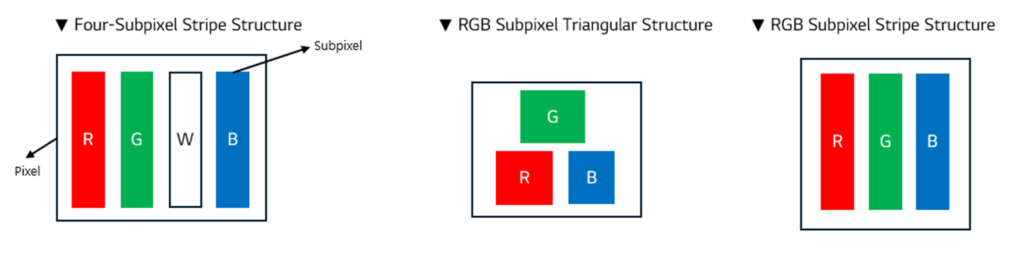
In more recent times LG Display have started to produce panels with a true RGB-stripe layout, removing the white sub-pixel from the panel design which should help improve text clarity, but unfortunately on their panels will come with some trade-offs. The main one being that it will come at the cost of some brightness on their panels, although on the flip side colour volume is improved as a result. Colour brightness in very dark HDR scenes should be improved, in a similar way to QD-OLED panels. Early indications are also that these panels show less visible grey banding, although this is early on so results may vary.
The first monitors using an RGB-stripe WOLED panel are starting to become available to buy now in some regions, and the LG Display WOLED panels we know about are discussed below and many should be coming soon. You should see RGB-stripe specifically promoted for relevant models as it’s a key change / feature.
The trade-offs for RGB-stripe WOLED panels
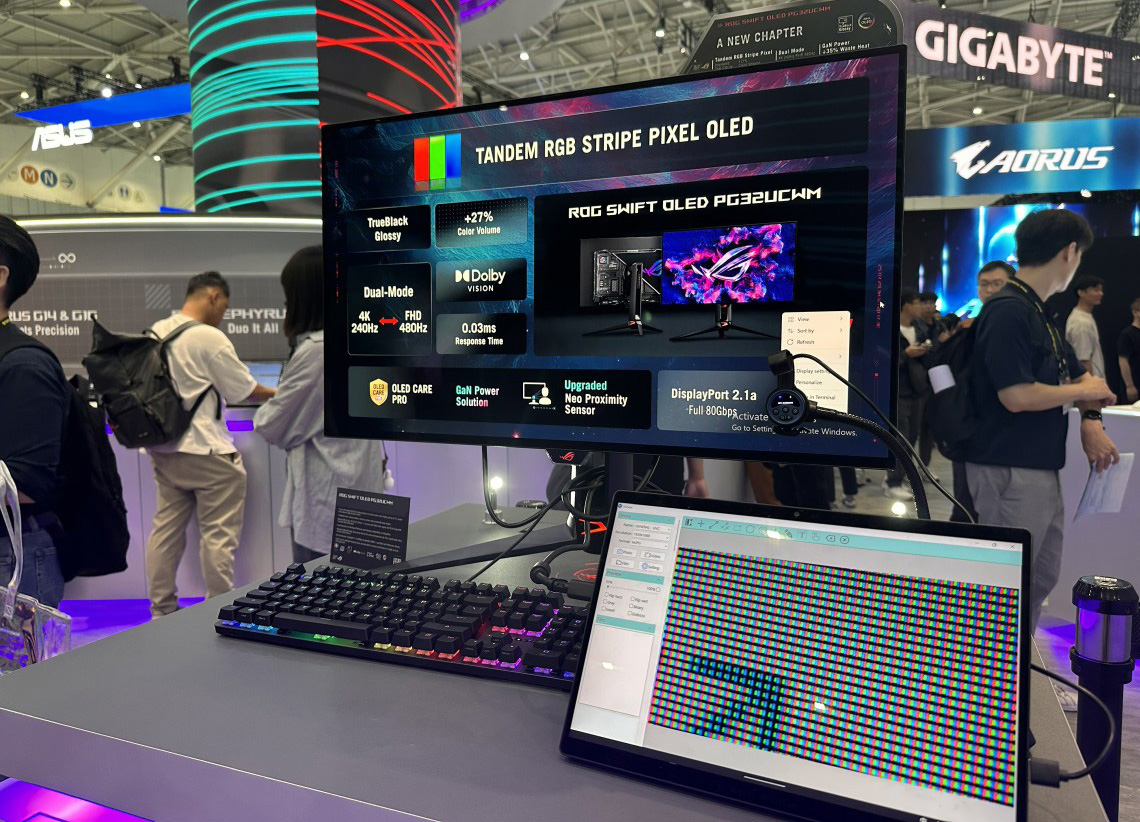
Removing the white sub-pixel from the panel design on WOLED panels isn’t without its trade-offs unfortunately. Most notably it will cause a reduction in brightness capabilities, which is obviously the opposite direction you’d really want OLED panels to be taking.
For some of their panels discussed below we’re seeing a step back here in SDR brightness from 335 nits (as featured on the latest 4th Gen Tandem WOLED panels with the white sub-pixel still used), to 250 nits for instance. HDR brightness and certification tiers are also taking a step backwards in some cases, with some of the RGB-stripe panels reaching the True Black 400 tier instead of the now-widely-achieved True Black 500 tier from this panel technology. There is also higher power consumption and some questions around panel longevity and lifespan with the change.
These are some of the sacrifices you make when removing the white sub-pixel from the design, long used by LG Display for enhancing brightness so this decision won’t have been simple.
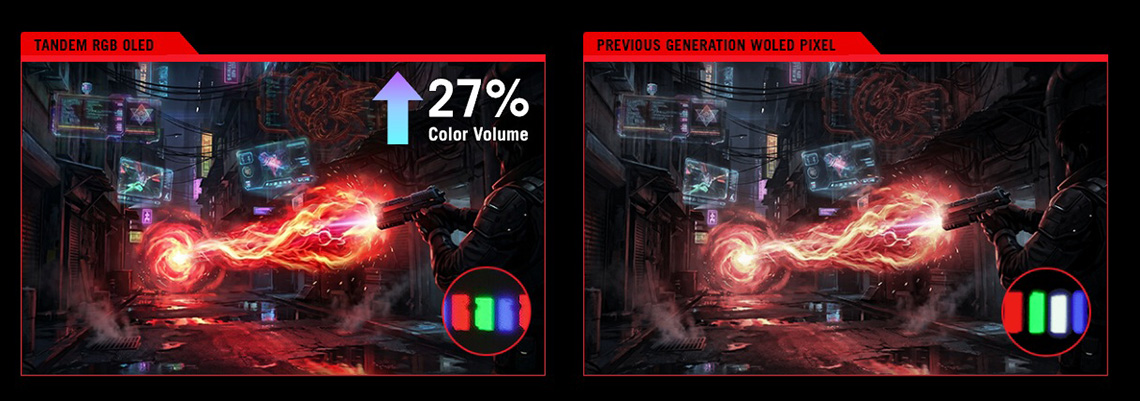
On the other hand, with the white sub-pixel removed from the design the colour volume in HDR will improve, with Asus quoting a 27% improvement in fact. We’ve explored this topic at length in the past, but the white sub-pixel can boost brightness, but can cause some washout of colours in the brightest scenes. This causes small highlights in dark scenes to look less vivid and saturated.
LG Display tell us that for example the 32″ 4K panel discussed below can reach 1000 nits colour luminance peak (1.5%) on the RGB-stripe version, but only 600 nits colour luminance on the RGWB version, despite being able to then push on to 1500 nits total peak luminance with the white sub-pixel boost used.
Known WOLED panels with RGB stripe
27″ 4K – available now in some regions
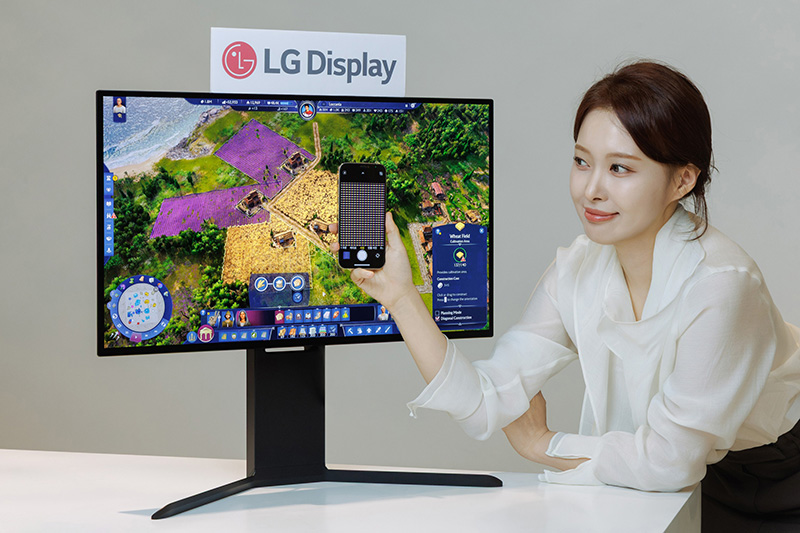
This was LG Display’s first 27″ 4K resolution WOLED panel of any type in fact, and it will offer an RGB-stripe layout (without the white sub-pixel). This panel was announced in late December 2025 and we’ve seen it adopted only by Asus and ASRock so far for a couple of monitors. The Asus model has started to appear in some regions now.
As there hasn’t been an RGWB version of this panel before we can’t really say what sacrifice has been made to brightness, other than to compare it with other modern WOLED panels. It’s going to have a 1000 nits peak brightness spec, 250 nits for SDR and meet the DisplayHDR True Black 400 certification tier.
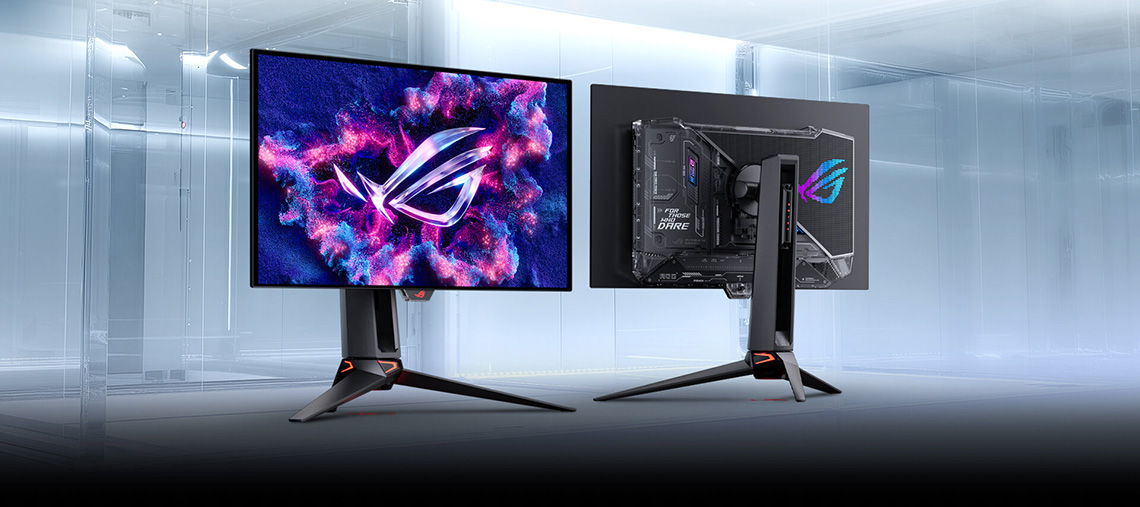
We know from an LG Display May 2026 press release that the panel is now in mass production and we’re expecting to see these monitors appear on the market during Q3. We’ll of course bring you reviews as soon as samples are available.
| Specs | |
| Panel size and format | 26.5″, flat |
| Resolution | 3840 x 2160 “4K” |
| Native refresh rate | 240Hz |
| Peak brightness spec (1.5% APL) | 1000 nits |
| SDR brightness / 100% APL | 250 nits |
| DisplayHDR certification tier | True Black 400 |
| Panel mass production | Now |
| Monitor availability ETA | Early Q3 |
27″ 5K – prototype panel showcased
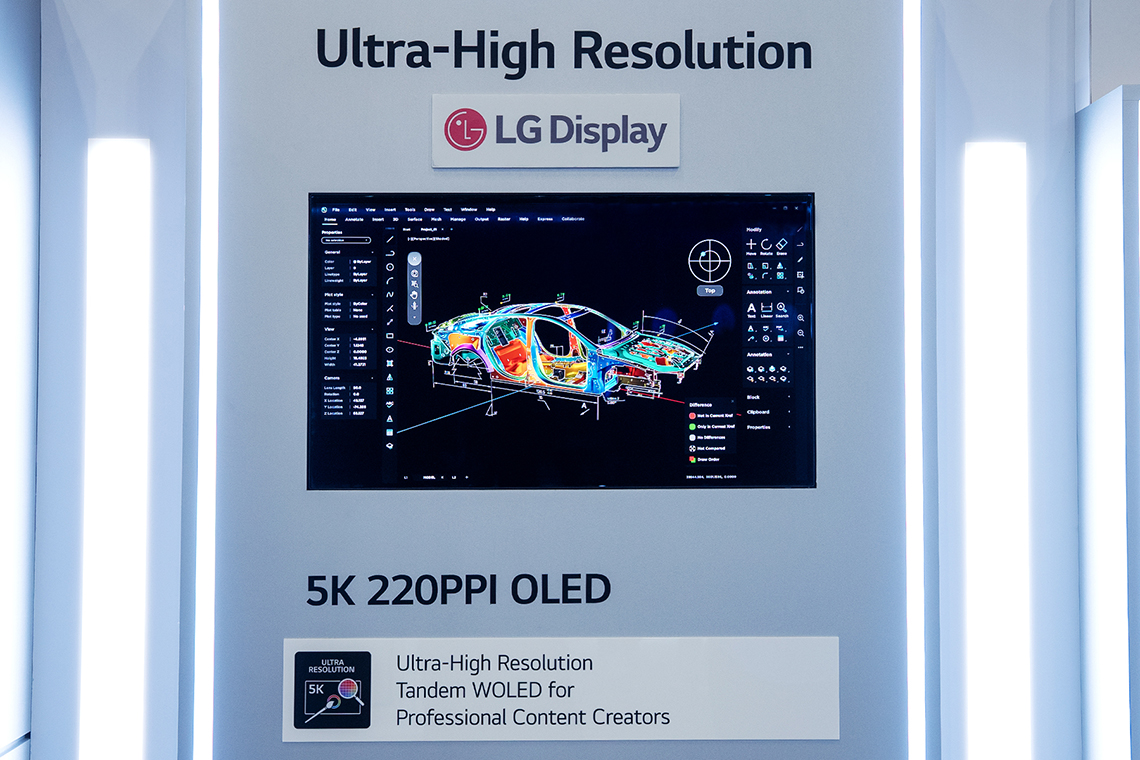
LG Display announced in May 2026 that they had successfully developed a prototype 5K (5120 x 2880) resolution 27″ Tandem WOLED panel as well, also featuring an RGB-stripe layout. This will offer an even higher pixel density ~218 PPI for “Retina class” resolution. It’s only in prototype form at the moment and no monitors have been announced yet which use this panel.
| Specs | |
| Panel size and format | 26.5″ flat |
| Resolution | 5120 x 2880 “5K” |
| Native refresh rate | 120Hz |
| Peak brightness spec (1.5% APL) | TBC |
| SDR brightness / 100% APL | 250 nits |
| DisplayHDR certification tier | True Black 400 |
| Panel mass production | TBC, prototype only |
| Monitor availability ETA | None announced yet |
32″ 4K – now available in some regions
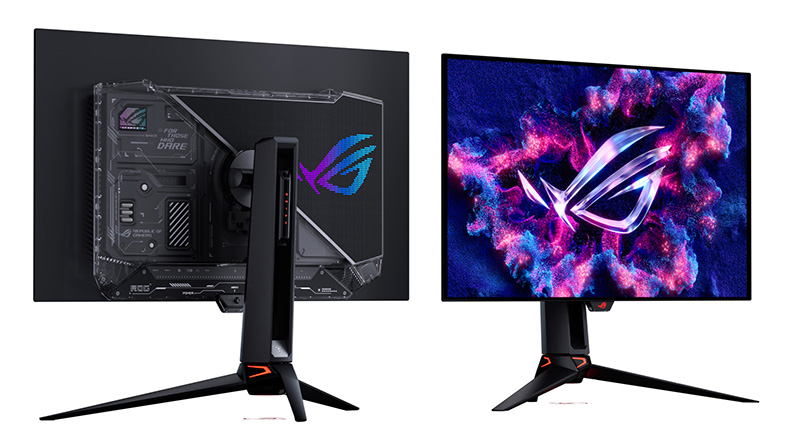
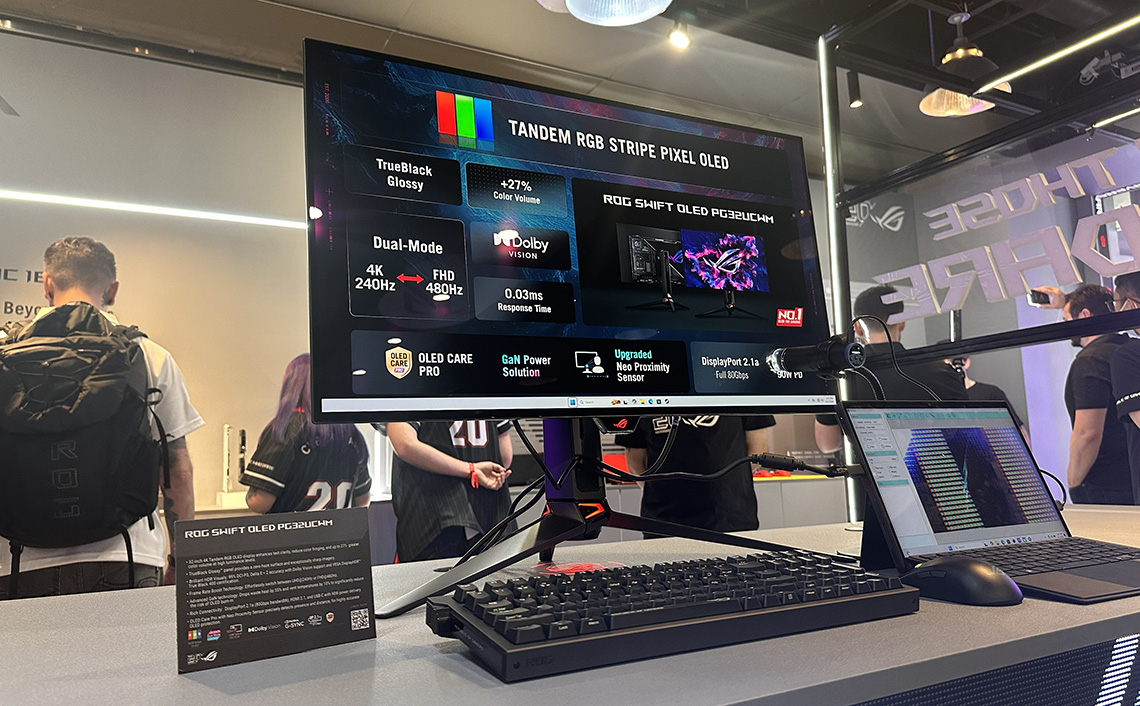
LG Display are only just launching their latest Tandem WOLED panel technology in to the 32″ segment, and they will now be offering two versions of their latest panel, one has the traditional RGWB layout (with white sub-pixel) but the other has an RGB-stripe layout. Only the ROG Swift PG32UCWM from Asus (now reviewed in full) has been announced so far using that RGB-stripe panel and it is due to be released in early Q3, with the actual panel now in mass production by LG Display.
| Brightness spec comparison for 32″ WOLED panel | RGWB panel | RGB-stripe panel |
| Peak brightness (1.5% APL) | 1500 nits | 1000 nits |
| SDR brightness / 100% APL | 335 nits | 250 nits |
| DisplayHDR certification tier | True Black 500 | True Black 400 |
The brightness specs are again lower for this panel, and we have now tested both the RGWB panel or the RGB-stripe panel variants. You can find reviews of the Asus ROG Strix XG32UQWMS here (RGWB version) and the Asus ROG Swift PG32UCWM here (RGB stripe version).
| Specs | |
| Panel size and format | 31.5″, flat |
| Resolution | 3840 x 2160 “4K” |
| Native refresh rate | 240Hz |
| Peak brightness spec (1.5% APL) | 1000 nits |
| SDR brightness / 100% APL | 250 nits |
| DisplayHDR certification tier | True Black 400 |
| Panel mass production | Now |
| Monitor availability ETA | Early Q3 |
39″ ultrawide – available now in some regions
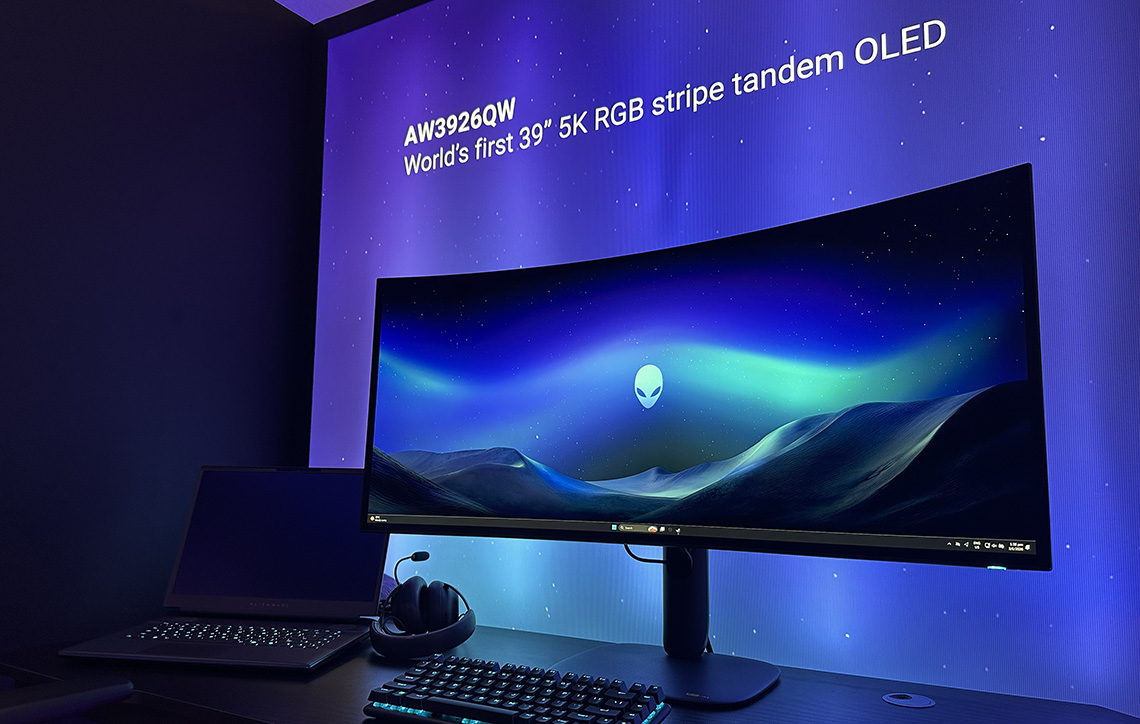
LG Display are also now producing an RGB-stripe version of their 39″ ultrawide Tandem WOLED panel, with a 5120 x 2160 “5K2K” resolution. Earlier this year we saw the standard RGWB version of this new panel adopted by LG Electronics for the UltraGear evo 39GX950B which we have reviewed, but at Computex 2026 Dell announced their Alienware AW3926QW which will use a similar, but different RGB-stripe version of the panel.
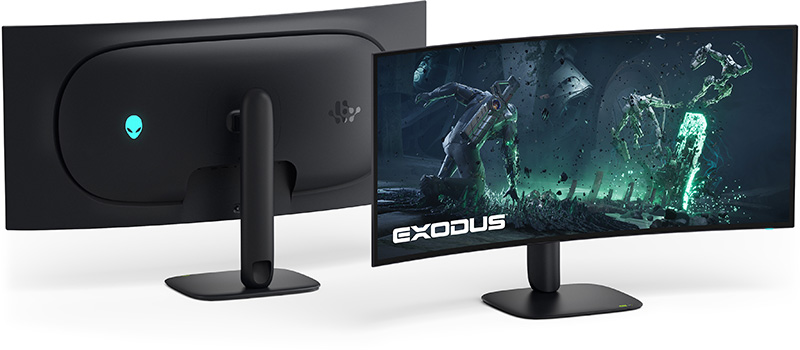
Some sacrifices have been made to panel brightness because of the removal of the white sub-pixel although not as drastic as we might have expected, as Dell seem to have pushed brightness higher here, probably thanks to the larger screen size where its easier to dissipate heat and control thermals.
The AW3926QW will offer a 1300 nits peak brightness spec (1.5% APL), 300 nits for SDR and meets the VESA DisplayHDR True Black 500 certification tier. Not huge drops compared with the RGWB version of the panel, although we need to wait to test everything ourselves to compare them more closely beyond the specs on paper.
| Brightness spec comparison for 39″ WOLED panel | RGWB panel | RGB-stripe panel |
| Peak brightness (1.5% APL) | 1500 nits | 1300 nits |
| SDR brightness / 100% APL | 335 nits | 300 nits |
| DisplayHDR certification tier | True Black 500 | True Black 500 |
This panel is in mass production now and the AW3926QW is expected to be released globally in late summer 2026, although it has started to appear in some Asian markets already.
| Specs | |
| Panel size and format | 39″ ultrawide, 1500R curvature |
| Resolution | 5120 x 2160 (5K2K) |
| Native refresh rate | 165Hz |
| Peak brightness spec (1.5% APL) | 1300 nits |
| SDR brightness / 100% APL | 300 nits |
| DisplayHDR certification tier | True Black 500 |
| Panel mass production | Now |
| Monitor availability ETA | Now in Asia “Late summer” in other regions |
WOLED panels where it does and doesn’t matter
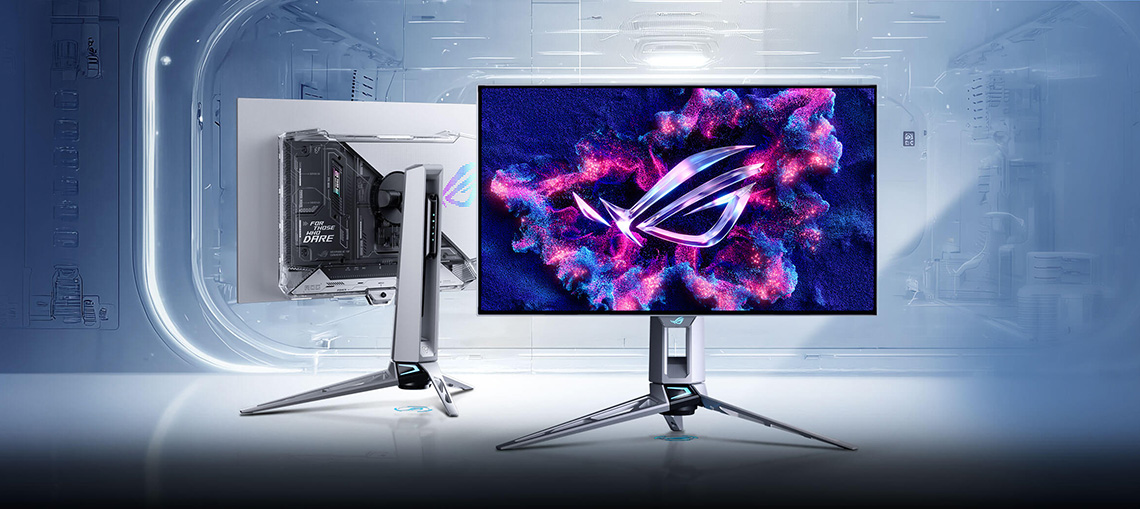
Other panels will follow from LG Display we expect but where we really think this could offer the most improvements to text clarity is again with the lower pixel density panels. That’s the same situation as with QD-OLED panels, and we’d really like to see refreshes of their various 27″ 1440p panels, and perhaps even their existing 34″, 39″ and 45″ 3440 x 1440 resolution panels. The lower the pixel density, the more potential benefit there is by shifting to an RGB-stripe layout. We think there’s less benefit for the higher pixel density panels, for the same reasons as with QD-OLED panels.
Why is it only their higher pixel density panels that are receiving the update so far then?
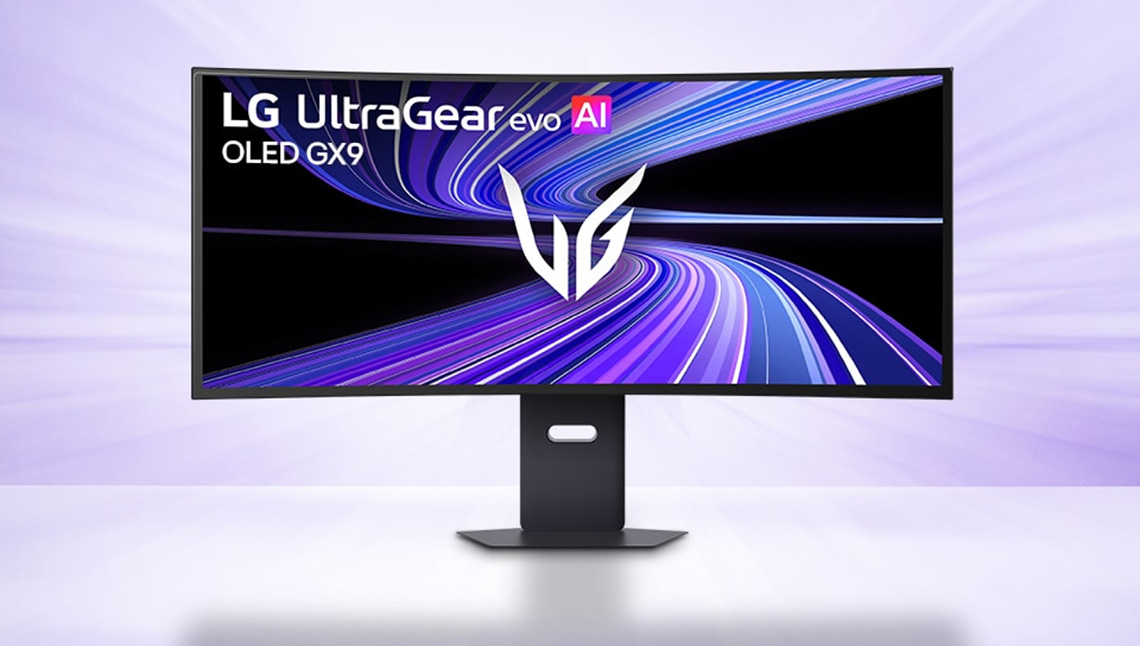
Text clarity and sharpness is already very good on their 32″ 4K and 39″ 5K2K panels thanks to the improved pixel layout they now use (RGWB) and mostly because of the improved pixel densities of ~140 and ~143 PPI respectively. The vast majority of people will find these perfectly fine with no issues we think.
Although not produced yet or with an RGWB layout, at even higher densities like those enabled by 27″ 4K and 5K, text clarity would be even better like we’ve seen in the QD-OLED space, there’s really no need to remove the white subpixel for that reason we don’t think.
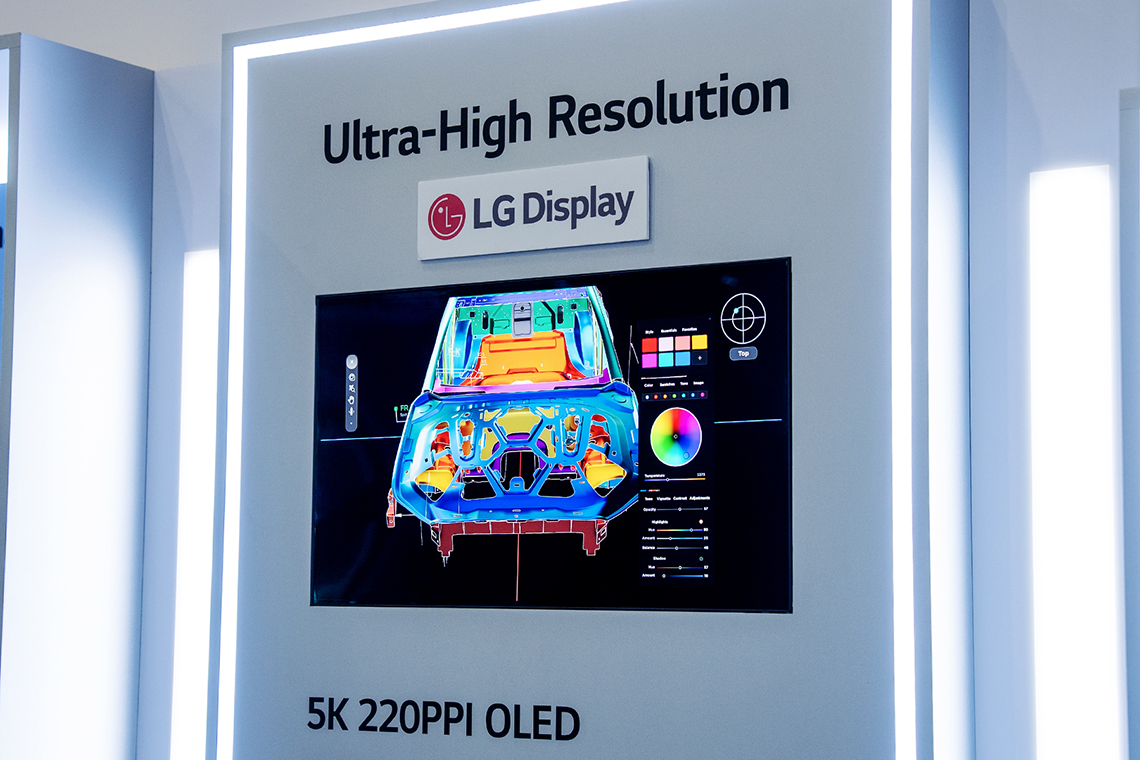
The real underlying reason we expect the white subpixel has been removed from the panel design on these new 27″ 4K and 5K panels is down to pixel density, and ultimately “space”. LG Display have lagged a little behind Samsung Display when it comes to these higher pixel densities, and trying to fit 4 sub-pixels in to the space that usually you’d use 3 sub-pixels is presumably a big challenge. The maximum pixel density we’ve seen from their RGWB layout where the white sub-pixel is still used is 143 PPI, as featured on their latest 39″ ultrawide OLED panel. Getting to ~160 PPI for 27″ 4K and now ~218 PPI for 27″ 5K is a step further, and we suspect this has necessitated the removal of the white sub-pixel, just to make these higher densities possible from a production and process point of view.
That’s fine of course if that’s what was needed, but we don’t think this is purely about enhancing text clarity as some might think. If it was, why not shift to RGB-stripe for the panels and pixel densities where it really would make a difference, like 27″ 1440p, 34″ 3440 x 1440 and so on? That’s where there’s more benefit in the change from a text clarity point of view, not on these super-high density panels. With the shift to RGB stripe layouts, hopefully LG Display will be able to figure out ways to compensate for the brightness drop as well, that’s going to be a new challenge they’ll face when ditching their trusty additional white sub-pixel.
Wrap-up
Hopefully that’s been a useful round-up of the reasons for the shift to RGB-stripe OLED panels. It seems like a no-brainer for QD-OLED panels with no real drawbacks beyond panel production changes, and we expect to see a rapid shift from Samsung Display across their whole panel range. They can update everything to the latest Penta Tandem QD-OLED panel structure and RGB-stripe at the same time hopefully. The most benefit from RGB-stripe layouts can be had from the lower pixel density panels, and it’s great to see they’ve started with their 34″ panel which is already available. Fewer options have been announced formally so far than with WOLED, but we expect roll-out to pick up pace quickly.
LG Display’s WOLED is a little more tricky as there’s trade-offs in brightness when shifting to RGB-stripe. So far it seems like this is being driven by necessity on the most part, in order to make higher pixel density panels possible and production viable. There’s far less benefit in RGB-stripe at the pixel densities it’s being used for so far, we’d really like to see it adopted for the mainstream lower density panels too. It’s great to see options in the WOLED space but we expect for a while there will be a choice offered by display manufacturers, some opting to prioritise the RGB-stripe, some opting to prioritise brightness and use the traditional RGWB panel. Some may even release both options like Asus are with their 32″ 4K Tandem WOLED monitors. It’s not as clear-cut as with QD-OLED because of the trade-offs, but we expect there to be continued focus from display manufacturers which will likely drive further panel development.
We may earn a commission if you purchase from our affiliate links in this article- TFTCentral is a participant in the Amazon Services LLC Associates Programme, an affiliate advertising programme designed to provide a means for sites to earn advertising fees by advertising and linking to Amazon.com, Amazon.co.uk, Amazon.de, Amazon.ca and other Amazon stores worldwide. We also participate in a similar scheme for Overclockers.co.uk, Newegg, Bestbuy , B&H and some manufacturers.
Stay Up To Date
 |  |  |
| Subscribe on YouTube | Follow us on X | Support Us |