Asus Unveil Their ROG Esports OLED Ace Monitor Line-Up at Gamescom 2026
Disclaimer: this article includes sponsored coverage by Asus from Gamescom 2026, but all content, opinions and commentary are our own as always
Introduction
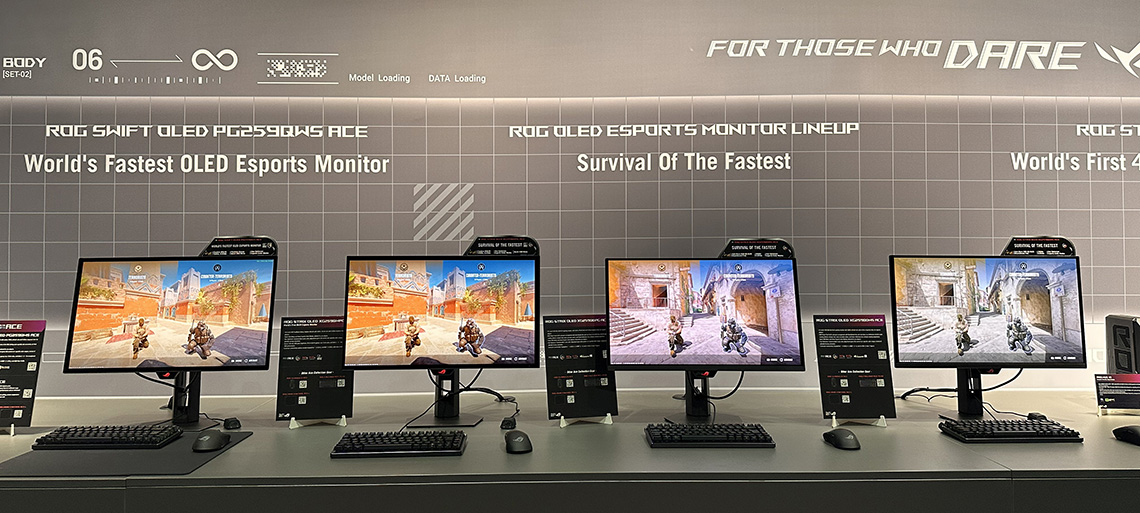
We saw an exciting range of new gaming monitors showcased by Asus at this years Gamescom event in Cologne, Germany, and in this article we’ll take a detailed look at their new range of ROG Esports OLED monitors, which bring a selection of OLED panel options and the latest specs to the competitive and esports gaming market. The new range is tailor-made for this audience, bringing high refresh rates and the amazing picture quality of OLED technology finally to these gamers.
This segment of the market are generally looking for 3 key things from a display, popularised in esports tournaments and competitive gaming environments. 1) a small format screen to minimise eye and head movement and provide a smaller screen area to focus on. Around 24″ is the typical choice. 2) a lower resolution than you might commonly see on larger screens, typically 1080p (1920 x 1080) is popular so you can drive higher frame rates, and 3) the fastest speeds possible, with super-fast response times and the highest refresh rates possible
Video coverage from the Asus Gamescom 2026 event
The current esports monitor market is dominated by older technology
Historically TN Film LCD panels have been the most popular choice for esports gamers over the years as these panels typically offer the fastest response times and highest refresh rates, especially in the smaller 24″ segment. Asus for instance have their own 610Hz TN Film esports monitor that is popular in this segment. However, the downsides of weak viewing angles, washed out colours, lower colour gamut, a generally poor picture quality and non-existent HDR capabilities remain a problem for some users.
While competitive and esports gamers might not care about these things as much in super-competitive situations, that doesn’t mean that they wouldn’t welcome improvements. It also doesn’t mean that people don’t want to use these screens as well for other things sometimes, and so these weaknesses of an ageing LCD technology are something which Asus are looking to address by introducing a new range of dedicated esports OLED displays into their ‘Ace’ line-up.
4 Esports ROG OLED monitors unveiled
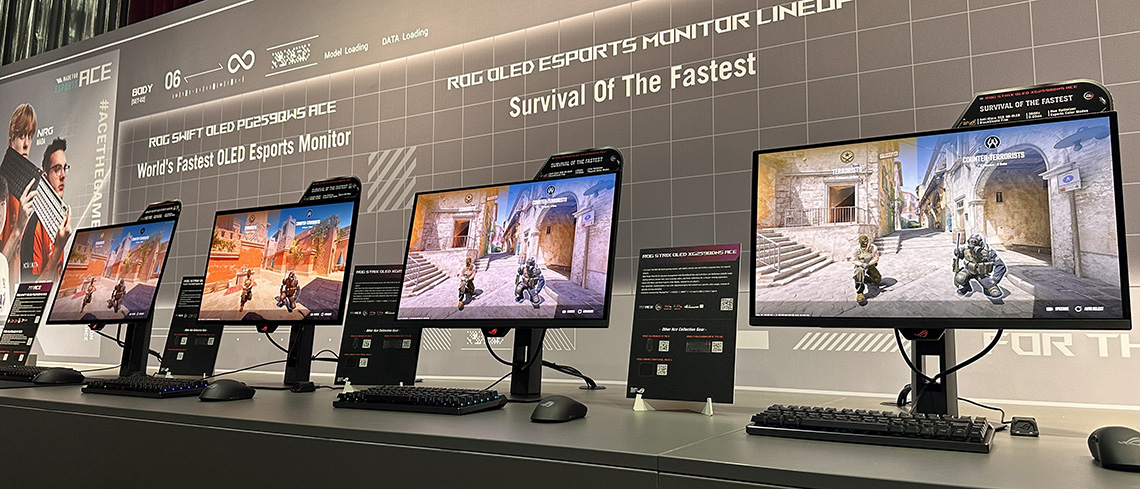
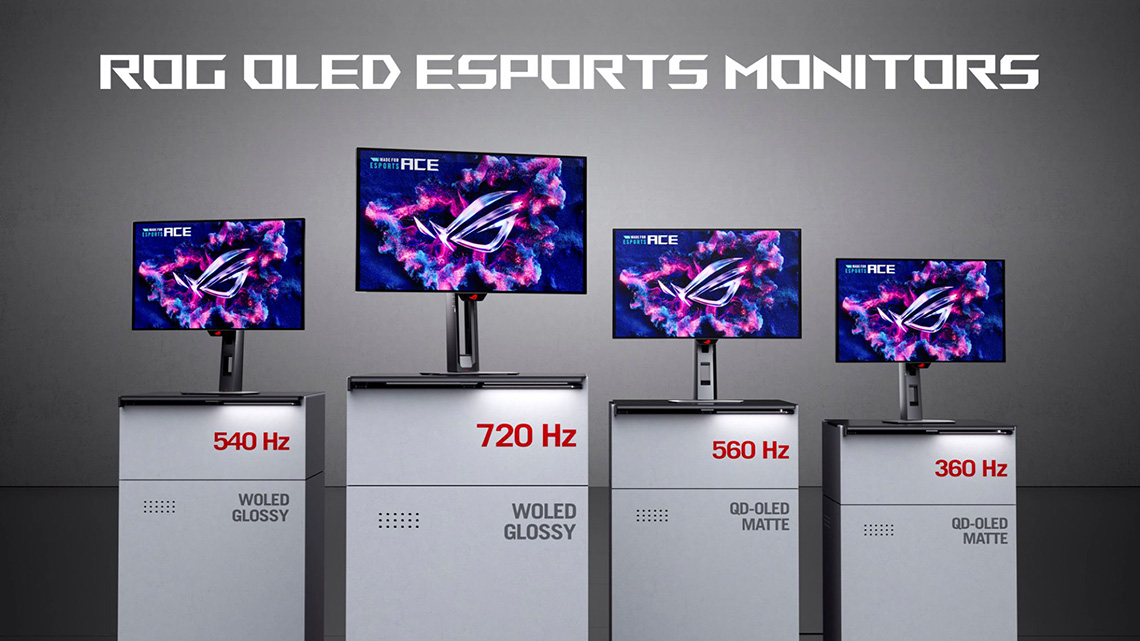
We saw four models on display at Gamescom, one of which we had seen previously at Computex in June, offering an array of great specs and a choice between panel technologies and refresh rates. All these new models are small format 24.5” OLED panels and offer a native 1920 x 1080 resolution which will be easier to power than higher resolutions, allowing gamers to prioritise speed and frame rate for those competitive situations. Whether you want the highest possible refresh rates, or are looking for a smaller OLED screen at a lower price point, there’s options available. Likewise there’s also a choice between WOLED and QD-OLED panels, and glossy and matte coatings.
Key features across the board
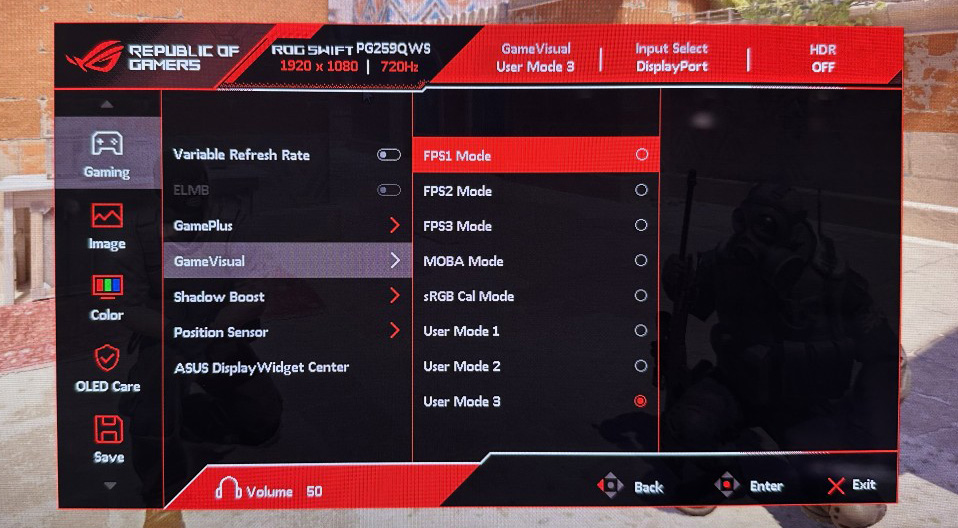
There are a number of other extras available to enhance gameplay, and these are featured on all of the OLED Esports Ace range we will cover here. This includes the following:
- Quick OSD menu to allow players to seamlessly switch between settings before every game depending on the gaming scenario. This means you can make faster adjustments to settings like brightness, contrast or gaming pre-set. It also allows you to switch video inputs quickly too.
- Three esports colour mode which provides specialised visual profiles “professionally tuned for elite competitive play”. There’s now 3 FPS modes specifically designed and tuned for CS:GO, Valorant and PUBG. They’ve also added additional User configurable modes as shown in the photo above.
- Hue optimiser – a customisable 6-axis colour adjustment technology that lets you control the hue and saturation of 6 specific colour channels. It acts like a built-in colour management system that lets you target specific areas without affecting the rest of the colours.
- Gallium Nitride Field-Effect Transistor (GaNFET) technology – Asus have switched to using a GaNFET power supply unit which is supposed to provide less heat compared with their previous internal power supplies used on some other models, which will potentially help extend the lifespan of the panel.
- Upgraded Neo Proximity Sensor is a feature of their Asus OLED Care Pro and is a highly sensitive TOF sensor which allows users to set their preferred usage distance. When the user steps out of range, the monitor will automatically switch to a black image (i.e. turn off the pixels) to reduce the risk of burn-on, and then will restore the on-screen content when you return. You can also customise the detection distance quickly and easily. The upgrades to the sensor making it different to previous models is a new adjustable sensitivity setting and an ‘Auto Away Timer’ for further control.
- Integrated measurement scales on the monitor stand allow you to reproduce your preferred monitor set-up wherever you are.
These 4 models contain a lot of the same features but there are a some notable differences too which we will cover in this round-up. Let’s start by looking at the model which features the highest refresh rate and work our way down from there:
Asus ROG Swift OLED PG259QWS Ace – The World’s fastest Esports OLED monitor with 720Hz
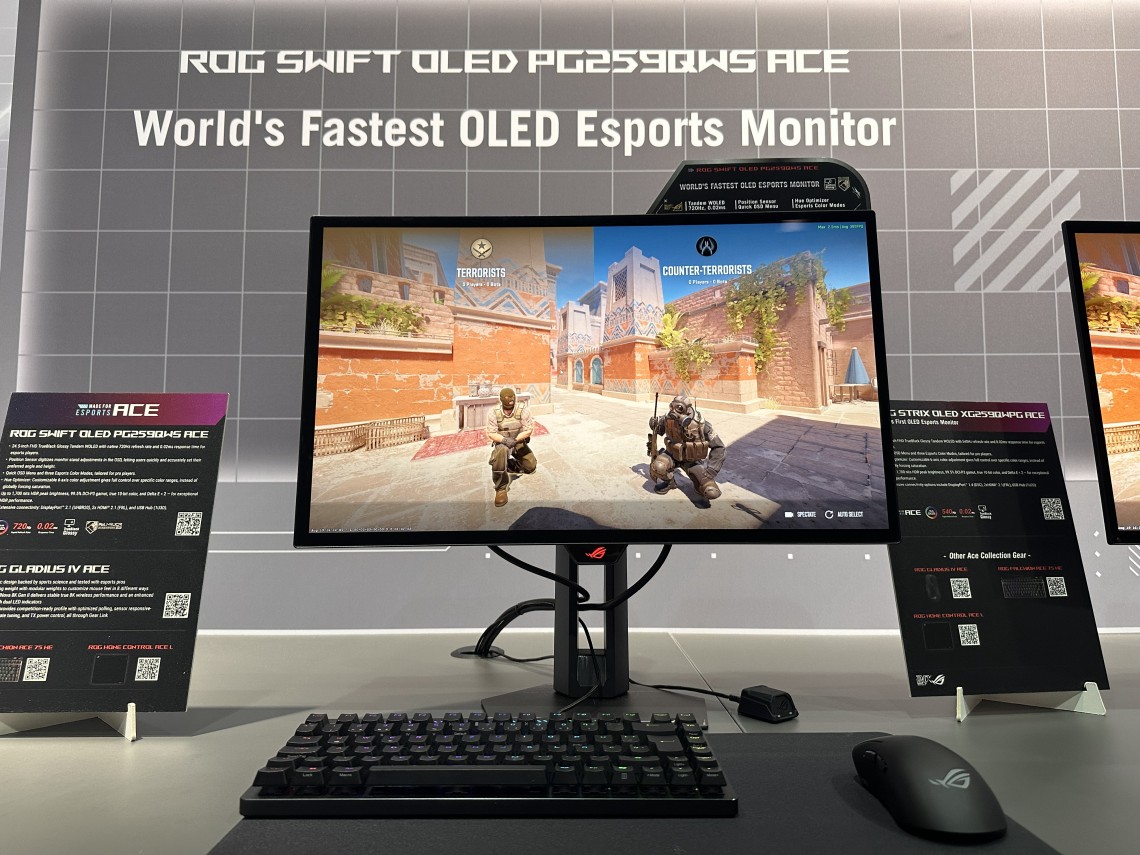
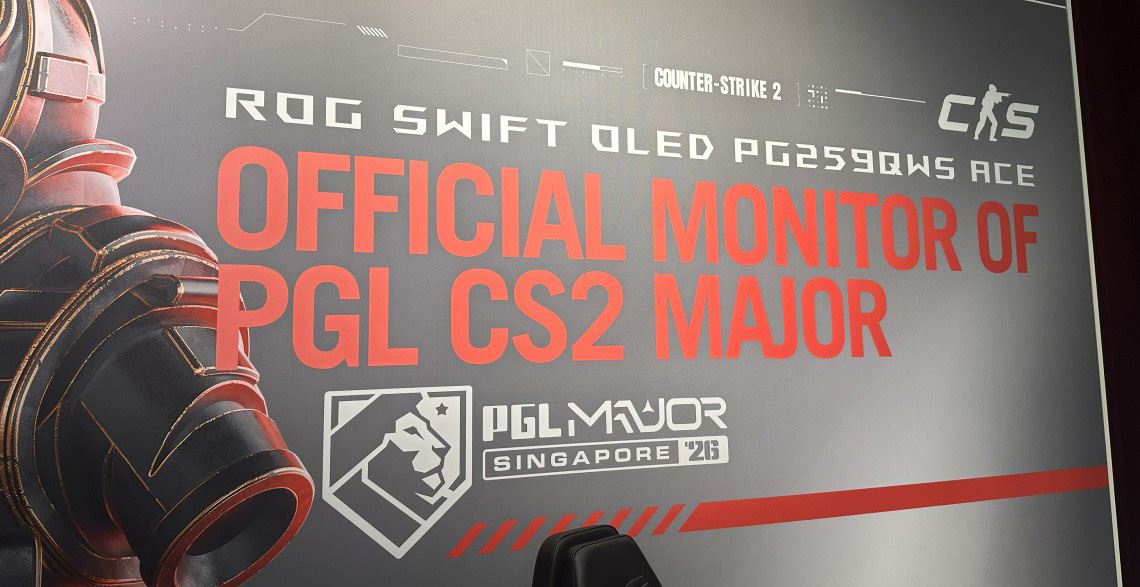
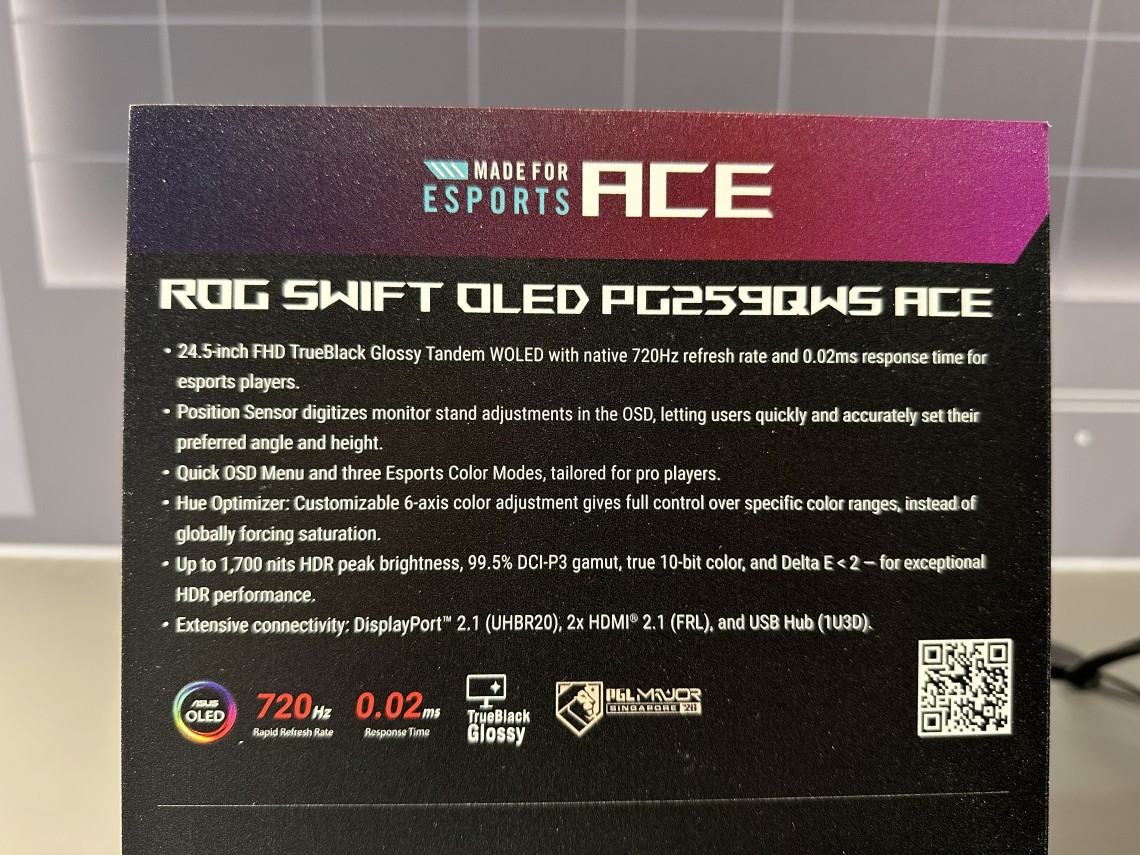
The headline announcement at the event was the unveiling of the world’s fastest OLED esports monitor, the ROG Swift PG259QWS Ace, a 24.5”, 1080p resolution Tandem WOLED monitor offering an insanely fast 720Hz refresh rate and a TrueBlack glossy screen coating. This model is part of their premier ROG Swift line-up and thus will be include all the latest features, connections and capabilities that you would come to expect with one of their flagship screens.
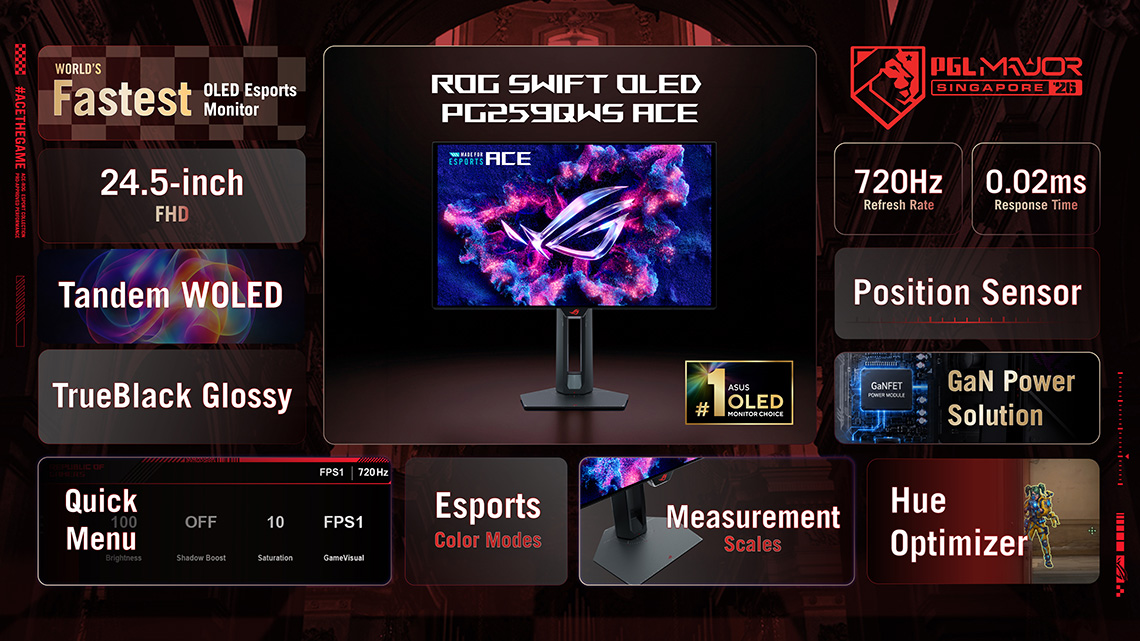
Tandem WOLED panel with TrueBlack glossy coating
It is built around a 4th Gen Tandem WOLED panel from LG Display. The 4th Gen Tandem WOLED panel improves the overall brightness and colour performance, offering “15% higher peak brightness, 25% wider colour volume and 60% longer lifespan versus previous-gen WOLED monitors.” It achieves these numbers thanks to the new panel structure, shifting from 3 light-emitting layers to 4, also known as a ‘Primary RGB Tandem’ panel structure. It also offers improved black depth in all lighting conditions.
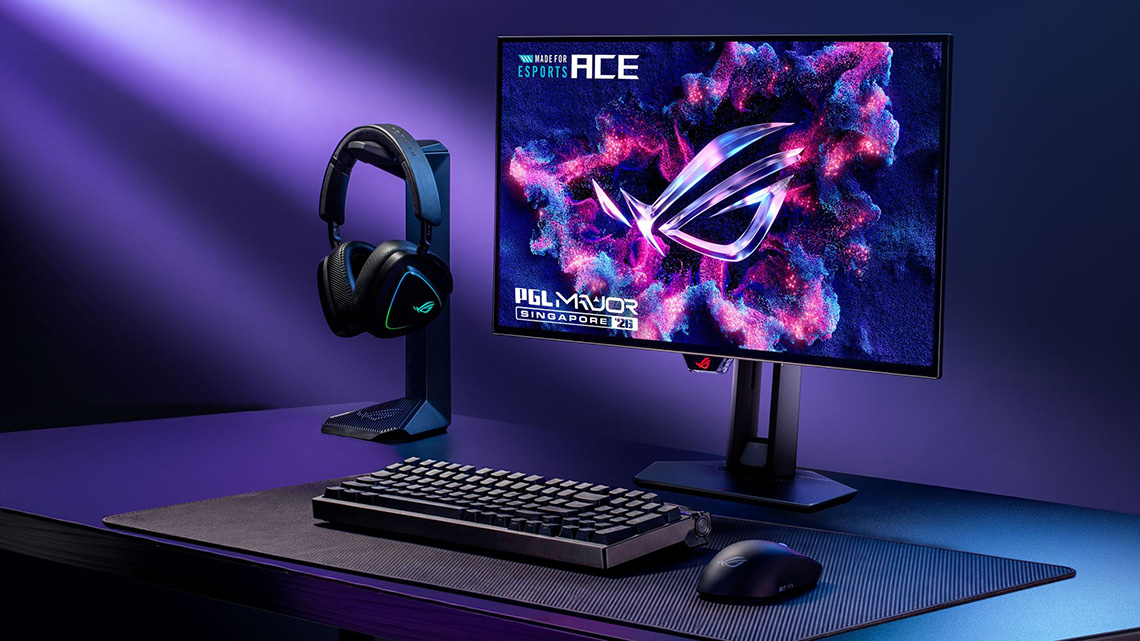
It also features their TrueBlack glossy panel coating allowing the monitor to display supersharp and clear images and present deeper blacks under any lighting. Where this has combined with the 4th Gen Tandem WOLED panel, will helps improve black depth even further.
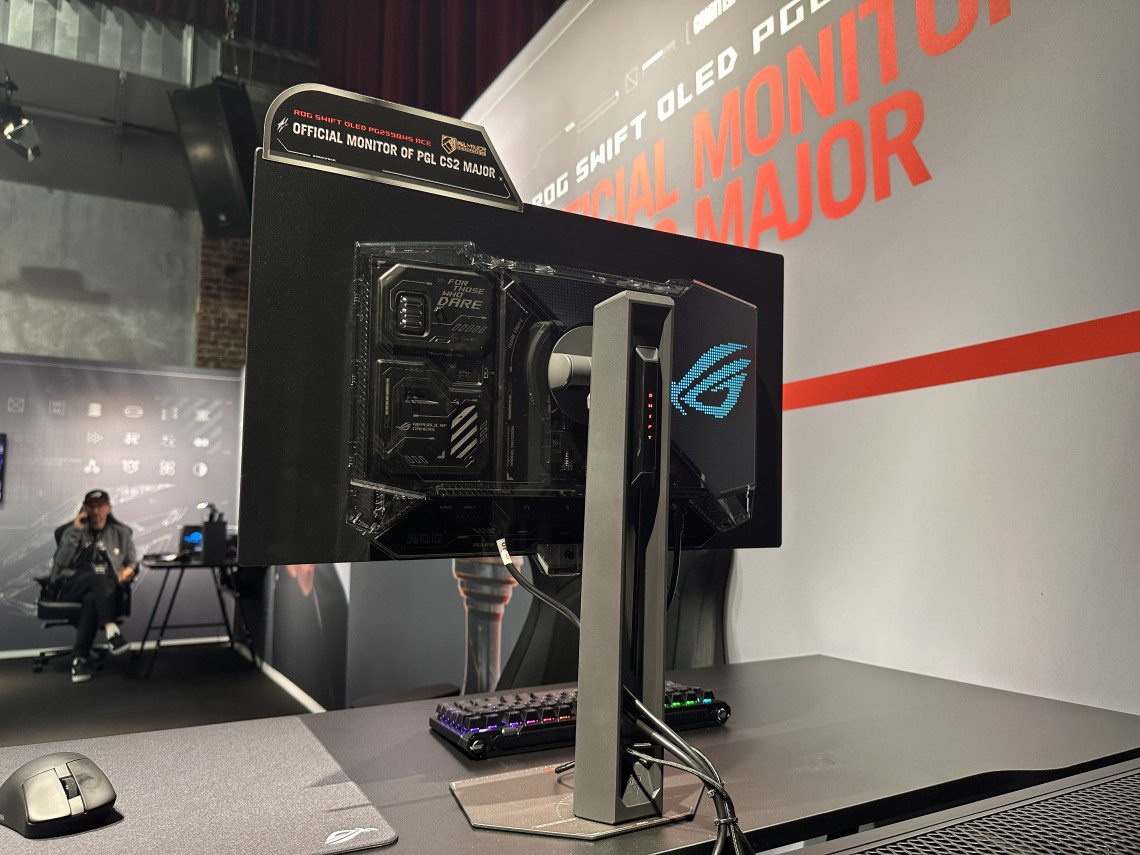
720Hz for amazing gaming performance
This model has a 720Hz refresh rate, the fastest refresh rate ever seen on an OLED screen to date with at least 1080p resolution, although we saw this refresh rate as a dual-mode option on the 27″ PG27AQWP-W, but only at a lower 1280 x 720 resolution. This does however give us some insight in to just how fast an clear 720Hz OLED can be.
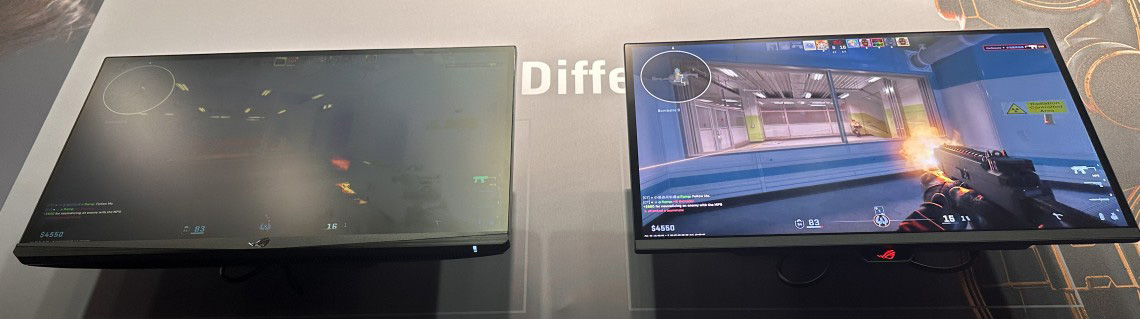
Asus explained that they expect the motion clarity and image quality of 720Hz OLED to surpass the visual experience and overall clarity current 600Hz+ TN Film gaming screens with strobing backlights. We might be getting in to the very fine details for motion clarity, but many competitive gamers don’t like to use strobing backlights anyway. The OLED panel has the response times (0.02ms G2G quoted) to keep up properly as well, avoiding all overshoot artefacts and offering clean and clear transitions all the time. Add to this improvements in the stroboscopic effect, overall system latency and frame rate support from having a higher refresh rate, and it could be a killer offering for many gamers. The high refresh rates are supported by adaptive-sync for VRR from compatible systems.
The new ‘Position Sensor‘
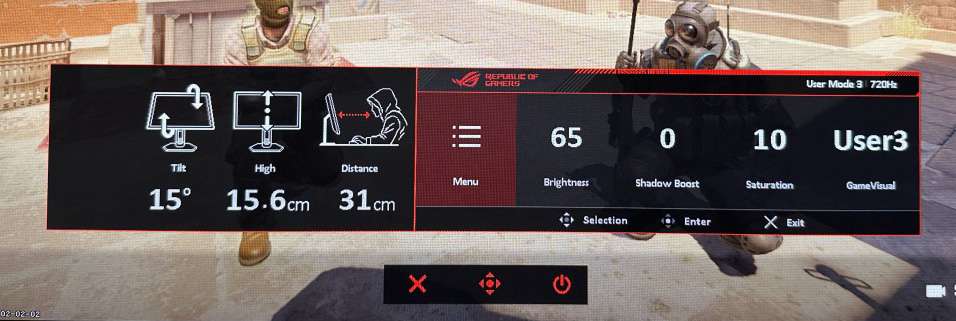
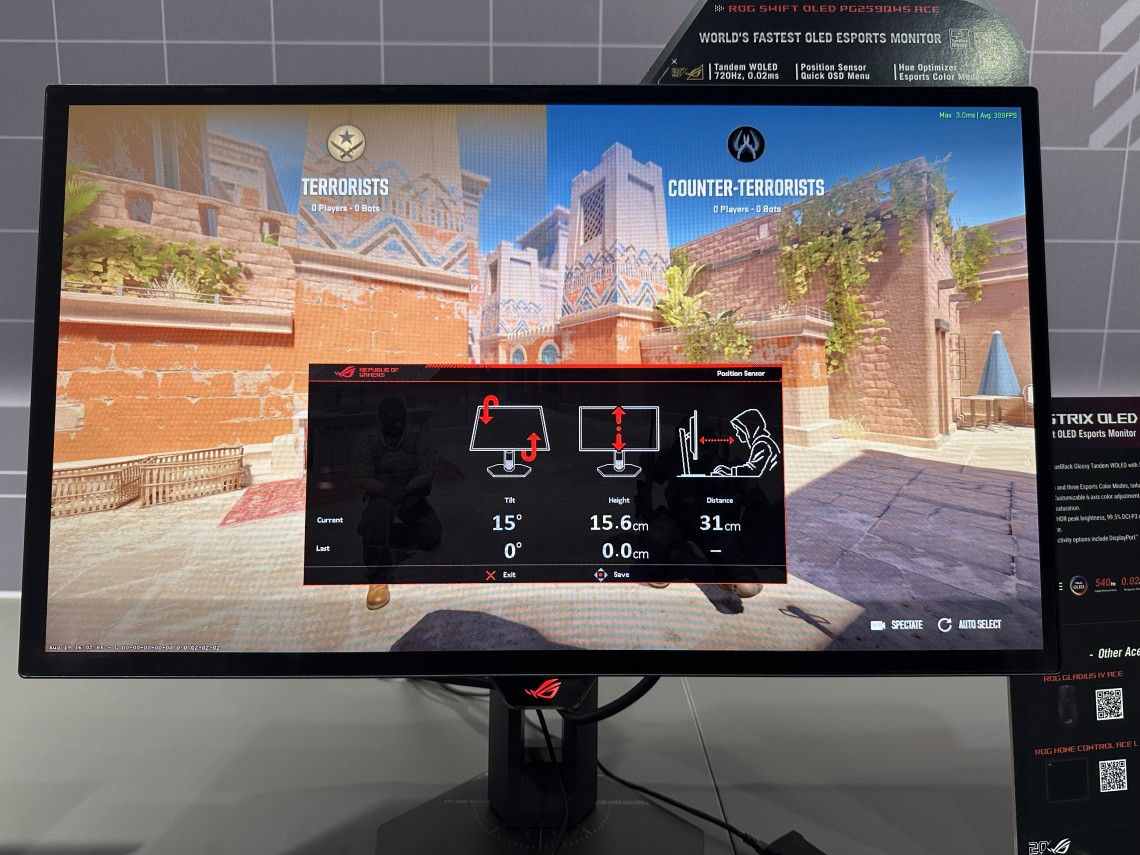
An innovative and unique feature we saw on this one is the inclusion of a Position Sensor which essentially digitises monitor stand adjustments in the on-screen display allowing you to quickly and accurately set your preferred angle and height. It senses your tilt and height positions and allows you to re-adjust to your desired levels quickly and easily. It also checks your viewing distance so that you can get set up just how you like each time you game. This could be potentially really useful in a competitive esports environment when setting up for battle in a tournament arena, where some gamers even take rulers with them today! This position sensor is unique to this ROG Swift model, not included on the ROG Strix models discussed below.
Other specs and details
In other specs the screen offers an ultra-fast 0.02ms G2G response time spec, 390 nits brightness (SDR), 178/178 viewing angles, 10-bit colour depth and a wide colour gamut covering 99.5% of the DCI-P3 colour space.
Note that the WOLED models discussed in this article feature the standard RGWB sub-pixel layout, with the white pixel kept to enhance brightness in a space which is predominantly aimed at dynamic content and gaming anywhere, where it matters less. If you’re specifically after an RGB stripe panel for more text work then check out the QD-OLED models later.
For HDR the screen is expected to be certified under the VESA DisplayHDR 600 tier, although that process is ongoing we were told. It does include a peak brightness spec of 1700 nits though which is impressive. It will also support various HDR formats too including HDR10 and Dolby Vision HDR.
Connectivity and stand
There are a wide range of connectivity options on offer too which includes DisplayPort 2.1 (UHBR20), 2x HDMI 2.1 connections, a USB Hub and a tripod socket. This is the only one of the new 24.5″ OLED models with DP 2.1 by the way.
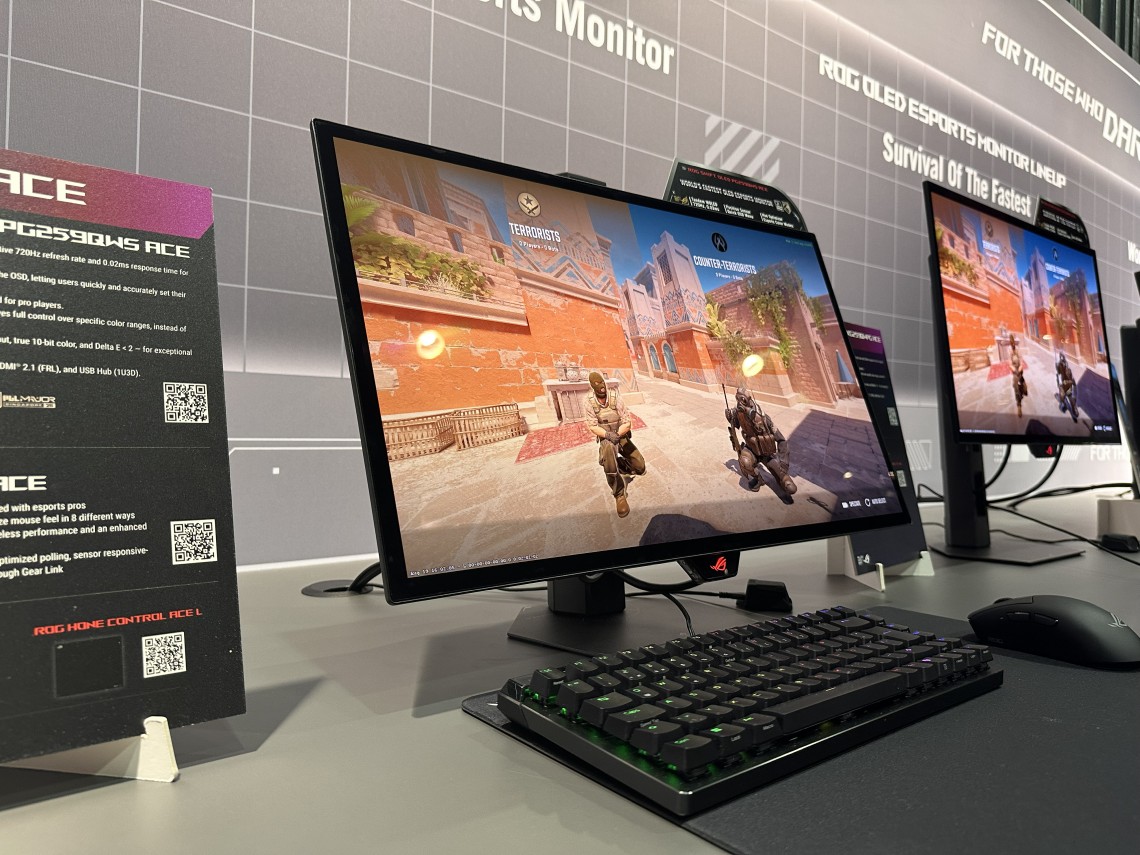
The stand offers tilt, height, swivel and rotate adjustments and can be angled to quite a extreme tilt to accommodate esports gamers who like to use those unusual angles for gaming. This model also features the smaller stand foot that the ROG Strix models have, ditching the wide 3-pronged stand that’s usually featured on the ROG Swift series. This will be a welcome change, giving you loads more desktop space for your keyboard and mouse during gaming situations.
Pricing and availability
This model is due to be released in early Q4 at a price of $1,099 USD or €1,149 Euro, which puts it in line with high end leading esports LCD monitors of this size.
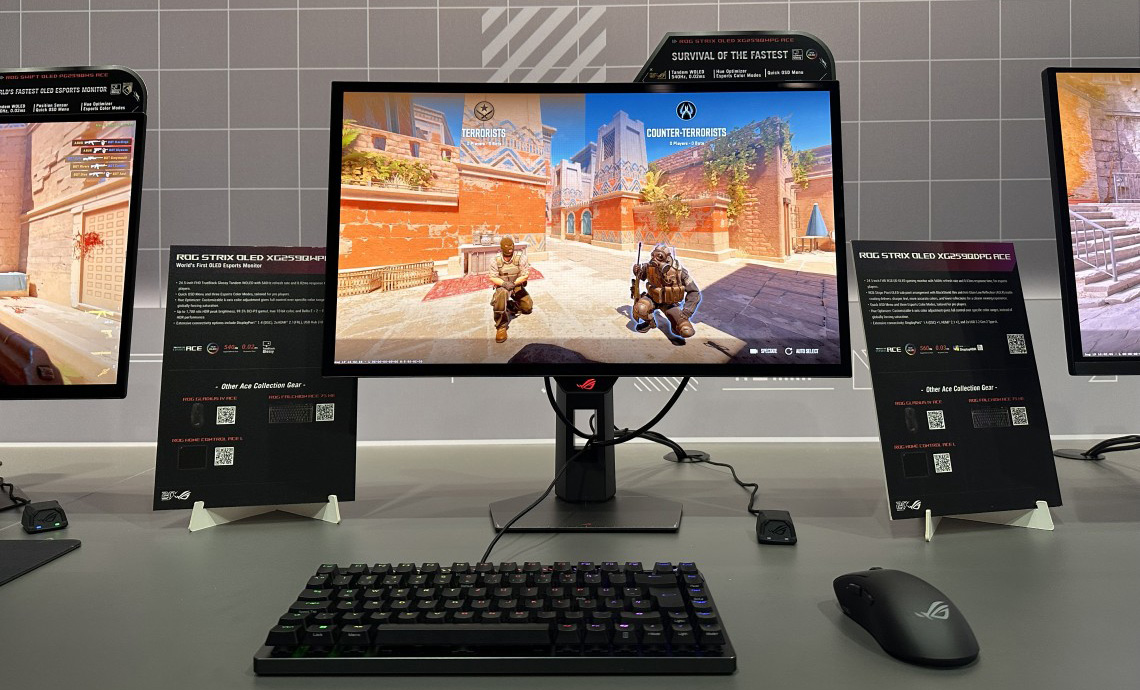
Asus ROG Strix OLED XG259QWPG Ace – a 540Hz WOLED display
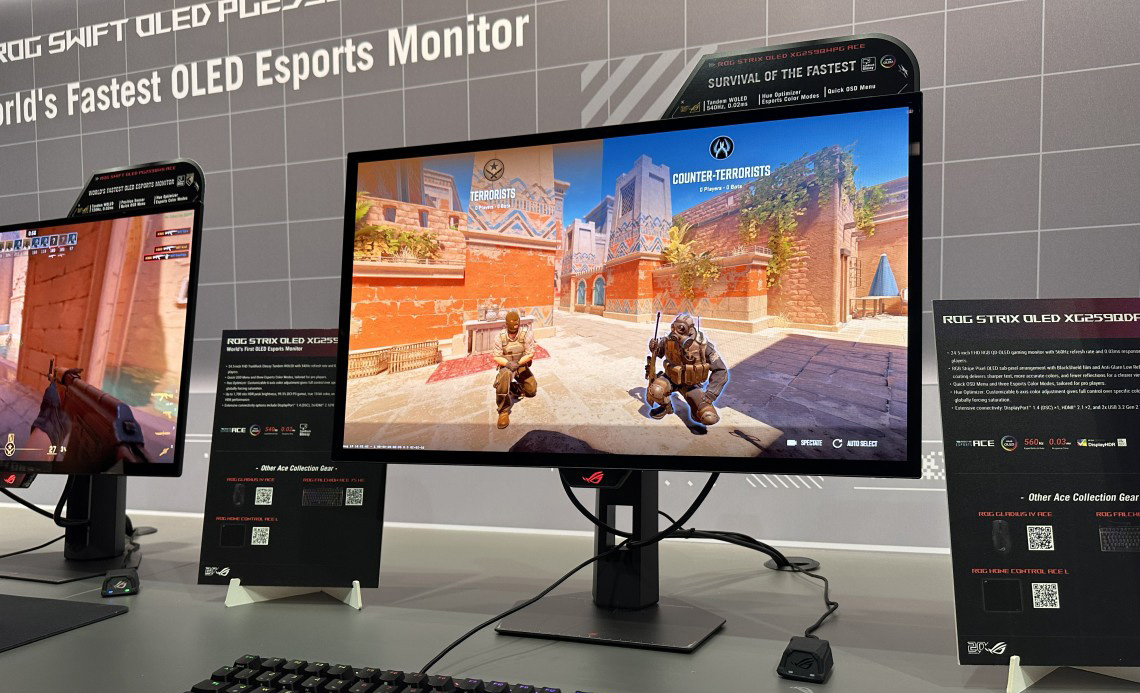
Asus’s also unveiled 3 models in their mid-tier ROG Strix range offering a similar strong performance at a lower cost. First up is a model that we first got to see showcased at Computex earlier in the year. The Asus ROG Strix XG259QWPG Ace has a 24.5” sized 1080p screen again, but this time with a lower (but clearly still very impressive) 540Hz refresh rate. It utilises the same 4th Gen Tandem WOLED technology from LG Display, combined with a TrueBlack glossy screen coating. That’s the same panel generation and coating combination as the headlining ROG Swift model we talked about earlier, but this time with a slightly more modest spec and lower price point.
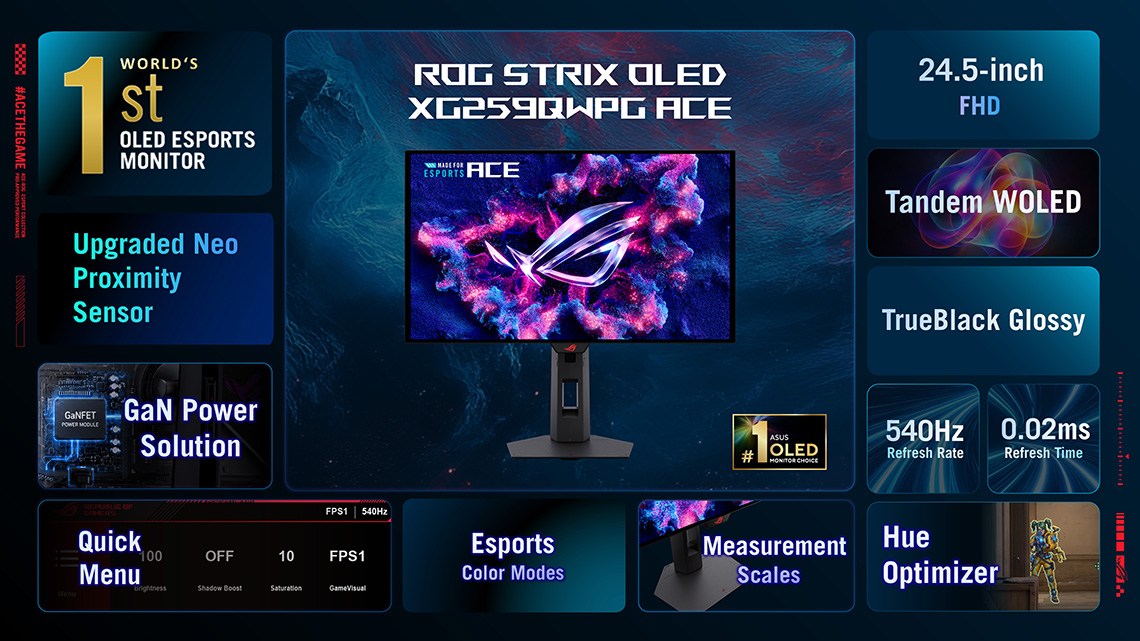
Other specs include a 0.02ms G2G response time spec, 390 nits brightness (SDR), 10-bit colour depth and a wide colour gamut covering 99.5% of the DCI-P3 colour space. It also comes factory calibrated with Delta E<2 colour accuracy.
For HDR the screen is expected to be certified under the VESA DisplayHDR True Black 600 tier and includes a peak brightness spec of 1700 nits (1.5% APL). It will also support various HDR formats too including HDR10 and Dolby Vision for a stunning HDR performance.
Connectivity options include 1x DisplayPort 1.4 (with DSC), 2x HDMI 2.1, USB Hub and a tripod socket.
Pricing and availability
This 540Hz WOLED model is due to be released in early Q4 at a price of $699 USD or €729 Euro.
Asus ROG Strix XG259QDPG Ace – bringing QD-OLED choice with 560Hz
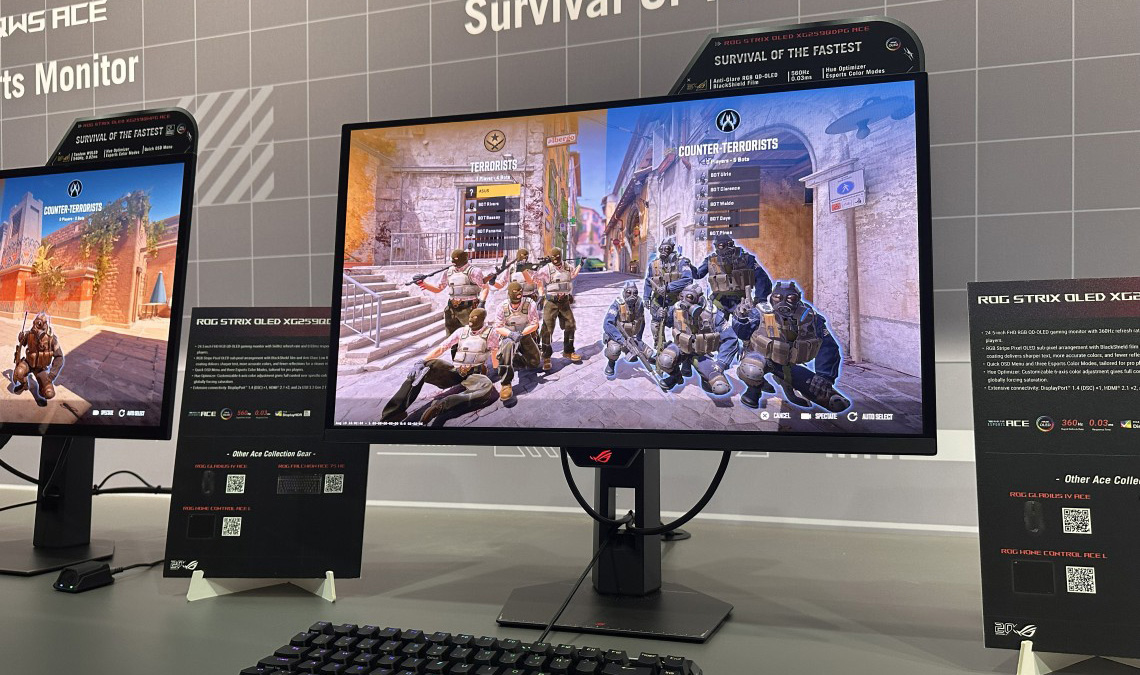
Next up is the ROG Strix XG259QDPG Ace which again sees a 24.5” sized screen coupled with a 1920 x 1080 resolution. This time the screen is built around a 5th-Gen Penta Tandem QD-OLED panel from Samsung Display and offers an impressive 560Hz refresh rate. This is the first time we’ve seen any QD-OLED panel of this size announced, so this brings a choice between the two competing panel technologies to this segment as well.
This QD-OLED panel will feature a true RGB-stripe subpixel arrangement as well, enhancing the image and text clarity and eliminating fringing issues that have impacted earlier QD-OLED monitor panels.
BlackShield Film and an Anti-glare coating
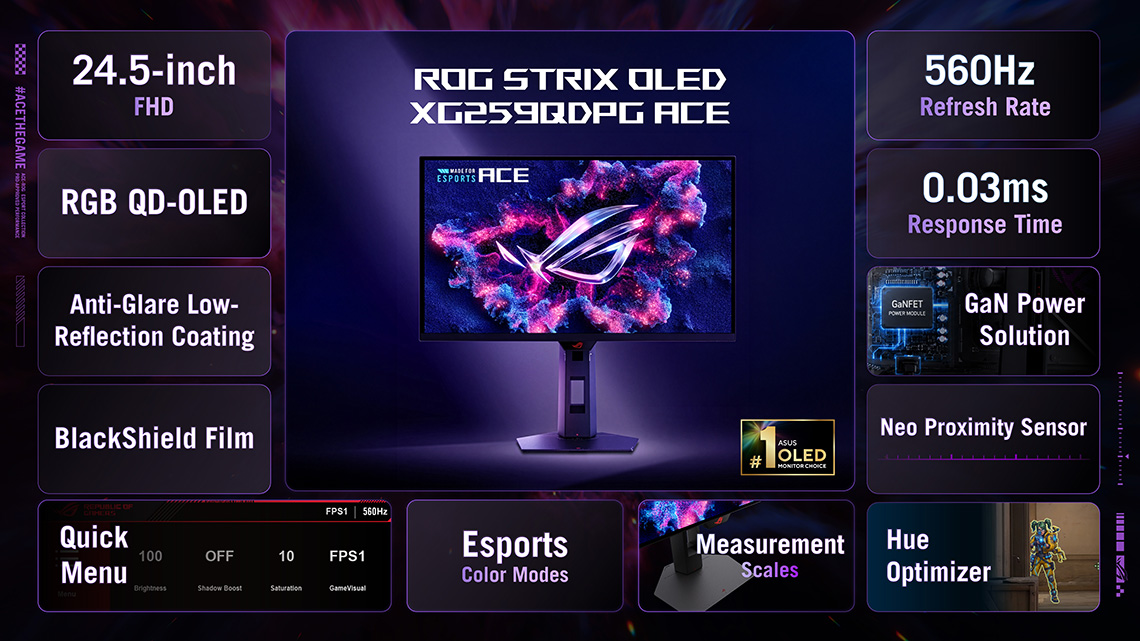
The screen also includes Asus’ ‘BlackShield’ film, an optimised panel structure that helps deliver deeper blacks in brighter lit room conditions and reduce the purple tint that impact older panels. The WOLED panels still hold the edge for brighter room conditions though, with better black depth and contrast in the presence of ambient lighting. The panel hardness has also increased from 2H to 3H, offering better scratch resistance and durability. We’ve seen this used on their latest 34″ ultrawide and 32″ panels already this year too and it does a nice job.
Interesting Asus have also selected the additional Anti-glare film for the new QD-OLED models, to minimise glare and reflections, a decision to also offer some differentiation between these QD-OLED models and the WOLED models which have the ‘TrueBlack glossy’ coating. Some gamers prefer a matte finish and so that option is available now from these models.
Other specs
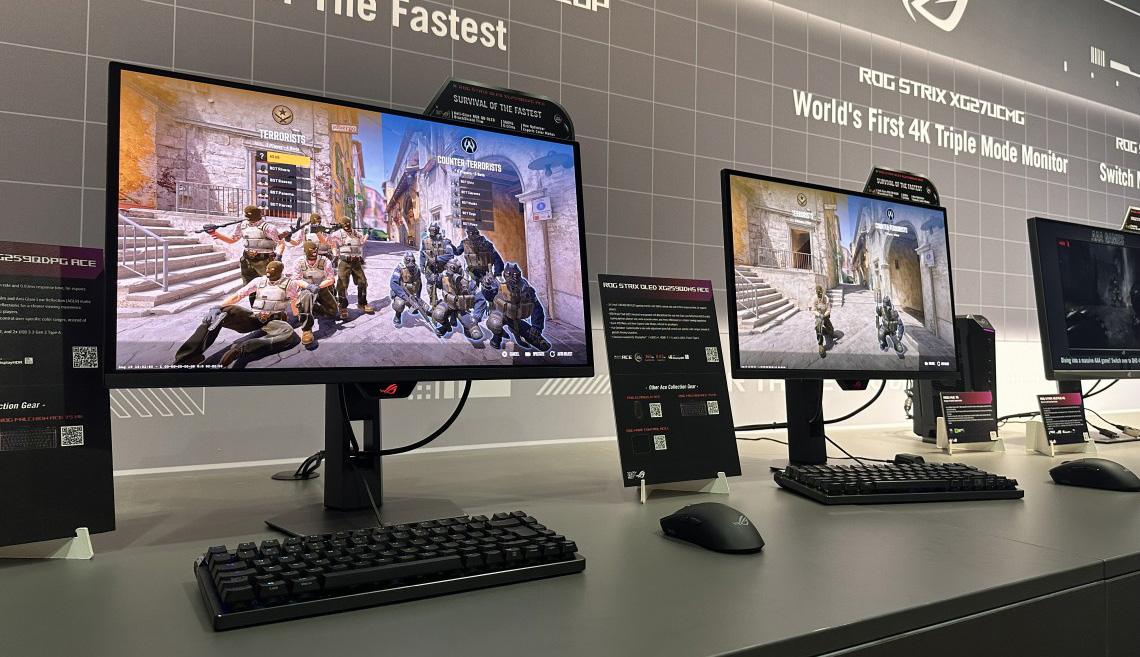
In other specs this screen has a 0.03ms G2G response time spec, and while it hasn’t been finalised yet it should offer an SDR brightness of at least 350 nits. It’s expected to be certified under the VESA DisplayHDR True Black 600 tier as well, and offer a peak brightness spec of 1800 nits (1.5% APL). Interestingly Samsung Display are shifting from quoting 2 – 3% APL for peak brightness, and moving to 1.5% like LG Display do – aligning the quoted peak specs a bit more closely.
The 560Hz refresh rate is supported by adaptive-sync for VRR from compatible systems and is compatible with NVIDIA ‘G-Sync Compatible’ and AMD ‘FreeSync Premium’ schemes.
For connectivity there is DisplayPort 1.4 (x1), HDMI 2.1 (x2), USB Type-A ports (x2) and a tripod socket.
Pricing and availability
This QD-OLED 560Hz model is expected to be launched in early Q1, but pricing is yet to be finalised. Indications are that it will be in a similar ball-park to the 540Hz WOLED model (priced at $699 USD) giving users the choice between the two panel technologies and screen coatings, at a similar price point.
Asus ROG Strix OLED XG259QDNS Ace – a 360Hz QD-OLED option
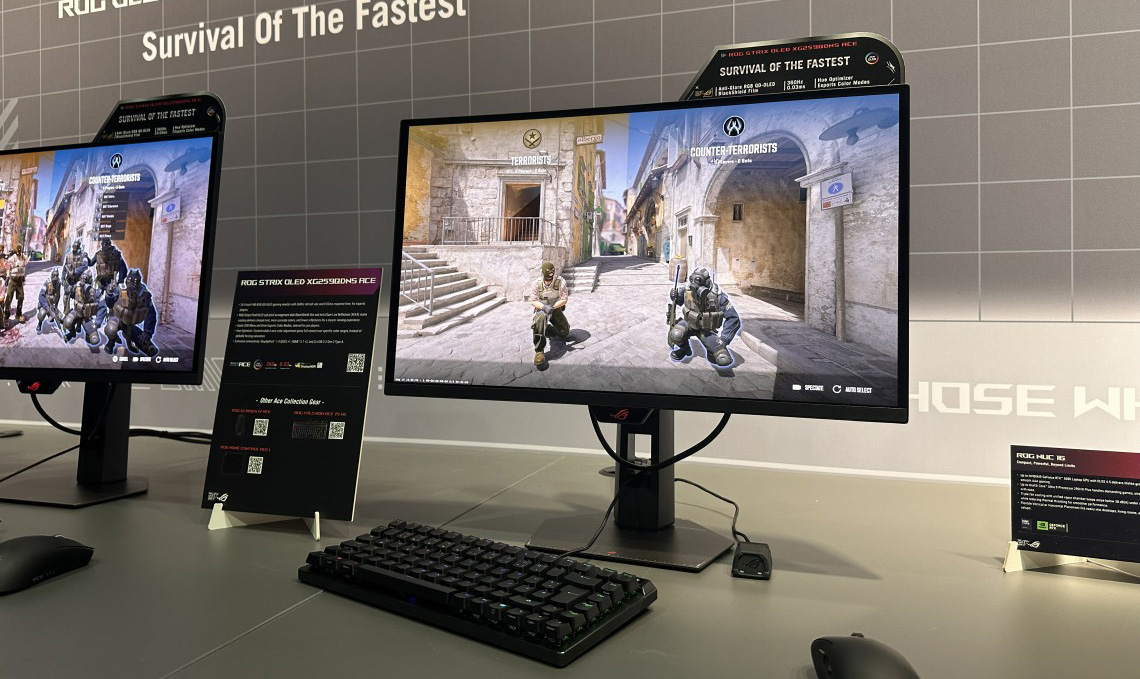
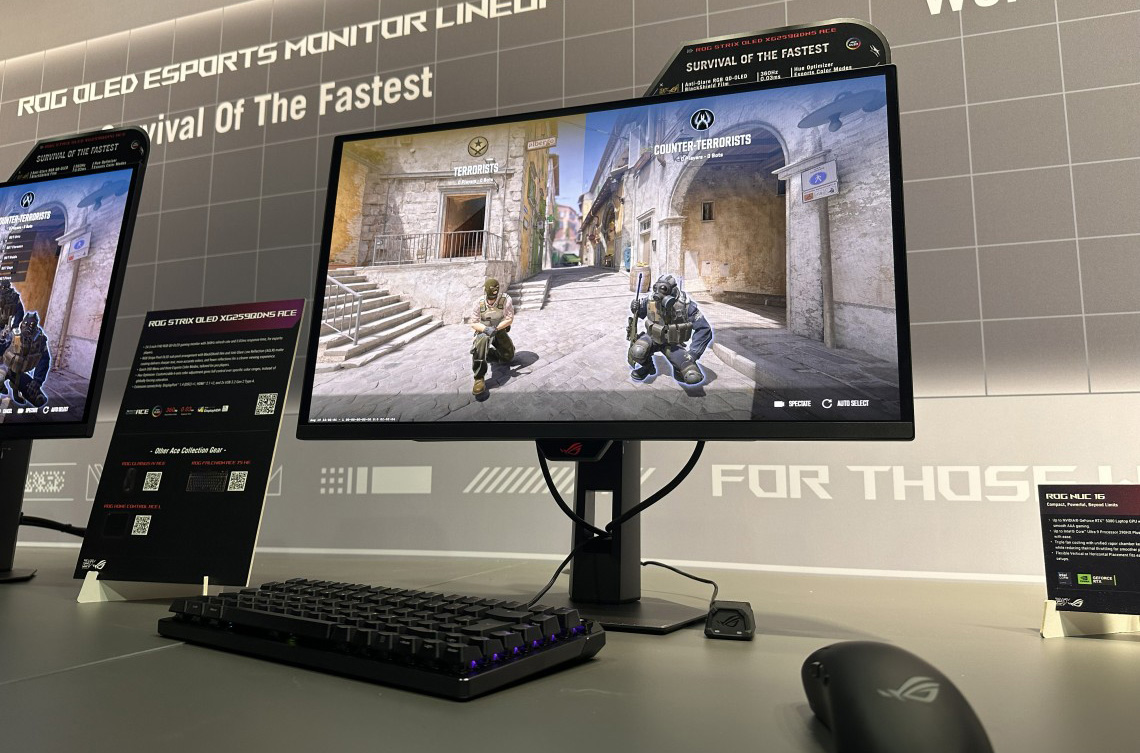
Last but not least is the Asus ROG Strix XG259QDNS Ace and this is another small format 24.5” OLED panel with a 1080p resolution and this time a lower 360Hz refresh rate. This one is also built around Samsung Display’s 5th Gen Penta Tandem QD-OLED panel technology, which includes a true RGB-stripe sub-pixel layout to improve text clarity and a the new ‘BlackShield film’ and Anti-Glare Low Reflection matte coating to improve black depth and reduce reflections, just like on the 560Hz model discussed above.
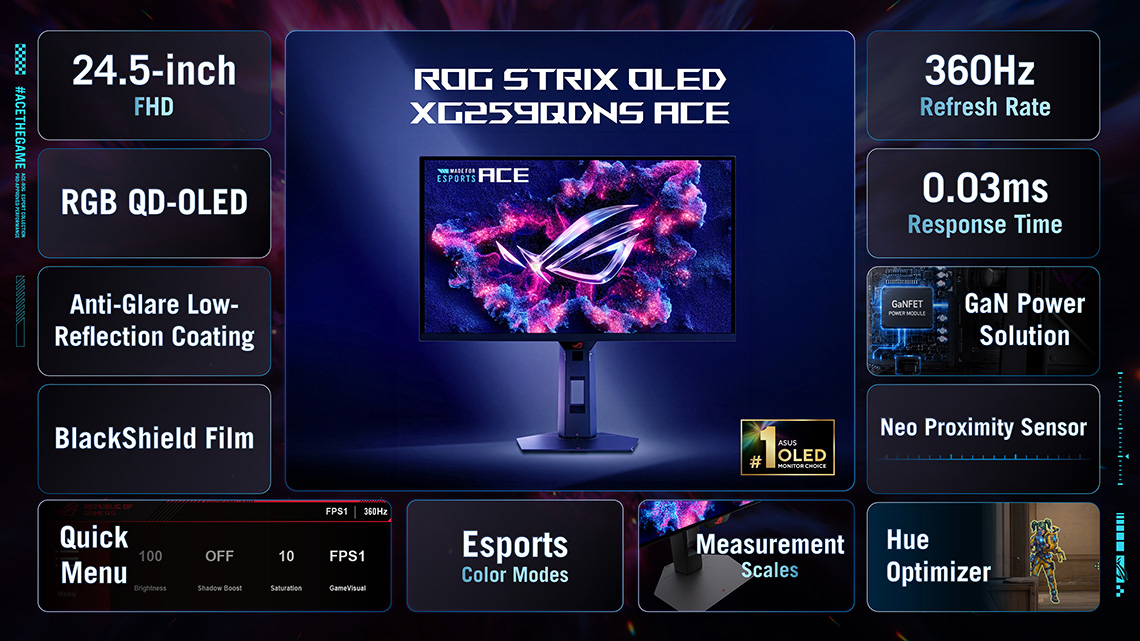
In other specs it offers an ultra-fast 0.03ms G2G response time spec, and it’s expected to offer the same brightness specs as the 560Hz model – so at least 350 nits for SDR, True Black 600 HDR certification and a peak brightness spec of 1800 nits (1.5% APL).
Pricing and availability
This QD-OLED 360Hz model is expected to be launched in early Q1, but pricing is yet to be finalised. We were told it will be a little less than the 560Hz model, but perhaps not drastically less. More info of course when we get it.
More Gamescom news and coverage
Look out for more information and coverage from Gamescom 2026. To stay up to date, make sure you subscribe to our YouTube channel here, follow us on X here for all the latest information and news.
We may earn a commission if you purchase from our affiliate links in this article- TFTCentral is a participant in the Amazon Services LLC Associates Programme, an affiliate advertising programme designed to provide a means for sites to earn advertising fees by advertising and linking to Amazon.com, Amazon.co.uk, Amazon.de, Amazon.ca and other Amazon stores worldwide. We also participate in a similar scheme for Overclockers.co.uk, Newegg, Bestbuy , B&H and some manufacturers.
Stay up to date
 |  |  |
| Subscribe on YouTube | Follow us on X | Support Us |
Latest News Round-up Video