
More Glossy WOLED Monitors! Gigabyte Launch Two New Models, With More to Come
Disclaimer: this article includes sponsored promotion by Gigabyte, but all content, opinions and commentary are our own
Introduction
It’s a long-standing debate – which is better, matte or glossy? We believe each coating type has its place in the market, and everyone’s use cases and viewing environment are different. We also believe that giving consumers a choice is a great thing. In the last 6 months or so we’ve seen a range of new WOLED monitors released by various manufacturers featuring the latest technologies, specs and features, especially with the arrival of LG Display’s latest 4th Gen Tandem WOLED panels. We’ve provided detailed information about those in the past, so if you want to know loads more about Tandem WOLED please check out our article here.
With LG Display now offering a coating choice to display manufacturers, we’ve seen different manufacturers adopt different panel options. Gigabyte were the first to announce a monitor using the new Tandem WOLED panel last year at Computex, with their super-popular (and excellent) MO27Q28G which we reviewed in September ahead of its launch during Q4. That screen has a matte anti-glare (AG) coating, but some people longed for a glossy screen coating instead.
We’re pleased to report that Gigabyte are now offering a glossy alternative to this screen, with the same great underlying panel and feature set, but this time with that alternative coating. Alongside that they’ve also now announced the upcoming launch of a second glossy WOLED screen in their range and told us they will be exploring others in the future as well. So, we’ll tell you more about both of these new 2026 screens below, as well as break down the pros and cons of matte vs glossy so you can make an informed decision. You’ve now got a choice between both options from a single monitor, so that will be very welcome we’re sure.

Matte vs Glossy – which is better for you?
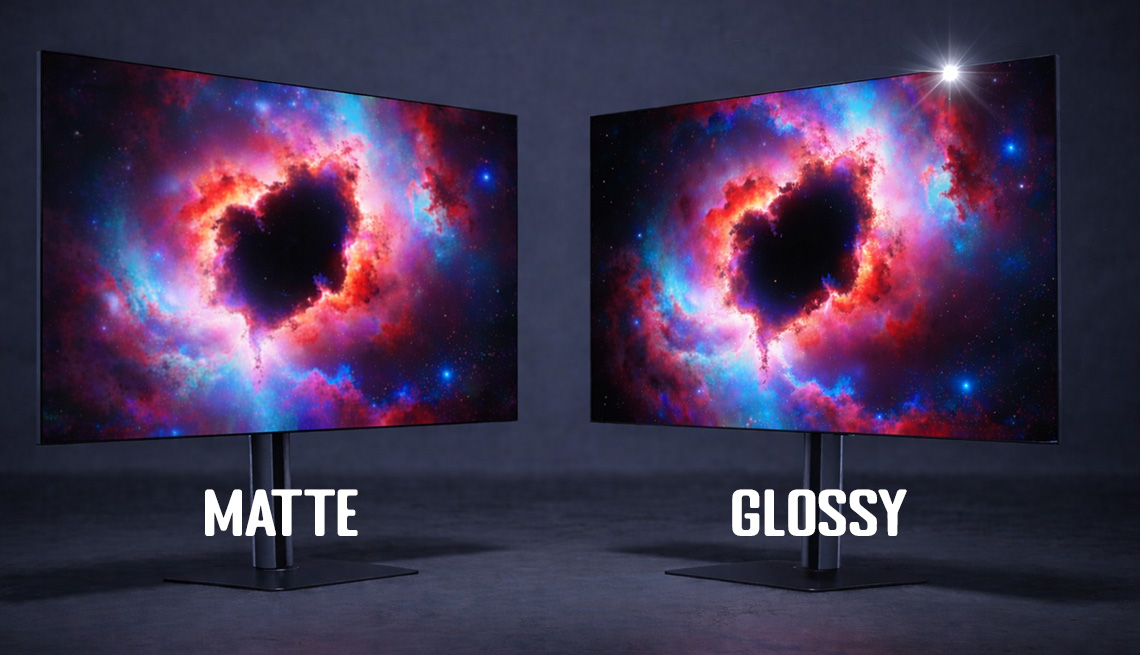
Everyone’s use case and viewing environment will vary, so we don’t think it’s realistic to label one coating as universally better – although there are strong advocates for both out there. We’ve provided the pros and cons of each coating approach below, but they’re basically the opposite of one another. A glossy coating will look sharper, clearer and have more of a “pop”, but you’ll need to contend more with reflections and glare, especially in brighter rooms or where you have light sources like lamps and windows which face the screen. On the other hand a matte anti-glare coating handles reflections and glare much better, making it well-suited to brighter room conditions and where you have light sources facing the screen. But, on the other hand the coating leaves you with some minor grain and the image won’t look as clear and clean as a glossy coating.
Glossy coating
Pros
- Clearer and sharper image with zero grain
- Improved black depth in brighter rooms
- More of a “pop” to the image
Cons
- Mirror-like reflections
- Increased glare and reflections
- More suited to darker room conditions
Matte AG coating
Pros
- Much better reflection and glare handling
- Diffused reflections
- More suitable for brighter room conditions
Cons
- Image may appear slightly grainy from the coating
- Slightly raised blacks in brighter rooms due to diffused light
- Less of a “pop” to the image
‘RealBlack Glossy’
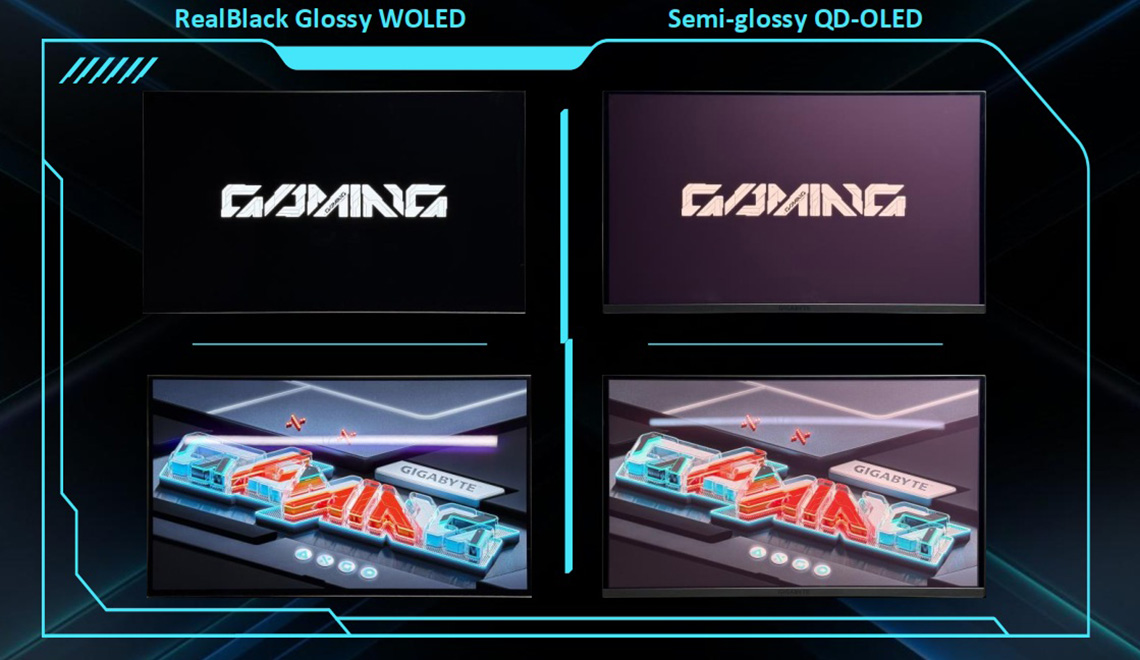
Gigabyte are branding this new glossy coating under the name ‘RealBlack Glossy‘. It’s a coating applied at the factory by LG Display so it remains the same as alternatively branded coatings from other manufacturers in visual appearance and characteristics. It’s important to note that this is actually a v2.0 glossy coating from LG Display, after their original iteration was trialled in 2024. It’s been improved and now offers:
- A zero-haze (0%) optical layer which should remove any slight graininess that was visible on the original glossy WOLED panel from 2024 for a clean, clear and crisp image. The original glossy 1.0 coating was rated with a 3% haze finish and we observed some minor grain to the image from that coating during our testing.
- Improved blacks in any lighting environment, especially where combined with a Tandem WOLED technology panel.
- A reported 38% drop in ambient reflections compared to previous-gen glossy WOLED panels from last year. This is also rated as offering 1.1% ultra-low reflection by LG Display.
Gigabyte MO27Q28GR
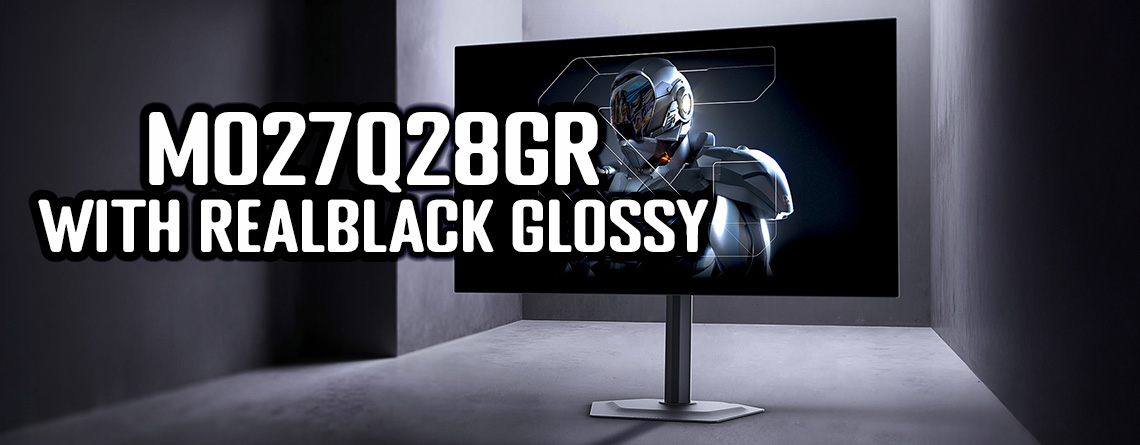
The first screen announced by Gigabyte with a new ‘RealBlack Glossy’ coating is the update to the MO27Q28G monitor, now adding a simple “R” on the end to distinguish it from the other version.
This new screen is exactly the same as the original, with the same panel, spec, feature set and performance. The choice now is simply whether you want a matte AG version, or a glossy version. There are also a couple of newly added features in the monitors software / firmware that we will discuss in a moment, which we are expecting to also be rolled out to the original model at some point soon as well for parity. A bonus for any existing owners of that model.
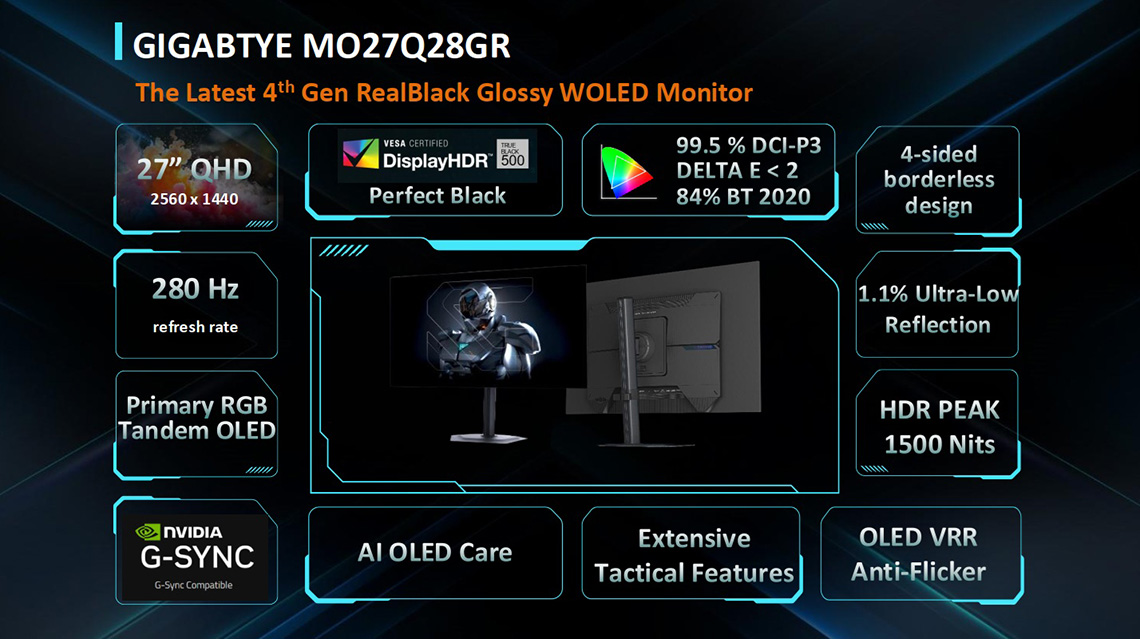
Full information and review available
You can see further specs for this screen above, we won’t go through them all in detail as we’ve provided a full feature on this screen in the past when it was released, and we’ve reviewed it in full as well so please check those out if you want to know loads more. That review applies equally to this new R model, with of course some updates around the screen coating to account for.
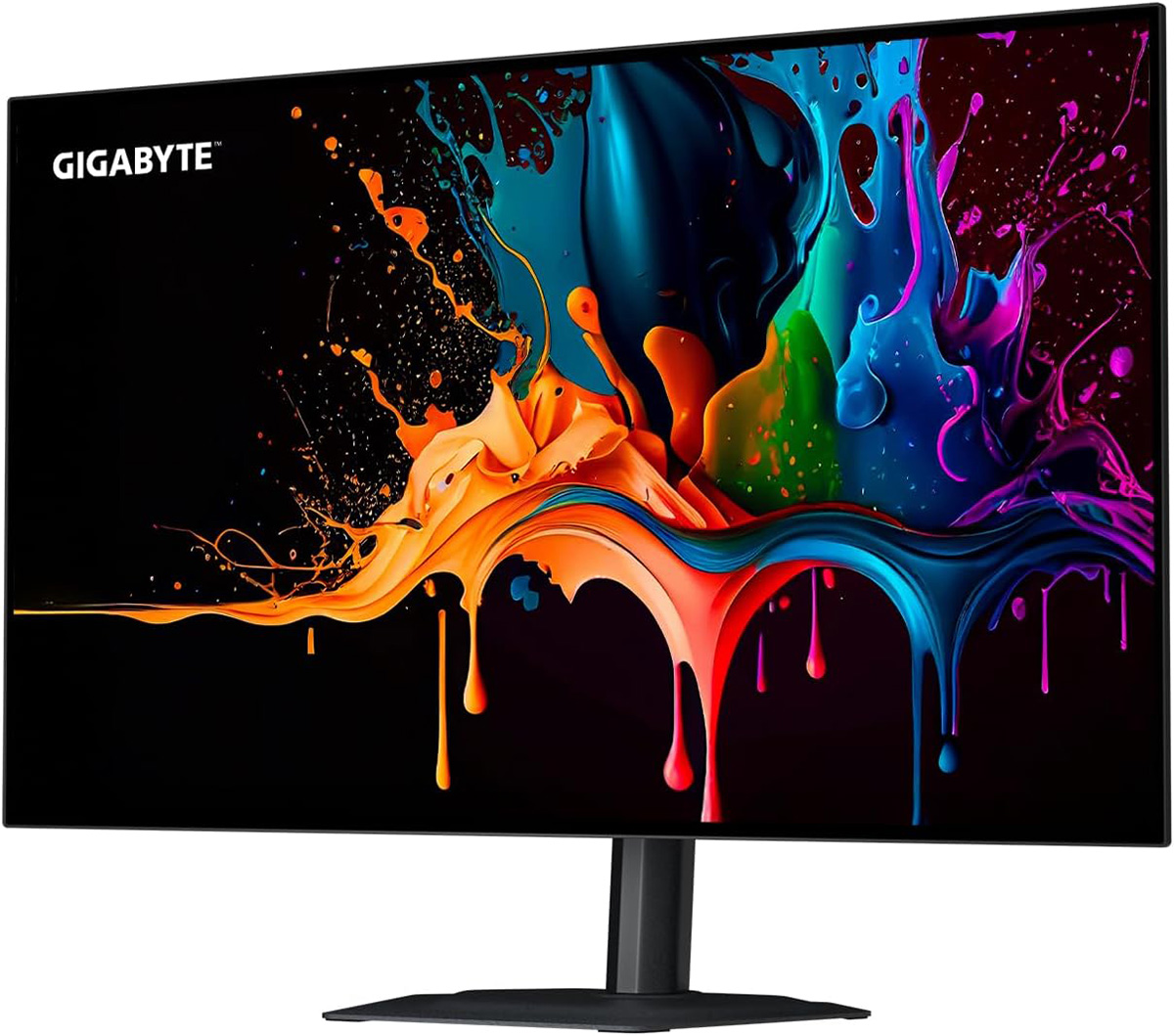
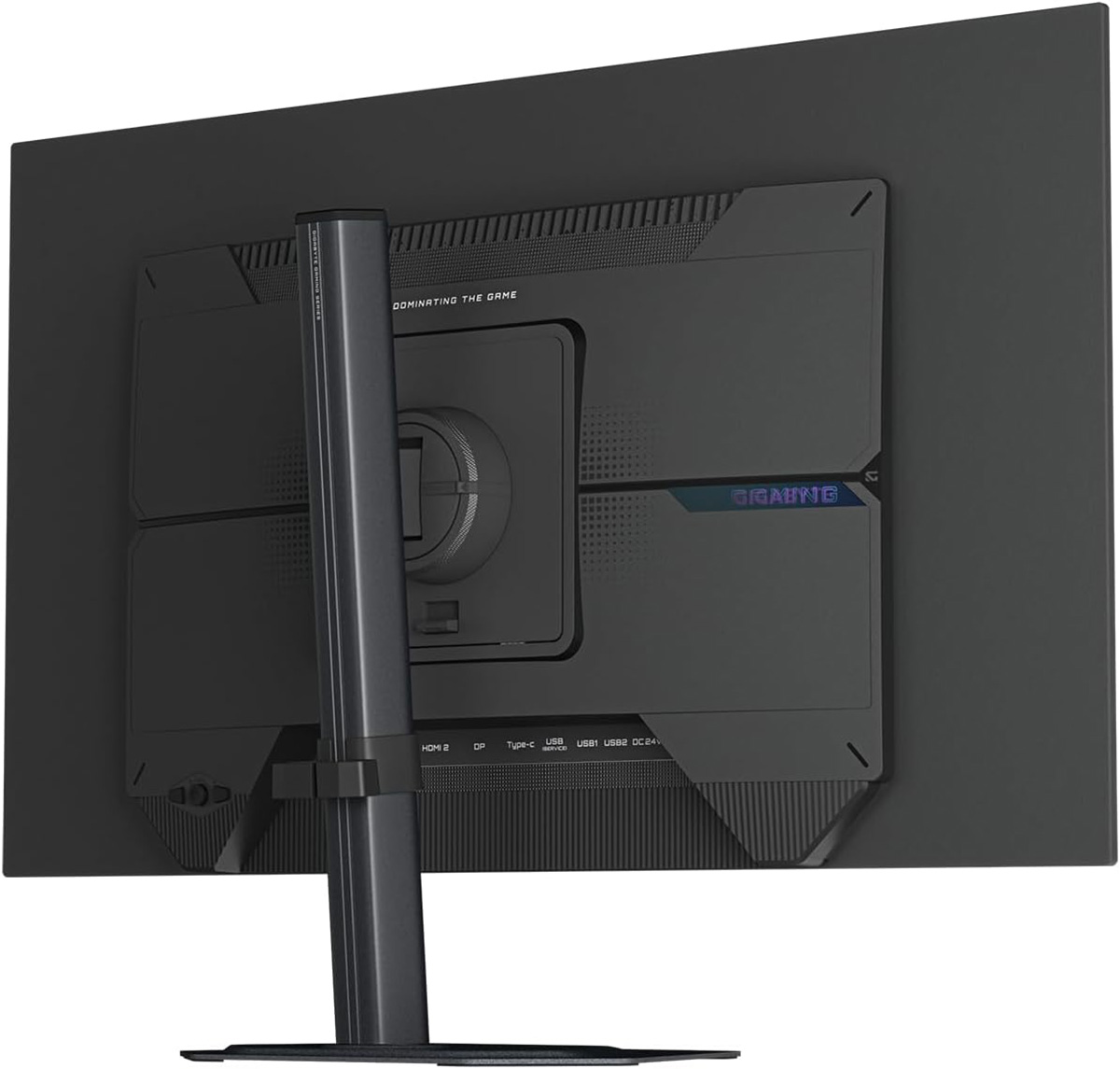
Availability and pricing
We are told that the MO27Q28GR is due to be released in early March 2026 and has a global MSRP of $559 USD (without VAT). It will be priced at €559 Euro in EMEA. Pricing and availability may vary by region due to tariff and import considerations and will be announced locally. It’s available in the US to pre-order now here.
Gigabyte GO27Q24G
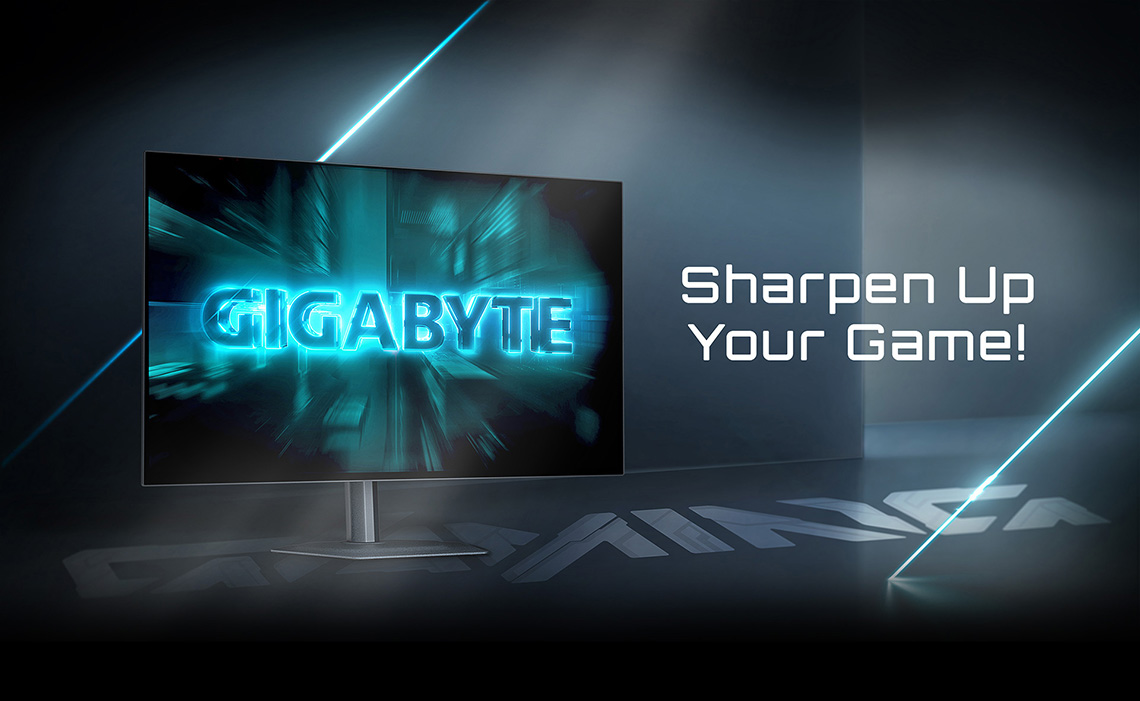
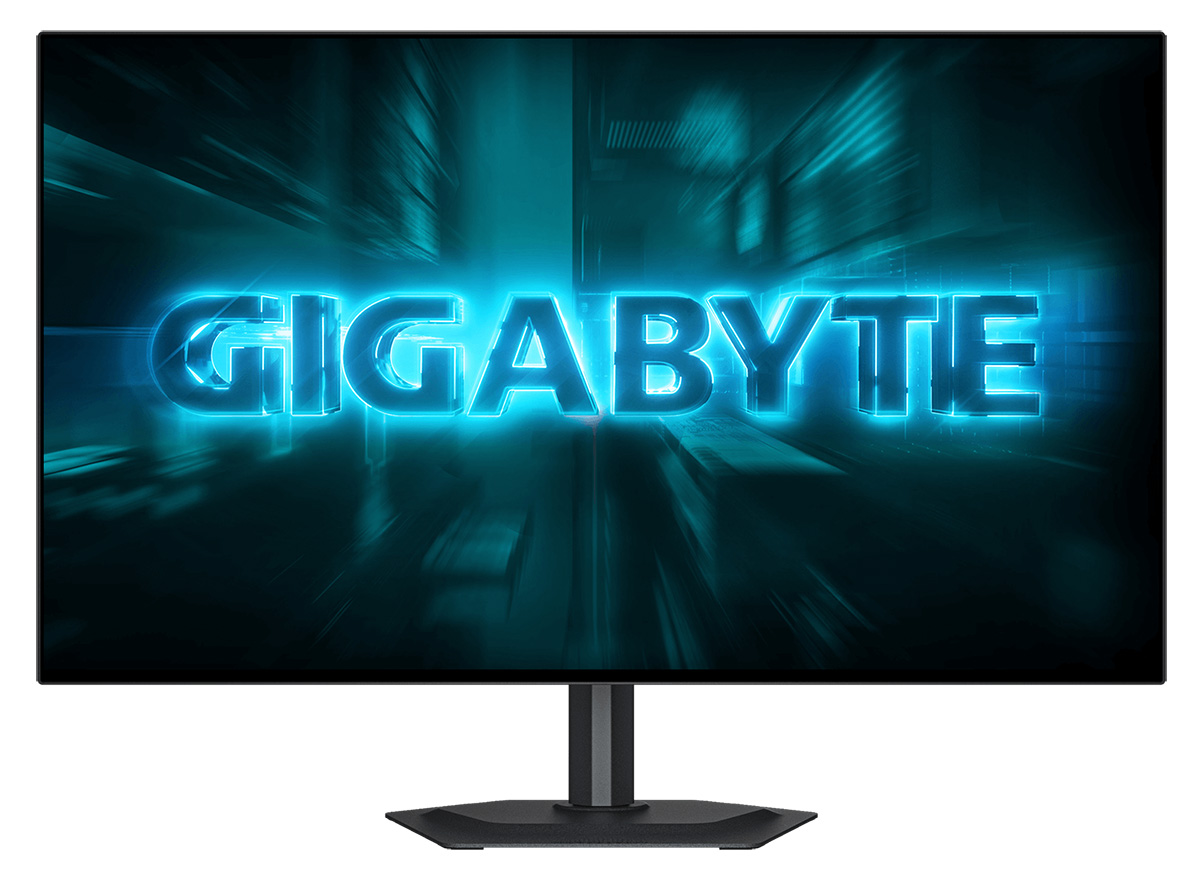
This is a second new glossy WOLED monitor which Gigabyte are now announcing. The GO27Q24G is a 27″ sized screen with a 2560 x 1440 resolution panel and a 240Hz refresh rate. It’s using an earlier generation WOLED panel, not featuring their Tandem WOLED technology and instead using MLA+ (Micro Lens Array+) to enhance brightness compared with earlier panels. It uses the same v2.0 ‘RealBlack glossy’ coating as the MO27Q28GR.
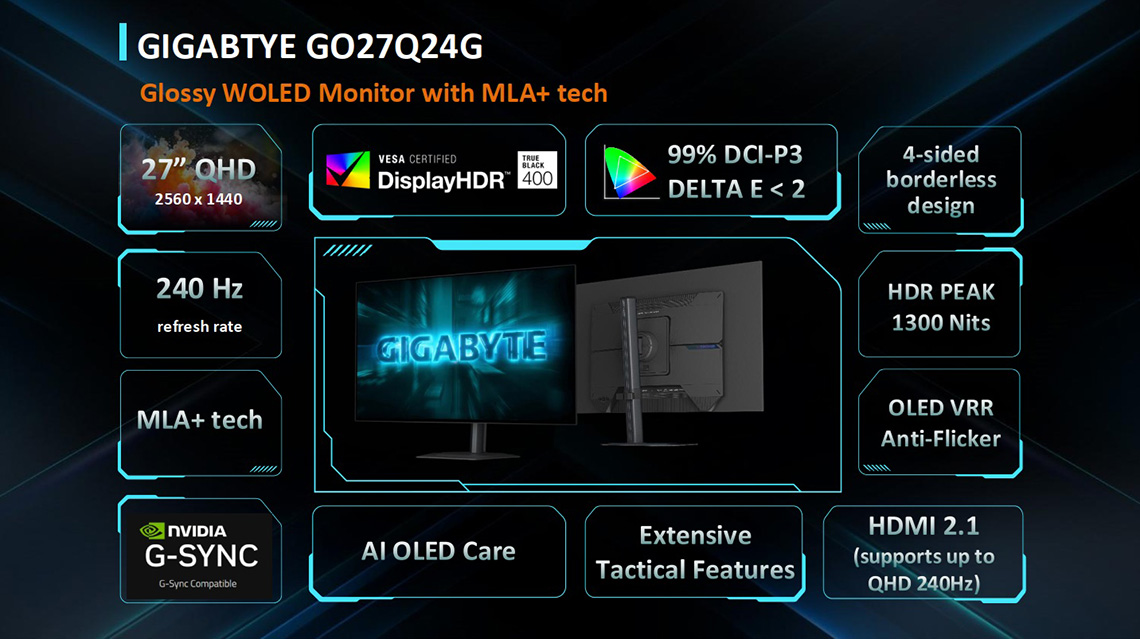
This screen has a slightly lower spec than the MO27Q28GR but still offers a decent set of extras, features and connections. There’s an SDR brightness of 275 nits, a peak brightness of 1300 nits for HDR, along with certification under the VESA DisplayHDR 400 True Black tier. The screen also offers a wide colour gamut covering 99% DCI-P3 and Variable Refresh Rates which include NVIDIA ‘G-sync Compatible’ certification.
Features and connections
A familiar range of Gigabyte features are on offer including their new UltraClear BFI blur reduction mode, OLED Anti-flicker modes (for reducing flicker during VRR gaming), a comprehensive range of OLED Care settings and a wide selection of ‘Tactical’ gaming settings and modes. This screen will also include the new Gigabyte OLED features discussed below, just like the MO27Q28GR has.
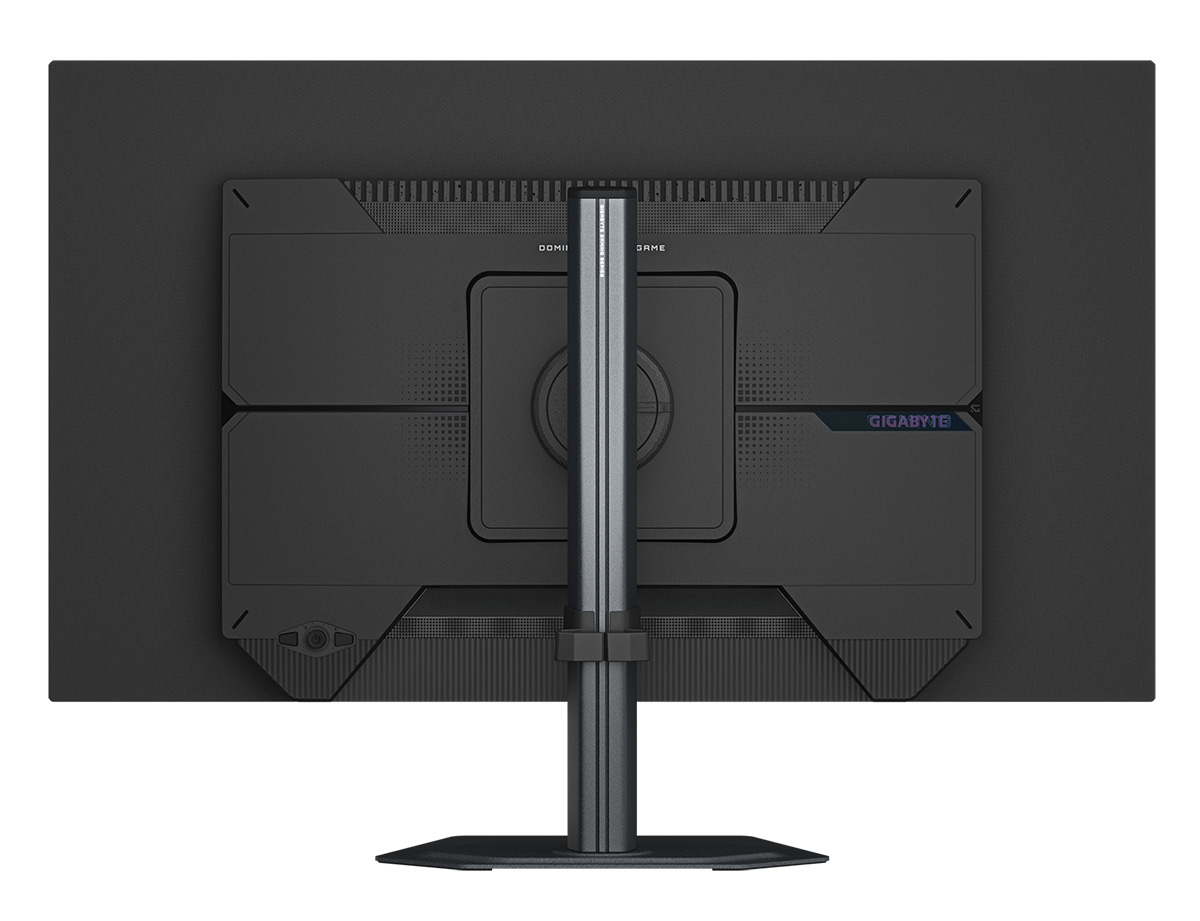
Connections include DisplayPort 1.4, HDMI 2.1, USB type-C (with DP Alt mode and 15W power delivery) and a headphone jack. The stand offers a full range of tilt, height, swivel and rotate adjustments. This model has the same design aesthetic as the MO27Q28G, although one note is that it doesn’t have any USB data ports.
GO27Q24G vs GO27Q24
You may notice that there is also a very similarly named model also listed on Gigabyte’s website, the GO27Q24. That model has a similar spec with a 27″ screen size, 2560 x 1440 resolution and 240Hz refresh rate, but it’s built around a Samsung Display QD-OLED panel instead of this new WOLED panel option.
| Spec | GO27Q24G | GO27Q24 |
| Panel Technology | WOLED | QD-OLED |
| Panel coating | RealBlack Glossy | Semi-glossy |
| SDR luminance spec | 275 nits | 250 nits |
| HDR peak brightness spec | 1300 nits | 400 nits |
| Connectivity differences | HDMI 2.1 | HDMI 2.0 |
| Extra Features | HyperNits HDR AI Picture Mode (end Q1) | n/a |
Both models have the same connections and most of the same features, although the new G model will include the new OLED features discussed in a moment below. The new WOLED model also offers a much higher brightness, including a 275 nits SDR luminance (vs. 250 nits on the QD-OLED model), and a peak brightness in HDR of 1300 nits (vs. only 400 nits on the QD-OLED model). Note that the HDR brightness is capped at 400 nits on the QD-OLED model as it does not feature a Peak 100 mode at all we are told. When it’s released, you will have a choice between a QD-OLED and a WOLED version depending on your preference, although the WOLED version will offer a brighter HDR experience.
Availability and pricing
We are told that the GO27Q24G (WOLED version) is due to be released at the end of March 2026 and has a North America launch price of $399 (without VAT) and in EMEA it will have a launch price of €399 Euro. The GO27Q24 (QD-OLED version) will retail for $369 USD (without VAT). Pricing and availability may vary by region due to tariff and import considerations and will be announced locally.
Other new Glossy WOLED monitors coming soon!
Gigabyte have told us that the development of glossy WOLED monitors isn’t stopping there, and they have plans to release other models throughout 2026. Expect to hear more about these in Q2, probably as part of Computex in May. As always, more information when we get it.
New Gigabyte OLED features
HyperNits HDR
A common challenge across many OLED monitors is that images appear overly dark in HDR peak brightness modes due to APL limitations. Gigabyte are looking to resolve this with their new ‘HyperNits’ setting on their new OLED monitors, “a smart tuning feature leveraging a unique algorithm to intelligently reshape the EOTF curve.”
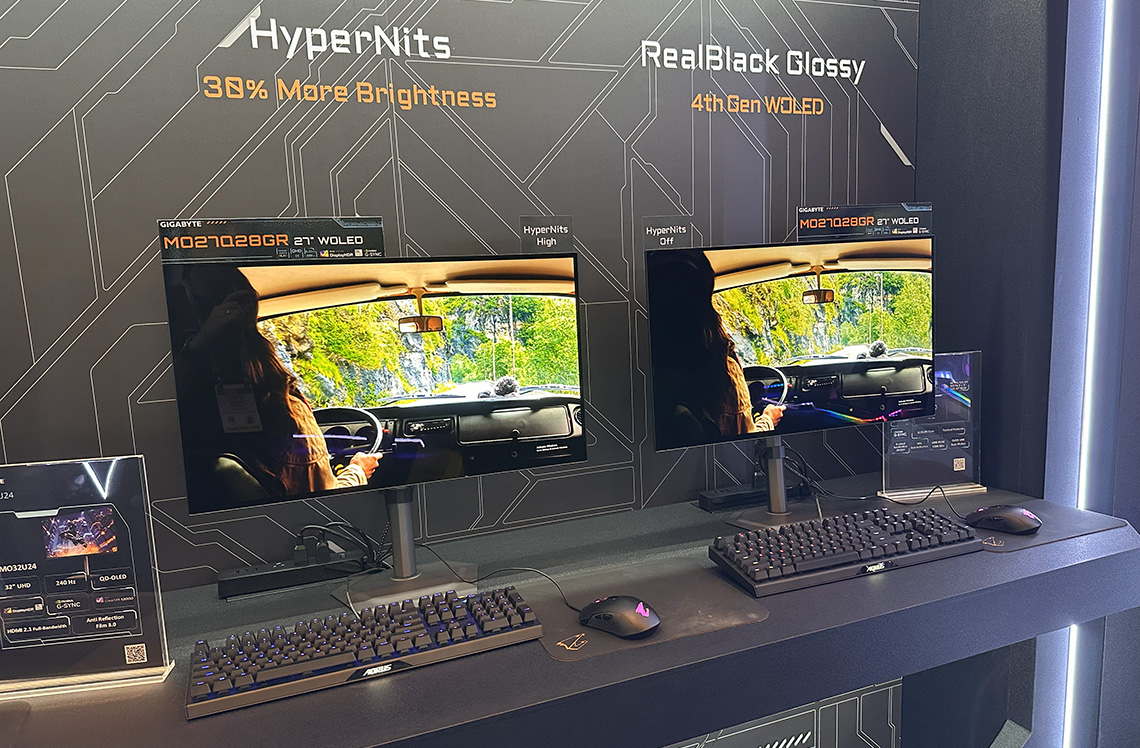
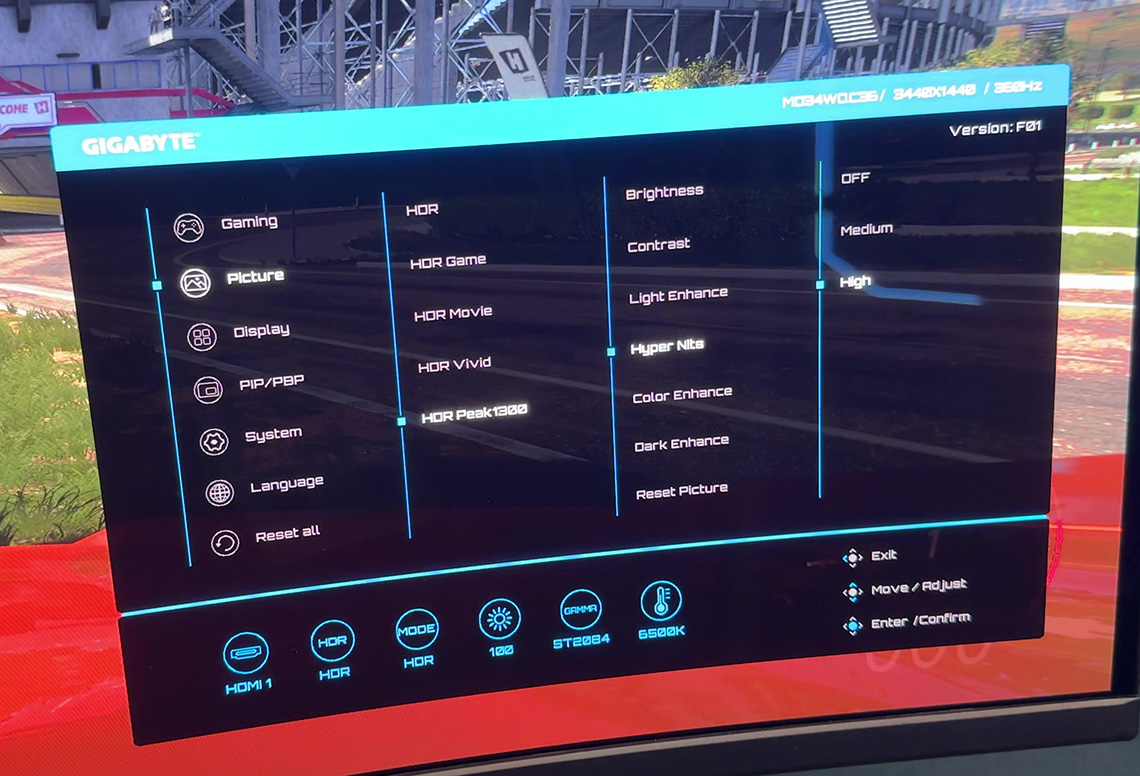
Gigabyte say that HyperNits boosts brightness by up to 30% while preserving critical highlight detail in HDR content. Two modes will be offered so that users can choose between HyperNits High for maximum brightness enhancement or HyperNits Medium for a gentle 20% lift in darker environments. We saw a demo of this at CES 2026 in January.
Models available – testing of HyperNits HDR coming soon
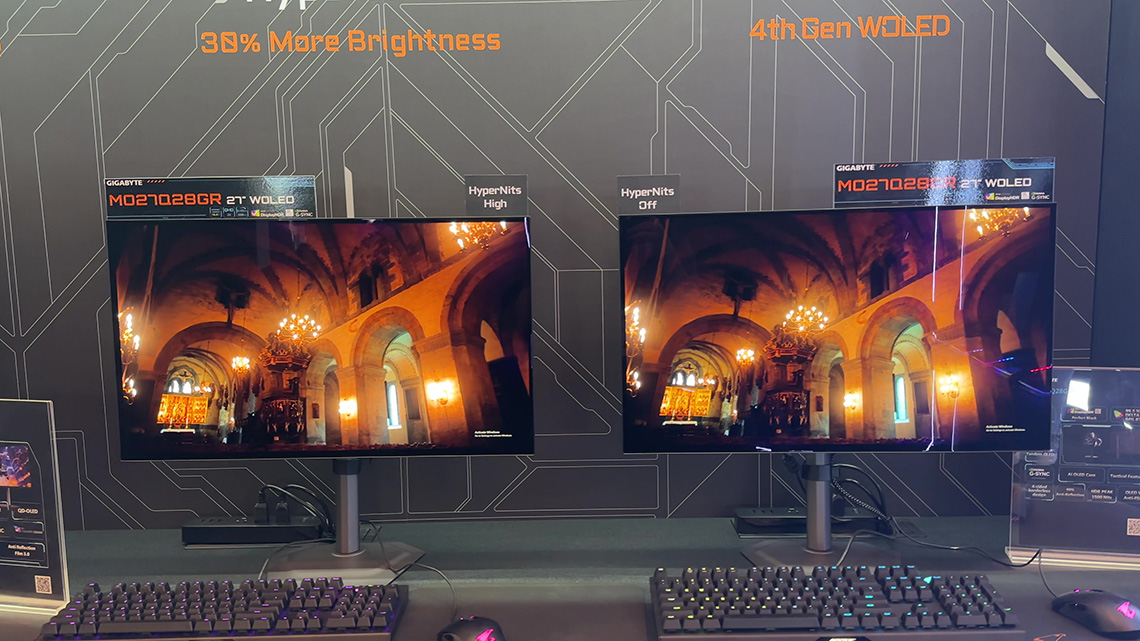
This new feature was on show at CES 2026 in a comparison using the new MO27Q28GR, with the one on the left having HyperNits turned on to high, and the one on the right with it off in normal HDR operation. We will be testing it out more thoroughly in the near future using the two new screens covered in this article as well, so we can evaluate the performance in more detail (MO27Q28G and GO27Q24G).
It will also be included on the other new monitors they showcased at CES like the MO32U24 and MO34WQC36 which were covered more in our CES round-up video here if you want to know more about those new screens.
Rolling out to some existing Gigabyte monitors as well
Gigabyte tell us that the plan is to also make this feature available via a firmware update to some existing OLED monitors in their range as well. The first model will probably be the MO27Q28G (matte AG version) which we’re told should receive this HyperNits firmware update around the same time as release of the new MO27Q28GR model – so around early March hopefully. Other models in their existing range are still being evaluated so we don’t yet know which others will receive the HyperNits update but more should follow.
AI Picture Mode

Another new feature that is coming soon on Gigabyte’s note models is their AI Picture Mode. They tell us that this is a software-based feature and will require a separate download, presumably of a small utility that will run on your system. This function is designed to auto-switch between display modes depending on the content you’re viewing.
It was promoted at CES 2026 as part of the launch of the models they had there (MO27Q28GR, MO32U24 and MO34WQC36) and is currently in development and planned for launch towards the end of Q1. It’s not clear at this stage which other screens this will be available with and whether it will also extend outside of their OLED monitors.
We may earn a commission if you purchase from our affiliate links in this article- TFTCentral is a participant in the Amazon Services LLC Associates Programme, an affiliate advertising programme designed to provide a means for sites to earn advertising fees by advertising and linking to Amazon.com, Amazon.co.uk, Amazon.de, Amazon.ca and other Amazon stores worldwide. We also participate in a similar scheme for Overclockers.co.uk, Newegg, Bestbuy , B&H and some manufacturers.